From the archive
Former Qatari PM Calls for Gulf-Iran Dialogue and Unified Saudi Security Stance Ahead of Oman Talks
Former Qatari PM calls for Gulf-Iran dialogue and unified Saudi security stance ahead of planned Oman talks.
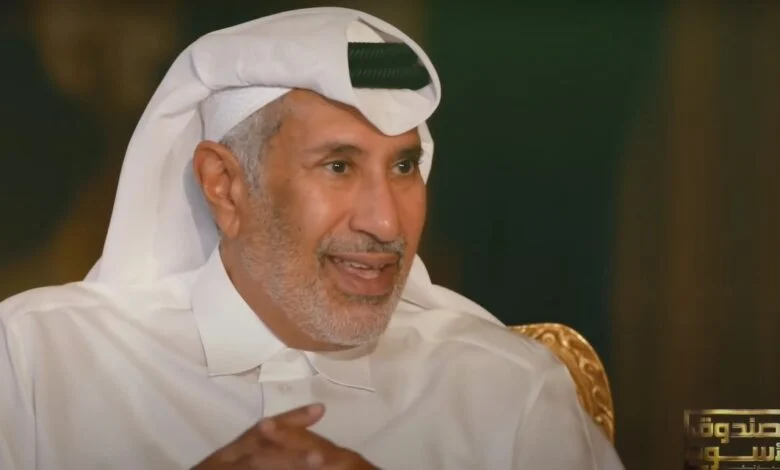
Iran announced Friday that a meeting is anticipated in Oman on Monday, bringing together Iran, Iraq, and the Gulf states. Tehran stated the talks are intended to prompt greater understanding among countries in the region and strengthen shared regional security. The upcoming gathering shows a renewed diplomatic push in the Gulf. Separately, former Qatari Prime Minister Sheikh Hamad bin Jassim Al Thani called for the reactivation of the Peninsula Shield Forces to help protect Saudi Arabia's borders. The Peninsula Shield Forces, also known as the GCC Unified Military Command, would support regional security efforts by providing a collective defense mechanism for member states.
Gulf States and Iran to Meet
Discussions at the upcoming meeting in Oman are expected to focus on regional security issues, a critical area of concern for all participating nations. The Strait of Hormuz, a critical maritime chokepoint for global oil shipments, is also anticipated to be a key topic of conversation, given its strategic importance to international trade and regional stability. The meeting, which will gather representatives from Iran, Iraq, and the Gulf states, aims to foster greater mutual understanding and reinforce shared regional security. This diplomatic initiative seeks to build bridges and address common challenges through dialogue. The Strait of Hormuz has been a source of regional tension, making its security and stability a significant concern for all parties involved in the talks, noting the urgency of cooperative solutions.
Sheikh Hamad's Diplomatic Vision
Sheikh Hamad bin Jassim Al Thani, who served as Qatar’s Prime Minister from 2007 to 2013 and as Foreign Minister from 1992 until 2013, expressed his hopes for the upcoming talks. His extensive experience in regional diplomacy lends weight to his perspective on Gulf relations. "I wish success for the proposed meeting to be held on Monday in Muscat between the Gulf Cooperation Council states and Iran," Sheikh Hamad stated, emphasizing the importance of direct engagement. He further added, "I also hope that the discussions will focus on ways to resolve the existing problems first before presenting any offers, and on laying out a roadmap for our relations with Iran in the future that ensures stability for both them and us." This approach prioritizes foundational solutions over superficial agreements.
Sheikh Hamad proposed transforming the Gulf basin into an "important economic lake" by fostering mutual benefits and common interests among its littoral states. This vision includes removing customs duties on exports between Iran and GCC states, a measure designed to boost economic interdependence and reduce friction. He cautioned that "temporary solutions and ceasefires do not serve either side; rather, they harm everyone," advocating for full and lasting resolutions. Emphasizing regional solidarity, Sheikh Hamad asserted that "Saudi Arabia’s security is important to all GCC countries, regardless of any disagreements between them," and that "an attack on Saudi Arabia is an attack on all GCC countries." This statement shows the principle of collective security within the Gulf Cooperation Council.
The security of maritime routes, particularly the Strait of Hormuz, remains a critical regional concern. Before the conflict, approximately 20.9 million barrels of the world’s oil supply transited through the Strait of Hormuz daily, showing its indispensable role in global energy markets. Qatar has consistently maintained that the Strait of Hormuz must remain open to international navigation, noting the importance of free passage for global commerce. Prime Minister and Minister of Foreign Affairs Sheikh Mohammed bin Abdulrahman bin Jassim Al Thani stated in June that Doha rejects any alteration to the Strait’s pre-war status, reaffirming Qatar's commitment to the established international maritime order.
Securing the Region Together
Sheikh Hamad bin Jassim Al Thani has consistently advocated for Gulf Cooperation Council (GCC) states to engage collectively and directly with Iran. His position emphasizes the importance of a unified approach among Gulf nations when addressing regional challenges and fostering dialogue with Tehran, rather than individual states pursuing separate diplomatic tracks. This collective engagement, he believes, would present a stronger and more cohesive front in negotiations.
The former Qatari Prime Minister also urged GCC states to adopt a firmer, unified stance regarding the Houthi movement in Yemen. Sheikh Hamad stated that the Houthi movement poses a danger to Saudi Arabia's borders, showing the need for a cohesive regional security response to protect member states. He reiterated his call for the reactivation of the Peninsula Shield Forces (GCC Unified Military Command) specifically to help protect Saudi Arabia’s borders, reinforcing the idea that regional threats require a unified military deterrent. This full security framework, encompassing both diplomatic engagement and collective defense, forms the core of Sheikh Hamad’s vision for a stable and prosperous Gulf region.