From the archive
Former Qatari PM Urges Gulf Unity Against Iran, Demands Support for Saudi Arabia
Former Qatari PM Hamad bin Jassim Al Thani urges Gulf states to unite decisively behind Saudi Arabia, calling Iran the region's main enemy and warning of…
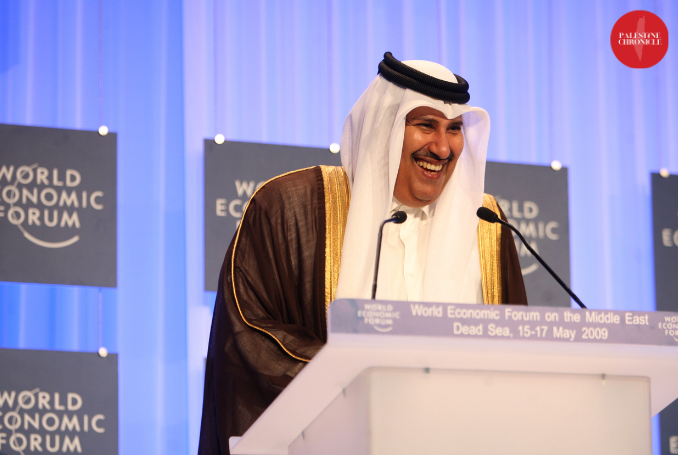
Former Qatari Prime Minister Hamad bin Jassim Al Thani called for decisive Gulf support for Saudi Arabia and identified Iran as the Gulf states’ "main enemy" in a lengthy statement published Saturday, following reports of missile and drone operations by Ansarallah-aligned Yemeni forces targeting Saudi airports and Aramco facilities. Writing on his official X account, bin Jassim urged Gulf Cooperation Council (GCC) members to set aside disagreements and move beyond verbal solidarity with Riyadh. He stated, "It has become more urgent and clearer than ever that we must stand with the Kingdom of Saudi Arabia in a practical and decisive manner in confronting the continuing threat and aggression it is facing from inside Yemen—although this aggression is not being managed from inside Yemen, but is instead being plotted and directed from abroad."
Bin Jassim added that "This situation requires setting aside all secondary disagreements among certain Gulf Cooperation Council states and demonstrating clear and practical unity among the Council’s members before issuing statements of verbal support." He further asserted, "We also continue to face an existential threat to the GCC states, not only from Iran, although it has now become clear that Iran is our main enemy."
Escalating Regional Tensions
Hamad bin Jassim described Iran as the Gulf states’ "main enemy" and issued a warning of an existential threat to the Gulf Cooperation Council (GCC). He stated, "We also continue to face an existential threat to the GCC states, not only from Iran, although it has now become clear that Iran is our main enemy." The former Qatari premier added, "This also confirms what I have previously said about the danger this situation poses to all GCC states and to their very existence." He emphasized that "Since the Kingdom is the largest country within the Gulf Cooperation Council, its stability and strength represent strength for all the Council’s states, regardless of any disagreements."
His message came amid escalating attacks on Saudi airports and energy facilities by Yemen’s Ansarallah-aligned forces. Bin Jassim stated, "It has become more urgent and clearer than ever that we must stand with the Kingdom of Saudi Arabia in a practical and decisive manner in confronting the continuing threat and aggression it is facing from inside Yemen—although this aggression is not being managed from inside Yemen, but is instead being plotted and directed from abroad." He further explained, "Therefore, what is urgently required is unity and a deep understanding of the current circumstances, so that we may emerge from this crisis stronger than before, God willing, followed by serious action—not mere wishes."
Saudi Arabia has simultaneously intensified its airstrikes across Yemen, including attacks on Sana’a, Amran, Ibb, and other provinces. Bin Jassim called for unity, asserting, "This situation requires setting aside all secondary disagreements among certain Gulf Cooperation Council states and demonstrating clear and practical unity among the Council’s members before issuing statements of verbal support." He cautioned, "While this does not mean that we are not seeking peace and clear relations with Iran, the Gulf Cooperation Council today faces several hostile schemes and conspiracies." He concluded that "Some target its interests and seek to exhaust its wealth, while others seek to establish political and economic control over our countries."
Call for Decisive Action
Hamad bin Jassim Al Thani demanded practical and decisive support for Saudi Arabia, urging Gulf states to set aside their internal disagreements in the face of what he described as an existential threat. "It has become more urgent and clearer than ever that we must stand with the Kingdom of Saudi Arabia in a practical and decisive manner in confronting the continuing threat and aggression it is facing from inside Yemen—although this aggression is not being managed from inside Yemen, but is instead being plotted and directed from abroad," bin Jassim stated. He emphasized the necessity for Gulf Cooperation Council (GCC) members to demonstrate unity beyond verbal declarations. "This situation requires setting aside all secondary disagreements among certain Gulf Cooperation Council states and demonstrating clear and practical unity among the Council’s members before issuing statements of verbal support," he added.
Bin Jassim further asserted that "Since the Kingdom is the largest country within the Gulf Cooperation Council, its stability and strength represent strength for all the Council’s states, regardless of any disagreements." He warned, "We also continue to face an existential threat to the GCC states, not only from Iran, although it has now become clear that Iran is our main enemy." The former Qatari prime minister, who served in that role from 2007 until 2013, concluded by stating, "Therefore, what is urgently required is unity and a deep understanding of the current circumstances, so that we may emerge from this crisis stronger than before, God willing, followed by serious action—not mere wishes."
Broader Implications for GCC
Hamad bin Jassim Al Thani warned of various hostile schemes aimed at undermining the Gulf Cooperation Council, stating that "Some target its interests and seek to exhaust its wealth, while others seek to establish political and economic control over our countries." He called for tangible responses, asserting that "what is urgently required is unity and a deep understanding of the current circumstances, so that we may emerge from this crisis stronger than before, God willing, followed by serious action—not mere wishes." Mr. Al Thani, who previously served as Qatar’s foreign minister from 1992 until 2013, emphasized the broader implications of regional stability. He stated that "Since the Kingdom is the largest country within the Gulf Cooperation Council, its stability and strength represent strength for all the Council’s states, regardless of any disagreements." He also noted, "We also continue to face an existential threat to the GCC states, not only from Iran, although it has now become clear that Iran is our main enemy."