From the archive
Qatar LNG Flow to Asia Continues Amidst Regional Tensions
Qatar LNG exports to China and Asia continue via the Strait of Hormuz, demonstrating reliability amidst regional tensions and geopolitical uncertainty.
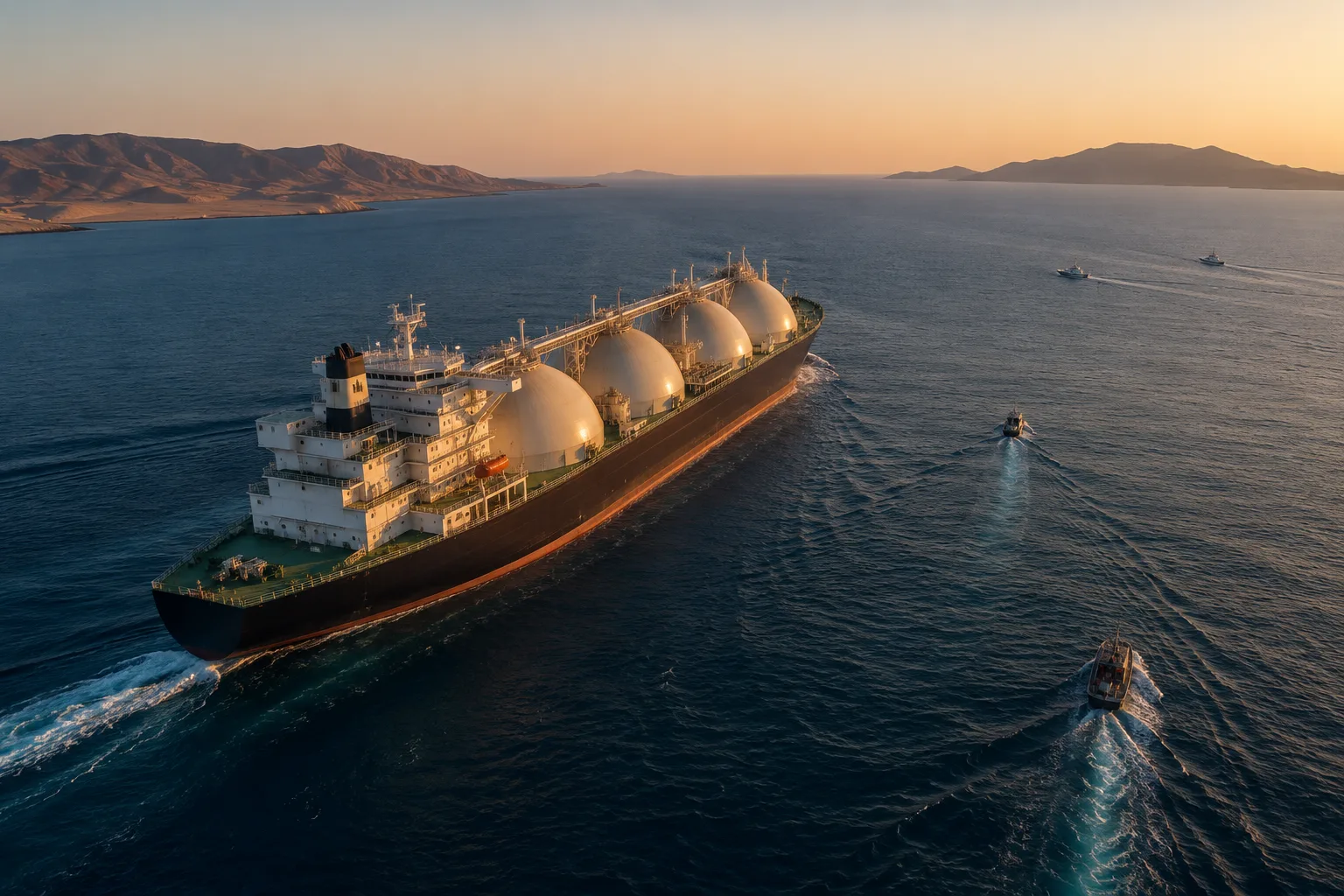
On June 9, 2026, the LNG tanker Al Daayen, operated by QatarEnergy, successfully transited the Strait of Hormuz, heading towards China. This journey by the Al Daayen, a key vessel in the global energy supply chain, showed the ongoing and consistent flow of Qatari liquefied natural gas to vital Asian markets, even amidst prevailing regional tensions. China, a major economic power and energy consumer, stands as the primary recipient of Qatari LNG under long-term contracts, absorbing the largest volume of these significant shipments. The consistent and uninterrupted deliveries highlight Qatar's steadfast commitment to its established energy supply agreements with key Asian importers, reinforcing its reputation as a reliable global energy partner.
Key Asian Destinations and QatarEnergy's Dominance
China, India, Japan, and South Korea serve as the principal destinations for Qatar's substantial liquefied natural gas exports. These nations represent some of the world's largest and fastest-growing energy markets, making reliable supply critical for their economic stability and industrial growth. QatarEnergy maintains its formidable position as the world's largest individual LNG exporter. The company possesses an impressive installed capacity that exceeds 77 million tons per year, a figure that solidifies its leading role in the international LNG trade. This significant capacity enables Qatar to consistently meet the substantial and ever-increasing energy demands of its key Asian partners. The consistent flow of these exports, particularly through critical maritime passages, shows QatarEnergy's key and indispensable role in global energy markets, especially in supplying major economies across the Asian continent.
Geopolitical Currents and Transit Fees Amidst Maritime Concerns
The LNG tanker Al Daayen's transit on June 9, 2026, marked the ninth Qatari cargo to depart the region since the ongoing crisis began. This regular shipment route remains critically important amidst evolving geopolitical dynamics in the Middle East, which frequently impact maritime trade. The strategic importance of the Strait of Hormuz as a chokepoint for global energy shipments cannot be overstated, as a significant portion of the world's oil and gas transits through it.
On June 8, the Iranian ambassador to Moscow, Kazem Jalali, made a notable statement regarding maritime regulations. Ambassador Jalali indicated that Iran and Oman were exploring the possibility of implementing differentiated transit fees for vessels. These proposed fees would be set based on the specific cargo type being transported through the Strait of Hormuz, potentially introducing new variables for shipping companies and energy traders. The ambassador’s statement follows a period of heightened regional tensions that have demonstrably affected maritime trade and shipping operations in the area. Such developments are closely watched by the international shipping community and energy markets alike, as they could impact the cost and predictability of global energy transport.
Concurrently, more than 11 million barrels per day continued to experience affected or restricted flows, according to Reuters Open Interest data reported on June 8. This substantial figure notes the persistent and tangible impact of regional developments on global energy transport routes and supply chains, showing the fragility of these critical arteries.
Market Monitoring and Strategic Outlook in a Dynamic Landscape
In response to these complex market conditions, LNG traders and buyers actively utilize Automatic Identification System (AIS) vessel tracking to monitor real-time liquefied natural gas flows originating from the Persian Gulf. This sophisticated monitoring is critical for making informed decisions, especially as U.S. LNG flows recently registered 2026 lows, which in turn reduced available arbitrage capacity for buyers seeking alternative supply options. The reduced availability from other major suppliers places greater emphasis on the reliability of existing contracts and routes. Against this backdrop, the final investment decision for the Browse LNG project in Australia has gained significant strategic relevance within the market. New LNG projects, like Browse, represent future supply sources but typically require a substantial timeline of between five and seven years from the final investment decision to commencing their first exports, impacting long-term supply outlooks and showing the need for strategic foresight in energy planning.
Qatar's Enduring Role as a Reliable Supplier
Maritime tracking data from LSEG Shipping, reported by Reuters, consistently confirms the continuity of liquefied natural gas shipments from Qatar to various destinations across Asia. This ongoing and reliable flow shows Qatar's persistent role as a steadfast and reliable energy supplier to the region, a reputation it has meticulously built over decades. The data indicates that Qatari LNG exports have maintained their trajectory and volume despite the complex geopolitical landscape affecting transit routes, demonstrating the nation's commitment to its international energy obligations.