From the archive
Qatar Participates in GCC Justice Undersecretaries Meeting to Boost Cooperation
Qatar participated in the 28th GCC Justice Undersecretaries meeting to enhance joint judicial, legal, and legislative cooperation among member states.
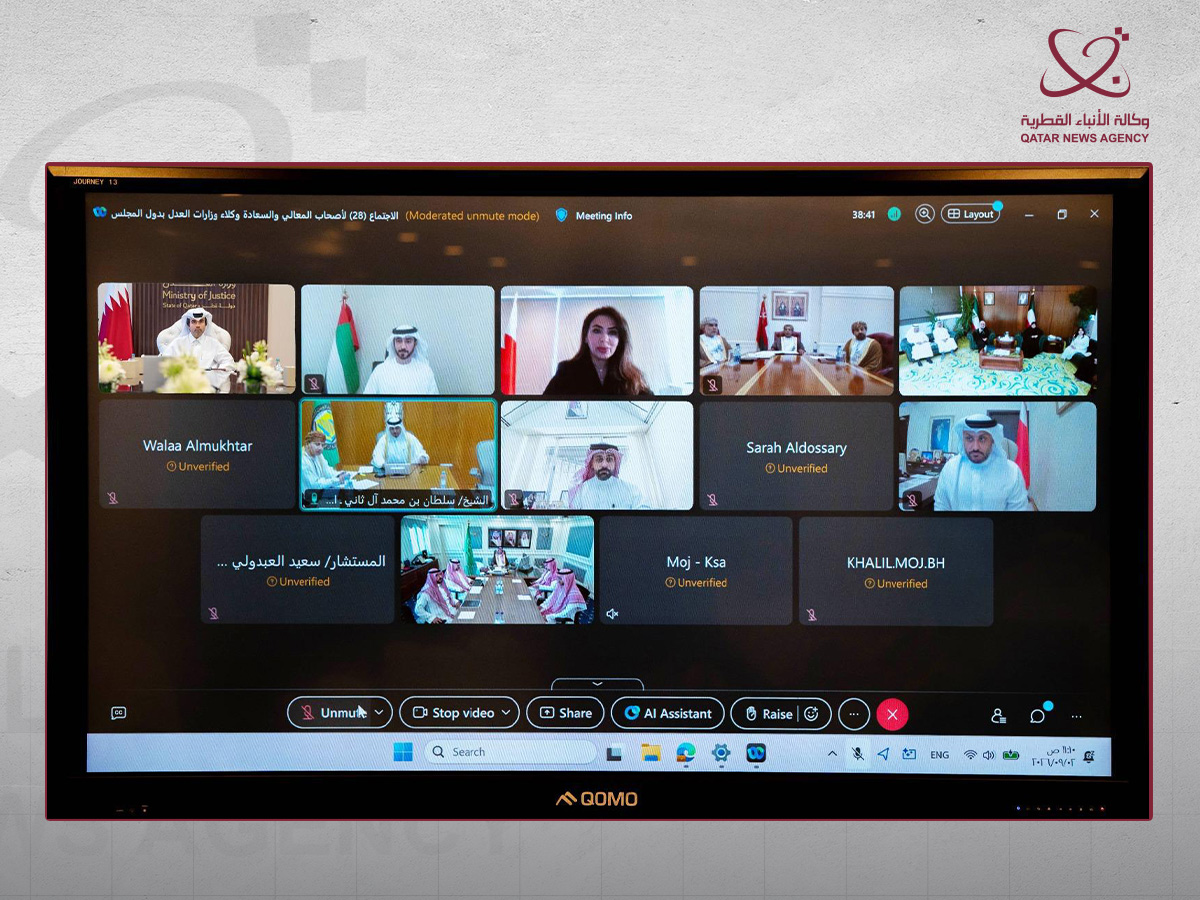
The State of Qatar participated in the 28th meeting of Their Excellencies the Undersecretaries of the Ministries of Justice in the Gulf Cooperation Council (GCC) countries. The virtual meeting was held on Wednesday. Doha served as the host city for this gathering, showing its commitment to regional judicial collaboration. The meeting aimed to boost cooperation among GCC justice ministries, fostering stronger ties and more integrated legal systems across the member states. This regular convening of high-level officials is a cornerstone of efforts to harmonize legal practices and address shared challenges within the Gulf region.
Delegation and Agenda
The meeting addressed several topics related to strengthening joint judicial, legal, and legislative cooperation among the Ministries of Justice of the Gulf Cooperation Council (GCC) countries. These discussions covered a wide array of issues pertinent to the advancement of justice systems regionally. Leading the State of Qatar's delegation was His Excellency Undersecretary of the Ministry of Justice, Saeed bin Abdullah Al Suwaidi. His participation noted Qatar's active role in promoting regional legal frameworks and judicial excellence. The gathering aimed to enhance collaborative efforts across the region's justice systems, ensuring a unified approach to legal challenges and opportunities. Discussions focused on mechanisms to harmonize legal frameworks and improve judicial processes between member states, with an emphasis on practical implementation strategies. The virtual meeting was held on Wednesday, facilitating broad participation from across the GCC, with the proceedings concluding on September 02, 2026, at 2:15 PM, marking the culmination of productive deliberations.
Key Discussions and Reports
The meeting received a report concerning the Committee of Officials of the Departments of International Cooperation and International Relations at the Ministries of Justice in the GCC countries for 2026. This report outlined the outcomes and recommendations from those prior meetings, which focused on enhancing cross-border judicial and legal coordination among member states. The committee's work is vital for ensuring smooth legal interactions and mutual assistance in judicial matters across the Gulf. Discussions revolved around mechanisms to streamline international legal processes and foster closer collaboration on issues pertaining to justice and law enforcement within the Gulf region, including extradition, legal aid, and information exchange. The insights from this report guided the undersecretaries in formulating strategies for improved regional cooperation.
Additionally, the General Secretariat's memorandum regarding the meeting of the Committee of Directors and Heads of Legal and Judicial Training Centers and Institutes in the GCC countries for 2026 was presented. This memorandum detailed proposals and initiatives aimed at standardizing and improving legal and judicial training programs across the GCC. The objective was to ensure a consistent level of expertise and professional development for judicial personnel throughout the member countries, thereby strengthening the overall judicial framework in the region. The memorandum emphasized the importance of continuous learning and the adoption of best practices in legal education to meet the evolving demands of modern justice systems. Both reports provided key insights and recommendations that informed the decisions made during the undersecretaries' meeting.
Outcomes and Future Cooperation
Appropriate decisions were taken during the meeting to advance joint Gulf action, according to officials. These measures are expected to contribute significantly to supporting the progress of cooperation among member states, building on the strong foundations already established. The outcomes are also intended to enhance integration between the Ministries of Justice of the Gulf Cooperation Council (GCC) countries, leading to more cohesive legal environments. The decisions aim to promote the exchange of expertise, facilitating a more unified approach to judicial and legal matters across the region, including the sharing of legislative models and judicial best practices. The meeting's conclusions are designed to strengthen the collaborative framework that underpins justice systems within the GCC, ensuring that the region continues to develop strong and interconnected legal infrastructures. These strategic decisions reflect a shared vision for a more integrated and efficient justice sector across the Gulf states.