From the archive
Doha Center Joins UK Workshop on Multi-Faith Partnerships
The Doha International Center for Interfaith Dialogue joined a UK workshop focused on developing multi-faith partnerships and fostering global cooperation.
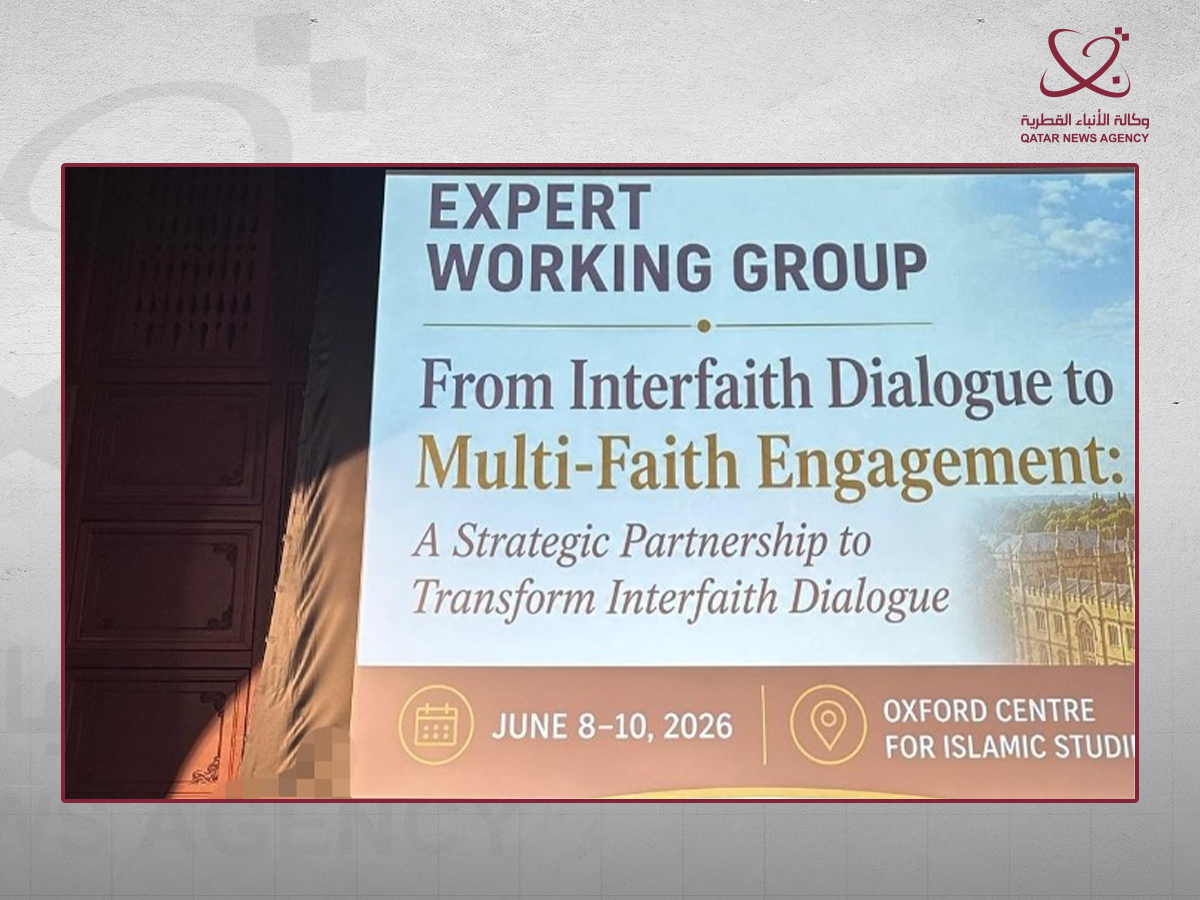
The Doha International Center for Interfaith Dialogue (DICID) participated in a high-level international workshop, "From Interfaith Dialogue to Multi-faith Partnership: Towards a Strategic Vision for Developing Cooperation Between Religious Communities." The Oxford Centre for Islamic Studies in the United Kingdom hosted the event, bringing together religious, intellectual, academic leaders, and decision-makers from around the world. The workshop focused on fostering multi-faith partnerships, showing a collective effort to advance global understanding and collaboration. This significant gathering brought together a diverse group of participants, including prominent religious figures, leading intellectuals, esteemed academics, and influential decision-makers, all converging to address critical issues concerning interfaith relations. The participation of the Doha International Center for Interfaith Dialogue in this high-level international workshop signifies its ongoing commitment to engaging in such key global dialogues.
Workshop's Strategic Focus
The workshop specifically addressed the transition from fostering mutual understanding to establishing practical and sustainable partnerships among diverse religious communities. Participants reviewed strategic issues pertinent to the future of cooperation between these communities, according to workshop organizers. These discussions included strategies for building global networks of religious and intellectual leaders, promoting religious freedom, and supporting civil society institutions. The full agenda also covered other key areas of focus, such as the development of young leaders through specific programs designed to empower the next generation of interfaith advocates. The workshop emphasized enhancing religious education and culture initiatives, recognizing their foundational role in promoting respect and knowledge across different traditions. A key component of the discussions involved coordinating responses to humanitarian challenges, noting the practical application of interfaith cooperation in addressing global crises.
Additionally, the workshop explored the implications of rapid technological transformations, particularly artificial intelligence, on both religious communities and broader interfaith relations. This forward-looking discussion aimed to understand how emerging technologies might impact religious practices, communication, and the dynamics of interfaith engagement. Organizers emphasized that constructing authentic and sustainable relationships between followers of different religions forms a fundamental basis for strengthening mutual trust and launching joint initiatives. This approach aims to move beyond dialogue to tangible collaborative efforts, asserting that religious and cultural diversity should be recognized not as a challenge, but as a significant source of human richness. This foundational vision frames diversity as a vital opportunity for enhanced cooperation and integration among different faith traditions and cultures, fostering a more inclusive global society.
Goals and Expected Outcomes
The workshop is expected to yield strategic visions aimed at enhancing cooperation among religious communities across local, regional, and international spheres. Organizers anticipate these visions will provide clear guidance for future collaborative efforts, serving as a roadmap for sustained engagement and partnership. These strategic visions are intended to offer full frameworks for how religious communities can work together more effectively to address shared concerns and promote peace. The discussions are designed to foster a deeper understanding of the mechanisms required to build strong and enduring interfaith relationships that can withstand global complexities.
Participants also intend to develop practical frameworks designed to support sustainable partnerships between religious, academic, and civil institutions. The frameworks are envisioned to facilitate more effective collaboration and resource sharing among these diverse entities, ensuring that initiatives are well-supported and impactful. These practical frameworks will outline concrete steps and methodologies for institutions to engage in meaningful and productive partnerships, moving beyond theoretical discussions to actionable plans. The goal is to create a blueprint for collaborative projects that can be implemented across various contexts, from community-level initiatives to international programs.
A primary goal of the workshop is to support the significant contributions of religious leaders in addressing common global challenges. The initiative seeks to empower these leaders in their efforts to foster a more stable and cooperative future through interfaith collaboration, acknowledging their key role in guiding their communities and influencing broader societal discourse. By supporting these leaders, the workshop aims to amplify their voices and facilitate their capacity to act as agents of positive change, contributing to a more harmonious and interconnected world.
Center's Commitment to Dialogue
The Doha International Center for Interfaith Dialogue (DICID) participated in the workshop as part of its ongoing commitment to engaging in international dialogues focused on advancing interfaith dialogue and cooperation paths. The Center's involvement shows its dedication to fostering understanding and collaboration between diverse religious communities globally. Discussions during the workshop were grounded in a foundational vision that recognizes religious and cultural diversity not as a challenge, but as a significant source of human richness. This perspective frames diversity as a vital opportunity for enhanced cooperation and integration among different faith traditions and cultures. The event's proceedings were documented, with the publication date noted as June 10, 2026. The DICID's participation reaffirms its strategic objective to be a leading voice in global interfaith initiatives, consistently seeking to bridge divides and build bridges of understanding.