From the archive
Fitch Affirms Qatar's 'AA' Rating, Cites LNG Recovery Prospects
Fitch affirms Qatar's 'AA' credit rating, removing it from 'Rating Watch Negative' as LNG export risks diminish.
Fitch Ratings has affirmed Qatar's credit rating at 'AA', removing it from 'Rating Watch Negative', citing reduced risks to its liquefied natural gas (LNG) facilities following Iranian missile strikes in March. This affirmation places Qatar's credit rating at the third-highest level on Fitch's rating scale, a significant indicator of the nation's economic stability and outlook. The agency projects Qatar's LNG exports will return to pre-war levels in the second half of next year. Fitch stated, "The AA rating reflects gross domestic product per capita among the world's highest, large sovereign assets, our expectation that additional gas production will further strengthen public finances." The decision to remove Qatar from 'Rating Watch Negative' shows Fitch's assessment of a diminished threat to the country's vital energy infrastructure.
The credit agency noted that while the geographic concentration and high complexity of Qatar's LNG facilities present a vulnerability, "the risks of further severe damage have reduced since March and the impact of the war on the credit profile will take longer to discern." Fitch added, "We assume that some form of deal will enable conditions conducive to the resumption of exports through the strait in the first quarter of next year, after which it will take about six months to reach the pre-war level minus the 17 per cent of capacity damaged by the Iranian attack on Ras Laffan." This assumption is central to the agency's optimistic forecast for the recovery of Qatar's key export capabilities.
Damage and Capacity Loss
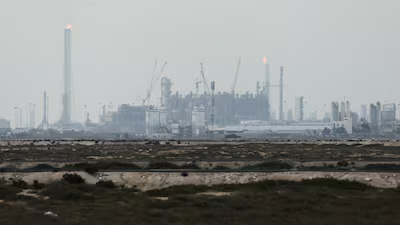
Iranian strikes damaged Trains 4 and 6 at the Ras Laffan industrial complex in March, leading to a significant loss in liquefied natural gas (LNG) production capacity. These Iranian missile strikes in March specifically destroyed parts of the Ras Laffan industrial complex, targeting key operational units. The damage specifically to Trains 4 and 6 resulted in a cut of 12.8 million tonnes of annual LNG capacity. This 12.8 million tonnes per annum (mtpa) capacity cut is equivalent to approximately 17 per cent of Qatar's total LNG exports, representing a substantial blow to its production capabilities. The estimated annual lost revenue stemming from this damage stands at $20 billion, noting the severe economic impact of the attacks. The Ras Laffan industrial complex is a critical global supplier, providing one-fifth of the world's super-chilled fuel, making the damage particularly impactful on global energy markets.
Following the missile strikes, QatarEnergy declared long-term force majeure on its contracts with several international buyers. These affected buyers are located in China, South Korea, Italy, and Belgium, indicating the broad international reach of Qatar's LNG supply chain. Saad Al Kaabi, the company’s chief executive, provided an estimate for the repair timeline, stating that repairs would take three to five years to complete. This extended repair period shows the complexity and extent of the damage inflicted on the critical LNG infrastructure. Despite the long repair horizon, Fitch's affirmation reflects confidence in Qatar's ability to manage these challenges and maintain its financial strength.
Geopolitical and Export Outlook
Fitch Ratings removed Qatar from 'Rating Watch Negative', citing the nation's strong economic fundamentals. The agency stated that Qatar's "AA rating reflects gross domestic product per capita among the world's highest, large sovereign assets," adding its "expectation that additional gas production will further strengthen public finances." Before the conflict erupted, more than 20 per cent of the global supply of crude oil and liquefied natural gas (LNG) transited through the Strait of Hormuz. The closure of the Strait of Hormuz significantly impacted Qatar's ability to export LNG, creating a critical vulnerability for its energy shipments and showing the geopolitical risks inherent in the region. The security of this vital shipping lane remains a critical concern for global energy markets and Qatar's export strategy.
Fitch acknowledged the inherent risks associated with Qatar's energy infrastructure. "While the geographic concentration and high complexity of Qatar's LNG facilities is a vulnerability," Fitch stated, "the risks of further severe damage have reduced since March and the impact of the war on the credit profile will take longer to discern." This nuanced view balances the country's strengths with its exposure to regional instability. The agency's assessment suggests that while the initial shock of the missile strikes was severe, the immediate threat of further escalation affecting these facilities has somewhat abated.
The credit rating agency anticipates a resolution for the Strait of Hormuz. Fitch indicated, "We assume that some form of deal will enable conditions conducive to the resumption of exports through the strait in the first quarter of next year." This assumption of a diplomatic resolution or agreement is a key factor in Fitch's positive outlook. Following the expected reopening, Fitch projects that it will take approximately six months for Qatar's LNG export levels to return to their pre-war state, adjusted for the 17 per cent capacity damaged by the Iranian attack on Ras Laffan. This timeline suggests a relatively swift recovery of export volumes once transit through the strait is normalized, despite the ongoing repairs to the damaged production trains. The agency's projection for exports to return to pre-war levels in the second half of next year aligns with this six-month recovery period post-Strait reopening.
Rating Rationale and Economic Forecasts
Fitch Ratings' affirmation of Qatar's 'AA' rating places it at the third-highest level on the agency's scale, signaling a strong financial position despite recent challenges. The agency stated that "The AA rating reflects gross domestic product per capita among the world's highest, large sovereign assets, our expectation that additional gas production will further strengthen public finances." This assessment notes Qatar's substantial wealth and its strategic investments in its gas sector as foundational elements of its creditworthiness. Fitch acknowledged that while "the geographic concentration and high complexity of Qatar's LNG facilities is a vulnerability, the risks of further severe damage have reduced since March and the impact of the war on the credit profile will take longer to discern." This careful consideration of both inherent risks and current geopolitical dynamics underpins the rating decision. The agency anticipates a resolution for the Strait of Hormuz, noting, "We assume that some form of deal will enable conditions conducive to the resumption of exports through the strait in the first quarter of next year, after which it will take about six months to reach the pre-war level minus the 17 per cent of capacity damaged by the Iranian attack on Ras Laffan." This specific timeline for both the Strait's reopening and the subsequent export recovery provides a clear framework for Fitch's projections.
Separately, the International Monetary Fund (IMF) has revised its economic projections for the Middle East, offering a broader regional context to Qatar's individual performance. The IMF cut its 2026 growth forecast for the region to 0.7 per cent, representing a 1.2 percentage point downgrade from its assessment in April. This downward revision reflects ongoing uncertainties and challenges across the Middle East. However, the IMF projects Middle East growth to rebound significantly in 2027, reaching 6.5 per cent. This 2027 projection marks an increase of 1.9 percentage points from its previous assessment, indicating an expectation of strong recovery. The International Monetary Fund expects Iraq, Kuwait, and Qatar to face sharp contractions in 2026, a period potentially impacted by the lingering effects of the conflict and the repair timelines for key infrastructure. Following this contraction, the IMF anticipates “double-digit expansions” in 2027 for these nations, suggesting a strong rebound as energy production and exports normalize and global demand potentially strengthens. This aligns with Fitch's long-term confidence in Qatar's economic fundamentals and its ability to leverage its vast natural gas reserves.