From the archive
Gulf Nations Condemn Iranian Attacks on Neighbors
Qatar, UAE, and Kuwait condemn Iranian missile and drone attacks on Jordan, Bahrain, and Kuwait, calling them violations of sovereignty and international…
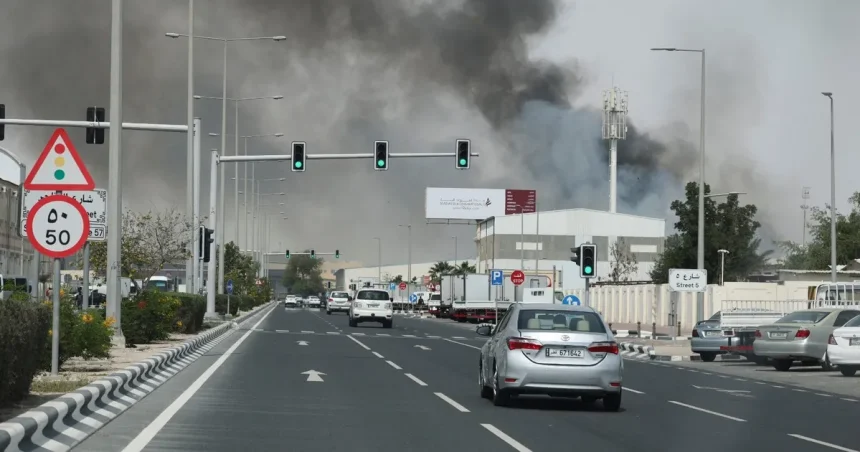
Qatar, the United Arab Emirates, and Kuwait on Thursday strongly condemned recent Iranian missile and drone attacks targeting Jordan, Bahrain, and Kuwait. The Gulf nations issued their condemnations after a series of Iranian attacks occurred over the past two days. Statements from the countries described the actions as clear violations of sovereignty and international law. These condemnations showed a unified regional stance against what they termed as aggressive actions. The diplomatic responses from Doha, Abu Dhabi, and Kuwait City noted the serious implications of these attacks for regional stability and adherence to international norms.
Gulf States' Stance
Qatar reaffirmed its full solidarity with Jordan, Bahrain, and Kuwait following the recent Iranian missile and drone attacks. The Qatari government showed its support for the affected nations in their efforts to safeguard sovereignty and territorial integrity. This expression of solidarity from Qatar emphasized the shared concerns among Gulf Cooperation Council (GCC) members regarding external threats. Qatar's Foreign Ministry specifically noted the importance of upholding the principles of international law and respecting national sovereignty to prevent further destabilization in the volatile region.
Kuwait's Foreign Ministry strongly condemned the Iranian attacks targeting both Bahrain and Jordan. A statement from the ministry reiterated Kuwait's full support for Jordan and Bahrain, emphasizing their right to protect their sovereignty and territorial integrity against such aggressions. The ministry's official communication stressed the imperative for all parties to exercise restraint and adhere to international conventions governing state conduct. Kuwait's firm stance reflected its commitment to regional security and its long-standing policy of advocating for peaceful resolutions to disputes.
The United Arab Emirates (UAE) reiterated its full solidarity with Bahrain, Jordan, and Kuwait. The UAE's Foreign Ministry issued a condemnation of the attacks, describing them as a flagrant violation of international law. The ministry's statement emphasized the importance of regional stability and adherence to international norms. This condemnation from Abu Dhabi further solidified the collective regional disapproval of the Iranian actions. The UAE's diplomatic message called for immediate cessation of hostilities and respect for the sovereign borders of all nations in the Middle East.
Regional Security Concerns
Qatar's Foreign Ministry warned that the continued attacks threaten regional security and stability. The ministry stressed the need for dialogue, diplomacy, and de-escalation to prevent further escalation in the region. This call for a diplomatic approach showed the gravity of the situation and the potential for wider conflict if the attacks were to continue. The Qatari government's proactive stance on de-escalation reflected a broader regional desire to avoid any actions that could further inflame tensions. Separately, the governments of Qatar, the United Arab Emirates, and Kuwait collectively reaffirmed their readiness to confront any threats to their security and sovereignty. This joint declaration served as a powerful message of collective defense and mutual support among the Gulf states. The three governments showed their commitment to protecting their national interests and ensuring the safety of their populations against any form of aggression.
Targeted Nations' Response
The governments of Jordan, Bahrain, and Kuwait reported that their air defense systems successfully intercepted and destroyed most of the incoming projectiles. Officials in each nation confirmed the efficacy of their defenses against the recent Iranian missile and drone attacks. These successful interceptions demonstrated the operational readiness and effectiveness of the targeted countries' military capabilities. The targeted countries indicated that their military capabilities were activated to counter the aerial threats, showcasing their resolve to defend their airspace and territories. These defensive actions were key in mitigating potential damage and loss of life, further noting the importance of strong national defense infrastructures in the face of evolving regional security challenges.