From the archive
India Appoints New Envoy to Qatar Amidst Deepening Strategic Ties
India appoints Dr. K Srikar Reddy as its new envoy to Qatar, signaling deepening strategic ties and a potential economic partnership agreement.
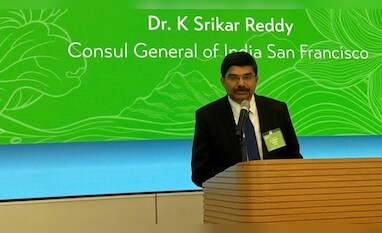
India's Ministry of External Affairs has officially announced the appointment of Dr. K Srikar Reddy as the next Ambassador of India to the State of Qatar. This significant diplomatic posting comes at a key time as India and Qatar have mutually agreed to explore the establishment of a bilateral Full Economic Partnership Agreement (CEPA). The combination of this high-level diplomatic change and the ambitious economic initiative clearly signals a period of deepening strategic ties between the two nations. This development is a direct continuation of recent high-level engagements that have been specifically aimed at expanding cooperation across a multitude of sectors, reflecting a concerted effort to strengthen the bilateral relationship. Dr. Reddy, who currently serves as the Consul General of India in San Francisco, California, brings a wealth of diplomatic experience to this key role, showing the importance India places on its relationship with Qatar. His appointment is anticipated to further facilitate the ongoing dialogues and initiatives between New Delhi and Doha.
Energy Partnership Strengthened
The energy sector remains a cornerstone of the India-Qatar relationship, with Qatar holding a critical position as a reliable supplier to India. In the fiscal year 2024-25, Qatar was unequivocally India's largest source of liquefied natural gas (LNG), delivering a substantial 11.2 million tonnes. This impressive volume constituted approximately 41 percent of India's total LNG imports, which collectively exceeded 27 million tonnes for the specified period. The long-term nature and strategic importance of this energy partnership were robustly reaffirmed in February 2024. During this time, Petronet LNG, India's largest LNG importer, successfully renewed a key 7.5-million-tonne-per-annum LNG supply agreement with QatarEnergy. This landmark agreement extends for an impressive 20 years, commencing in 2028 and continuing through to 2048, effectively securing a significant and stable portion of India's future energy requirements. The renewal of this agreement notes the mutual commitment to energy security and long-term economic collaboration.
However, the stability of these critical energy supplies faced an unexpected disruption in March 2026. Iranian strikes targeted energy facilities within Qatar, specifically impacting the vital Ras Laffan Industrial City complex, a key hub for Qatar's energy infrastructure. Following these unprecedented attacks, QatarEnergy was compelled to declare force majeure on affected LNG supplies. This declaration, a standard contractual provision, indicated that the company was unable to fulfill its contractual obligations due to unforeseen circumstances that were entirely beyond its control. In direct response to QatarEnergy's declaration, Petronet LNG subsequently issued its own force majeure notices to its Indian offtakers. These included major state-owned entities such as GAIL, Indian Oil Corporation, and Bharat Petroleum, signaling potential widespread impacts on India's energy sector and the need for contingency planning. The incident showed the geopolitical sensitivities surrounding global energy supply chains and the potential vulnerabilities even for established partnerships.
Broader Economic and Diplomatic Ties
Beyond the energy sector, India and Qatar share ambitious economic goals, having established a clear target to significantly double their bilateral trade turnover. The aim is to increase trade from approximately $14 billion to an impressive $28 billion by the year 2030, reflecting a strong commitment to economic growth and diversification. This significant economic ambition is complemented by a series of high-level diplomatic exchanges that show the depth of the bilateral relationship. Qatar’s Amir, Sheikh Tamim bin Hamad Al Thani, undertook a significant state visit to India in February 2025, a visit that served to further strengthen and solidify bilateral relations across various domains. During this important period, India and Qatar reached a key agreement to expedite negotiations on a Bilateral Investment Treaty. This agreement signals a concerted effort to enhance investment protection and facilitate increased investment flows between the two countries, fostering a more secure and predictable environment for businesses. Additionally, India's External Affairs Minister, S. Jaishankar, visited Qatar in 2024, contributing to the ongoing high-level dialogue and reinforcing the strategic partnership. The diplomatic relations between India and Qatar were first formally established in 1973, laying the foundational groundwork for the current extensive and multifaceted engagement that spans decades of cooperation and mutual understanding. This long history provides a stable base for future collaborations and strategic alignment.
Community and Future Outlook
Dr. K Srikar Reddy's appointment as India's next envoy to Qatar is poised to enhance these multifaceted ties. His current role as the Consul General of India in San Francisco, California, has prepared him for the complexities of international diplomacy, and his transition to Doha is expected to bring renewed vigor to bilateral interactions. The ongoing diplomatic engagements between the two nations are a testament to their strong relationship. For instance, in May 2025, Prime Minister Narendra Modi and the Amir of Qatar engaged in a telephone conversation following the tragic Pahalgam terror attack, an interaction that clearly showed the continuous high-level communication and mutual concern between the leadership of both countries.
The Indian community in Qatar is exceptionally substantial, numbering more than 800,000 individuals, making it one of the largest Indian diasporas globally. This vibrant and extensive community plays an indispensable role in strengthening the cultural, social, and economic ties between India and Qatar. Their contributions are vital, not only to Qatar's economy but also in fostering a deeper understanding and appreciation of each other's cultures. The presence of such a large and active community further deepens the bilateral relationship, acting as a living bridge between the two nations and ensuring a continuous flow of people-to-people connections. The collective efforts in diplomacy, trade, energy, and community engagement highlight a promising future for India-Qatar relations, with Dr. Reddy's ambassadorship set to play a key role in navigating this evolving partnership.