From the archive
Media Figures Hail Father Amir's Legacy in Building Modern Qatar
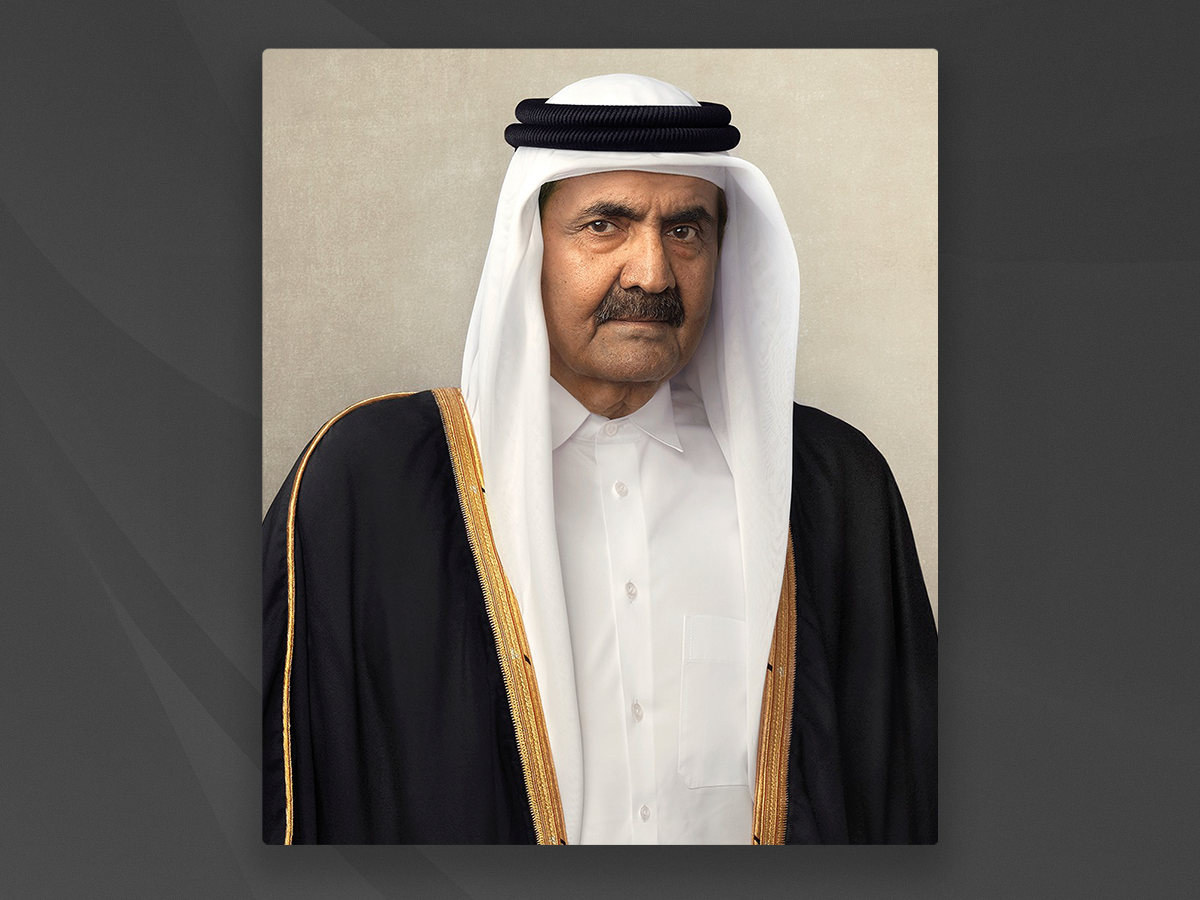
Media figures praise the legacy of HH the Father Amir Sheikh Hamad bin Khalifa Al-Thani, highlighting his pivotal role in building modern Qatar and its…
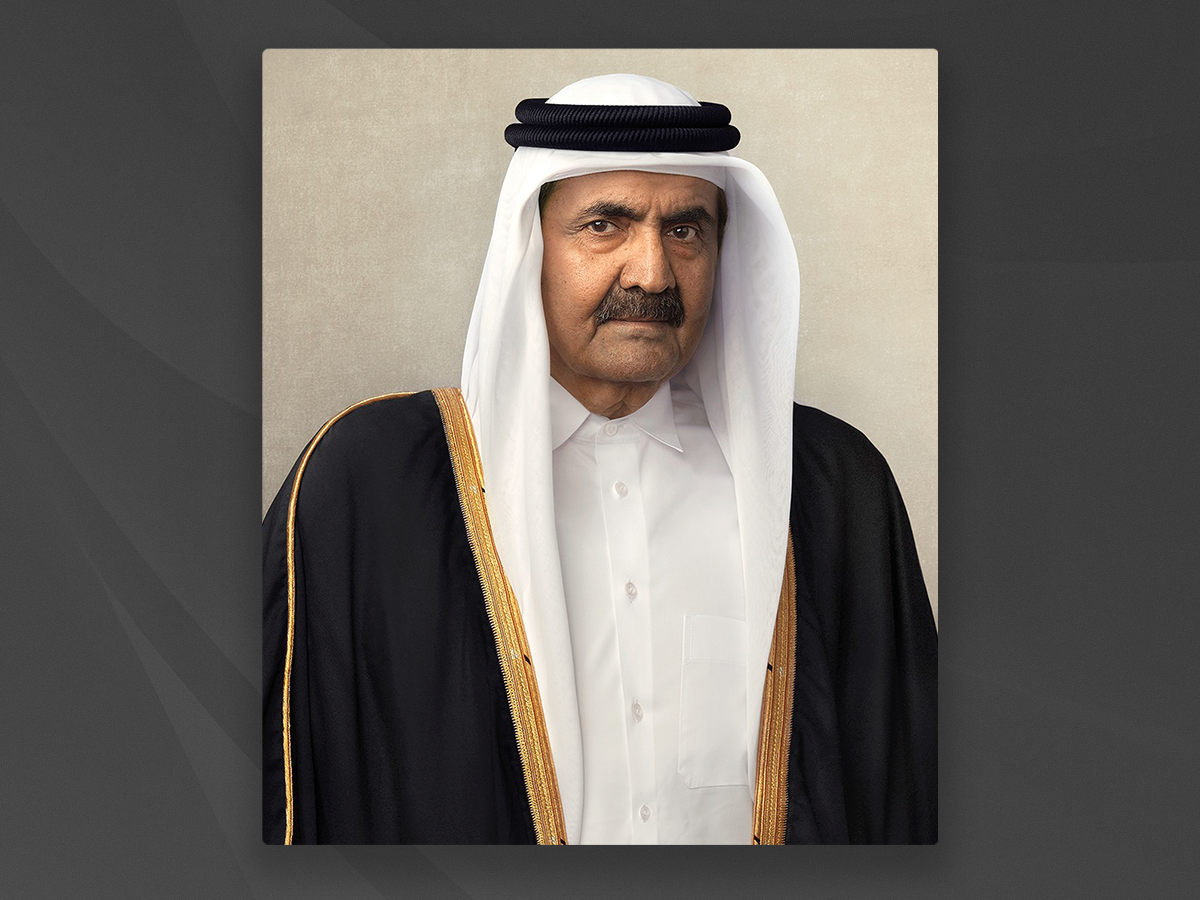
Media figures have lauded HH the Father Amir Sheikh Hamad bin Khalifa Al-Thani for his key role in building modern Qatar and consolidating its regional and international standing. Observers note he led Qatar's transformation into an influential player on both Arab and international stages, successfully shifting the nation from a smaller state to one with an active and influential regional presence.
Mahmoud Alloush, speaking to France 24 TV channel, stated that HH the Father Amir "succeeded in transforming Qatar from a small state into one with an active and influential presence among the regional powers that have contributed to shaping the political landscape in the region over the past decades." Writer Dr. Abdulhamid Al Shayji, in an article for the Kuwaiti newspaper Al-Qabas, affirmed that HH the Father Amir "represented a significant era in modern Qatar's history, during which the country witnessed major transformations in the fields of development, economy, education, and consolidation of its regional and international presence." Palestinian writer and political analyst Ibrahim Al Madhoun added that HH the Father Amir "holds a special place in the hearts of Palestinians for his political and humanitarian support of the Palestinian cause during what he described as critical and dangerous periods."
Transformative Leadership and Vision
Writer Dr. Abdulhamid Al Shayji noted that HH the Father Amir Sheikh Hamad bin Khalifa Al-Thani left a prominent mark on modern Qatar's history, a period during which the country witnessed major transformations in development, economy, education, and its regional and international presence. Writer Abdulrahman Al Otaibi further noted that HH the Father Amir's reign saw the launch of major modernization projects and the strengthening of media presence with the launch of Al Jazeera. Omani writer Nasser Al Abri, in an article published in Oman's Alroya Newspaper, stated, "HH the Father Amir believed that true wealth was not only based on natural resources, but that it also included their sound management and using these natural resources to serve the people."
HH the Father Amir led a national project that invested energy revenues towards building schools, universities, hospitals, research centers, and modern infrastructure. Saudi writer Mirza Al Khuwaildi, writing in the London-based Asharq Al-Awsat newspaper, explained, "Sheikh Hamad's policies relied on investing gas wealth to build a strong economy and diversify sources of income." Al Khuwaildi added that during Sheikh Hamad's years in power, the country's GDP more than doubled, per capita income rose, and liquefied natural gas exports ushered in a new era in the country's history. The country's GDP increased more than twenty-fourfold during his reign, transforming Qatar into one of the world's largest exporters of LNG.
Indonesian researcher Kurniawan Arif believes HH the Father Amir was the architect of modern Qatar's renaissance. Arif stated in an article on the British website Middle East Monitor, "HH the Father Amir was the architect of modern Qatar's renaissance, reshaping the foundations of the concept of sovereignty and proving that a small state can become a globally significant and indispensable player on the international stage, not through military might, but by redefining the true meaning of power in the 21st century."
Externally, Sheikh Hamad's foreign policy was based on mediation, openness, and strengthening diplomatic and economic presence. Al Khuwaildi observed that Qatar adopted a more active policy in regional affairs and played a mediating role in several African and international conflicts, including the Lebanese crisis during both the 2006 war and the 2008 political crisis. He also noted that Qatar took significant political stances in support of the Palestinian cause, particularly providing economic support to the Gaza Strip and creating a conducive environment for negotiations to end the war there. Qatari policy over the past decades has relied on employing soft power and building a broad network of diplomatic relations.
Regional and Global Diplomacy
HH the Father Amir Sheikh Hamad bin Khalifa Al-Thani modernized the country's political structure and focused on soft power through culture and diplomacy. Qatar played mediating roles and reduced tensions in several crises under his leadership. Lebanese journalist Nader Ezzeddine stated in an article published in Lebanon's Annahar newspaper, "during HH the Father Amir's reign, Qatar led mediation efforts involving Lebanon, Sudan, Palestine, and Yemen. The State of Qatar hosted conferences, negotiations, and diplomatic initiatives, with mediation becoming one of the defining features of Qatari foreign policy as well as a means of strengthening the country's security by making it a sought-after party in crisis management." Qatar specifically played a mediating role in the Lebanese crisis during both the 2006 war and the 2008 political crisis, also contributing to the reconstruction of Lebanon following the 2006 conflict.
HH the Father Amir maintained contact with and provided political and moral support to Palestinian President Yasser Arafat during his siege. Palestinian writer and political analyst Ibrahim Al Madhoun noted that HH the Father Amir "holds a special place in the hearts of Palestinians for his political and humanitarian support of the Palestinian cause during what he described as critical and dangerous periods." HH Sheikh Hamad bin Khalifa played a prominent role during the 2008-2009 war on Gaza through his political stances and by hosting an emergency Arab summit. He was also the first Arab leader to visit Gaza in 2012, marking a significant diplomatic gesture. Writer Dr. Abdulhamid Al Shayji, in an article in the Kuwaiti newspaper Al-Qabas, further elaborated that HH the Father Amir "represented a significant era in modern Qatar's history, during which the country witnessed major transformations in the fields of development, economy, education, and consolidation of its regional and international presence, while maintaining its deep-rooted Gulf identity and fraternal relations with its brothers."
Praise from Arab and International Voices
International media outlets and regional commentators have extensively recognized HH the Father Amir Sheikh Hamad bin Khalifa Al-Thani's impact on Qatar. The British newspaper The Times stated that HH the Father Amir led the modernization of Qatar, transforming it into an influential player on the international stage. The Times considered him the architect of Qatar's modern renaissance, having led its transformation from a small Gulf peninsula into a modern, energy-rich, and stable nation with a significant role in international investment and diplomacy. The Anadolu Agency described HH the Father Amir as the leader who spearheaded Qatar's transformation, making it more prominent regionally and globally through an economic shift based on natural gas revenues and infrastructure investments, as well as proactive foreign policy initiatives, playing an active role on both regional and international levels.
Saudi writer Mirza Al Khuwaildi stated that HH the Father Amir's name is synonymous with the greatest transformation in modern Qatar's history. Omani writer Nasser Al Abri said HH the Father Amir's reign was one of the most significant transformative periods in Qatar's history. Spanish journalist Alberto Ochoa stated that under HH the Father Amir, Qatar transformed into a global diplomatic and investment powerhouse. Palestinian writer and political analyst Ibrahim Al Madhoun stated that HH the Father Amir holds a special place in the hearts of Palestinians for his political and humanitarian support. Al Madhoun added, "Palestinians hold HH the Father Amir in high esteem and deep affection, noting that one of the most prominent examples of this was during the siege of the late Palestinian President Yasser Arafat, when HH the Father Amir maintained contact with him and provided political and moral support."
Iraqi academic Adel Al Ghurairi stated that the passing of HH the Father Amir represents a loss of a figure who played a key role in building the modern state. Al Ghurairi added that Qatari policy over the past decades has relied on employing soft power and building a broad network of diplomatic relations with various regional and international parties, which enabled Doha to play mediating roles and reduce tensions in several crises. Mahmoud Alloush, a researcher at the Policy Analysis Centre, stated that Qatar as a modern and contemporary state that has achieved a remarkable renaissance over the past decades would be incomplete without mentioning HH the Father Amir Sheikh Hamad bin Khalifa Al-Thani, who left a clear mark on the major transformations the country has witnessed on the economic and political levels. Spanish writer Eduardo Alvarez considered the biography of HH the Father Amir to be that of a leader with great political acumen, adding in an analysis published in the Spanish newspaper El Mundo that the Father Amir was the architect of remarkable initiatives in an energy-rich region, transforming a remote location into an international hub in record time.
Enduring Impact and Development
During HH the Father Amir Sheikh Hamad bin Khalifa Al-Thani's leadership, Qatar experienced a full renaissance across infrastructure, culture, economy, and sports, which notably culminated in the nation hosting the World Cup. Qatar also became a scientific and cultural hub, attracting leading global academic institutions. Education City, established during this period, successfully drew branch campuses of international universities to the country. Economically, Qatar's GDP more than doubled during his years in power, and per capita income rose significantly. Liquefied natural gas exports ushered in a new era for the country’s economic history. HH the Father Amir also successfully secured Doha's selection to host the 2022 FIFA World Cup, further cementing Qatar's global presence.