From the archive
Qatar Acquires KC-46A Tankers, Bolstering Air Patrols Amid Regional Tensions
Qatar acquires four KC-46A Pegasus tankers from the US for $4.5 billion, enhancing its air patrol capabilities amid regional tensions.
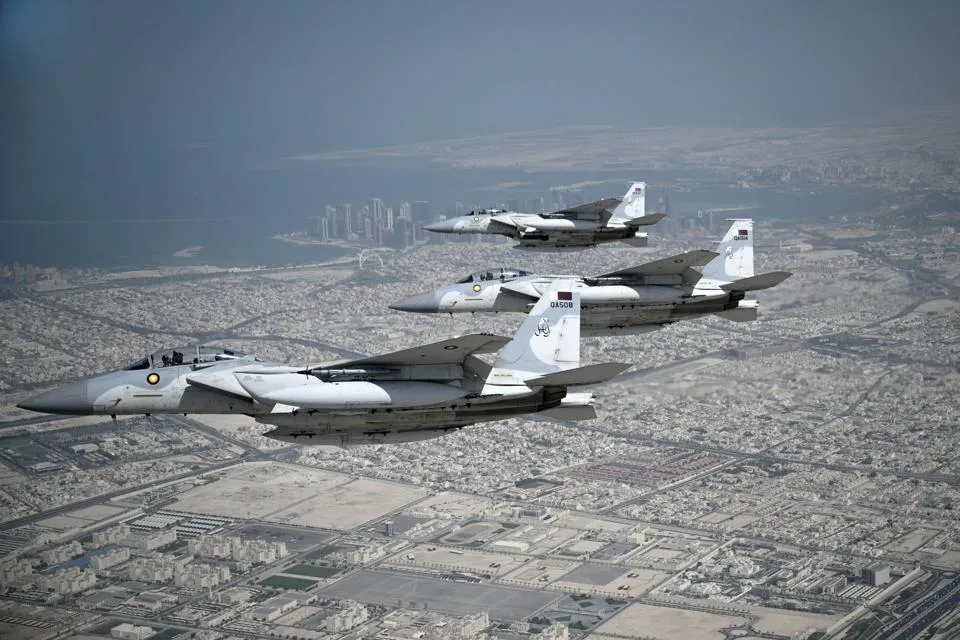
Qatar is set to acquire four KC-46A Pegasus aerial refueling and strategic transport aircraft, a move that will significantly bolster the Qatar Emiri Air Force's capabilities. The United States State Department announced its approval of the possible deal on August 20, detailing it as part of an estimated $4.5 billion agreement. This significant procurement decision confirms that Qatar has ordered four KC-46A Pegasus aerial refueling and strategic transport aircraft. The acquisition will introduce a dedicated tanker fleet to Qatar, which currently operates without such assets. Indeed, the Qatar Emiri Air Force presently lacks any tanker fleet, making this acquisition a foundational step in its strategic development. This strategic procurement comes as regional tensions continue to influence defense postures across the Persian Gulf, noting Qatar's commitment to enhancing its national security.
The KC-46A aircraft, manufactured by Boeing, will provide Qatar with aerial refueling support, extending the operational range and endurance of its fighter jets and other aircraft. The deal also includes associated equipment and services, enhancing Qatar's logistical and operational independence. The State Department's approval, formally announced in an August 20 press release, shows ongoing defense cooperation between the United States and Qatar. The new tankers are expected to improve Qatar's ability to conduct prolonged air patrols and participate in coalition operations, addressing a critical gap in its current air force structure. This capability is vital for maintaining air superiority and projecting influence in a volatile region.
Advanced Capabilities and Components
The acquisition package for Qatar's KC-46A aircraft includes eight PW4062 turbofan engines, providing the necessary power for the tankers. These powerful engines ensure the KC-46A can operate efficiently across various mission profiles and carry substantial loads. For enhanced situational awareness and self-protection, the deal incorporates 10 AN/ALR-69A radar warning receivers. These advanced systems are key for detecting and identifying radar threats, providing pilots with timely warnings. Defensive capabilities are further strengthened by the inclusion of 15 Guardian Laser Transmitter Assemblies, which are components of Large Aircraft Infrared Countermeasure (LAIRCM) systems designed to protect against missile threats. These systems work by confusing incoming heat-seeking missiles, diverting them away from the aircraft. Additionally, eight LAIRCM system processor replacements are part of the agreement, ensuring the long-term operational readiness and maintainability of these critical countermeasures. The full nature of this package reflects a focus on both offensive reach and defensive resilience for Qatar's new tanker fleet.
Beyond its refueling role, the KC-46A is a versatile platform capable of carrying significant cargo. Each aircraft can transport up to 65,000 pounds of cargo, supporting logistical operations and humanitarian missions. This dual capability makes the KC-46A an invaluable asset, not only for military operations but also for rapid deployment of aid or equipment in emergencies. The expanded capabilities offered by these tankers are expected to significantly alter Qatar's military posture. The Jerusalem Post noted that the addition of KC-46As could allow Qatar's air force "to conduct long-range strike missions far beyond its borders, marking a dramatic shift in its operational reach." This assessment notes the strategic importance of the acquisition in regional power dynamics.
Strategic Rationale: Sustained Air Operations
Qatar has been actively modernizing its air force, acquiring advanced fighter jets from multiple international suppliers. From the United States, Doha has acquired F-15QA (Qatar Advanced) jets, significantly boosting its aerial combat capabilities. These F-15QAs represent a advanced variant of a proven fighter platform. Further diversifying its fleet, Qatar has also acquired Dassault Rafales from France, adding a potent multirole fighter aircraft to its inventory. The Rafales are known for their versatility in air-to-air and air-to-ground missions. Complementing these acquisitions, Doha has procured Eurofighter Typhoons from the United Kingdom, strengthening its air defense and strike capabilities. The Typhoons are high-performance interceptors and ground-attack aircraft, providing a strong layer of defense.
These acquisitions of advanced fighter aircraft necessitate strong aerial refueling support to maximize their operational range and endurance. The KC-46A tankers are expected to provide this critical capability, allowing Qatar's fighter jets to conduct extended missions and maintain a persistent presence in the air. The ability to refuel in-flight will significantly enhance the operational flexibility of the F-15QA, Dassault Rafale, and Eurofighter Typhoon fleets, enabling them to cover greater distances and remain on station for longer periods. This capability transforms these advanced fighters from short-range defenders into potential long-range projectors of air power.
The strategic implications of these new tankers, particularly in conjunction with Qatar's modern fighter fleet, have been noted in analyses of regional dynamics. One article observes that the deal "simultaneously hands Doha a long-range force-projection capability toward Israel that it previously did not possess." This assessment suggests a potential shift in the regional balance of power, granting Qatar the capacity for operations at greater distances. The extended reach provided by the KC-46A Pegasus aircraft could enable Qatar's air force to operate beyond its immediate borders for sustained periods, changing calculations for both allies and potential adversaries in the Middle East.
Regional Context and Security Concerns
Regional security dynamics have intensified, influencing defense postures across the Persian Gulf. In January 2022, the United Arab Emirates endured its first drone and missile attacks from the Houthis in Yemen, noting the evolving nature of threats in the region. These attacks showed the vulnerability of even well-defended nations to asymmetric warfare tactics. Abu Dhabi subsequently determined that the only reliable method to intercept Houthi drones involved dispatching its F-16s and Mirage 2000s on continuous patrols, a resource-intensive solution that emphasizes the need for persistent air presence.
Further regional instability was observed during the June 2025 Israel-Iran 12-day war, when Iran forewarned a retaliatory strike on Qatar's Al-Udeid airbase. This threat prompted immediate defensive actions, with Qatar scrambling F-15QAs and AH-64E Apache helicopter gunships to search for incoming drones, demonstrating its readiness to respond to aerial threats. During this conflict, Iran also fired a salvo of ballistic missiles, which Qatar's MIM-104 Patriot PAC-3 surface-to-air missiles successfully intercepted. This interception showcased the effectiveness of Qatar's ground-based air defense systems against sophisticated threats. Despite these defensive measures, Qatar's air force and air defense proved unable to prevent an Israeli airstrike on Doha targeting Hamas political leaders on September 9, 2025, showing the complexities and limitations of even advanced defense capabilities in a multi-layered conflict.
At the onset of the 2026 Iran war, Qatar's F-15QAs intercepted two Iranian Su-24 Fencer tactical bombers that were heading toward Al-Udeid airbase, successfully defending a critical regional asset. The conflict also saw Saudi Arabia and the UAE secretly bombing Iranian targets, indicating a broader regional involvement. Following continued Iranian attacks after the April 8 ceasefire, Kuwait and Bahrain also bombed Iranian targets in July, further illustrating the widespread impact and interconnectedness of regional security challenges. These events collectively highlight the volatile geopolitical landscape in which Qatar is enhancing its military capabilities, making the acquisition of assets like the KC-46A Pegasus tankers a critical component of its long-term defense strategy.