From the archive
Qatar Affirms Commitment to Middle East Peace and Global Partnerships at UN
Qatar affirms its commitment to Middle East peace through diplomacy and international partnerships, focusing on mediation, humanitarian aid, and…
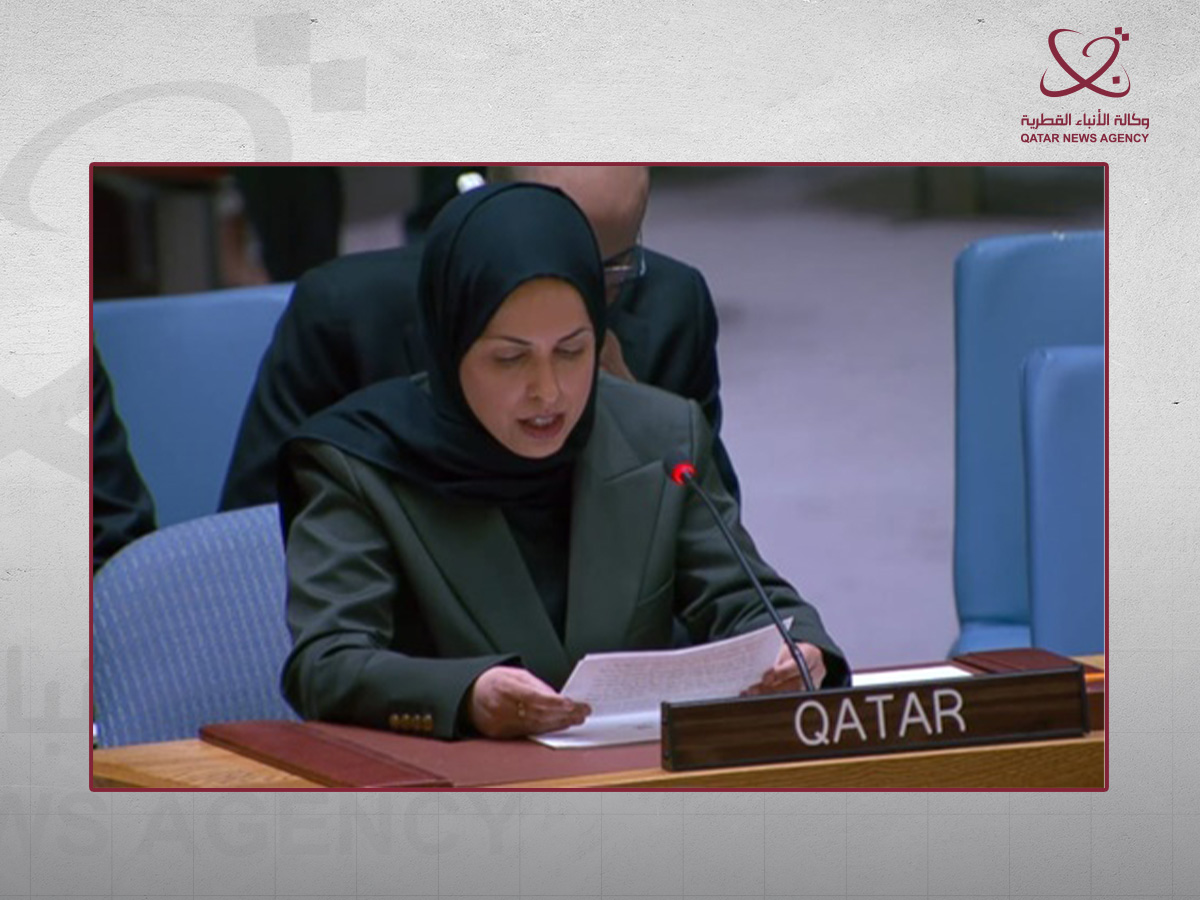
Qatar's Permanent Representative to the UN, Sheikha Alia Ahmed bin Saif Al Thani, delivered a statement at the UN Security Council during a high-level open debate on 'Sustaining International Peace and Security: Promoting Political Solutions in the Middle East: Mediation and Dialogue for Lasting Peace' in New York. The debate showed the critical importance of diplomatic engagement and peaceful resolution mechanisms in a region frequently marked by complex geopolitical challenges. Sheikha Alia Ahmed bin Saif Al Thani affirmed Qatar's commitment to continued coordination of its humanitarian and development efforts with partners. She stated that this coordination aims to ensure an effective response to urgent needs, support recovery and reconstruction, and enhance opportunities for sustainable peace in the Middle East. This strategic approach notes Qatar's dedication to fostering stability and prosperity beyond its borders, working collaboratively with international and regional stakeholders.
Mediation as Foreign Policy Cornerstone
Mediation and peaceful dispute resolution form a cornerstone of Qatar's foreign policy, rooted in its permanent constitution and commitment to the United Nations Charter. This foundational principle guides the nation's diplomatic endeavors, emphasizing dialogue over confrontation. Qatar has consistently contributed to peaceful settlement efforts across the Middle East and globally, facilitating ceasefire agreements, prisoner exchanges, and peace agreements that have brought tangible positive outcomes. The nation reiterated the necessity for all parties to respond to ongoing mediation efforts, aiming to address crises through peaceful means and dialogue. These efforts are seen as vital pathways to de-escalation and the establishment of lasting stability.
Qatar, alongside Egypt, the United States, and Turkey, undertook joint mediation efforts that led to the ceasefire agreement signed in the Gaza Strip in October. This collaborative diplomatic initiative demonstrated the power of multilateral engagement in addressing urgent humanitarian and security concerns. The agreement represented a key step towards alleviating suffering and creating a window for further negotiations.
Qatar stresses the necessity for all parties to fulfill their commitments and fully implement this agreement, ensuring the opening of crossings for a sustainable and uninterrupted flow of humanitarian aid to the Strip. The consistent delivery of aid is critical for the civilian population, and Qatar continues to advocate for unimpeded access. Qatar reiterates its steadfast position calling for a just, full, and lasting solution to the Palestinian issue. This solution, based on the two-state solution, aligns with international law and relevant UN resolutions. Such a resolution should lead to the realization of the Palestinian people's right to self-determination and the establishment of their independent state on the June 4, 1967 borders, with East Jerusalem as its capital. This position reflects a long-standing commitment to international legality and human rights, aiming to secure a dignified future for the Palestinian people.
Addressing Regional Tensions
Qatar continues its efforts with regional and international counterparts to ensure the continuation of the ceasefire between the United States of America and the Islamic Republic of Iran, which resulted from mediation efforts by the Islamic Republic of Pakistan. These ongoing diplomatic engagements are critical for preventing a return to escalation and securing freedom of navigation in the Strait of Hormuz, a vital international waterway for global trade and energy supplies. Maintaining stability in this strategic maritime choke point is a key objective for regional and global security. The nation strongly condemned the Iranian attacks on the Hashemite Kingdom of Jordan, the Kingdom of Bahrain, and the State of Kuwait, considering them a flagrant violation of the sovereignty of these states and a breach of international law. Such aggressive actions undermine regional stability and the principles of peaceful coexistence between nations.
Qatar reaffirmed the importance of full compliance with Security Council resolutions 552 and 2817. These resolutions are key for upholding international maritime law and ensuring the safety of passage through critical waterways. The state reiterated the necessity of respecting freedom of navigation and the right to safe passage through the Strait of Hormuz as a natural international waterway. This principle is fundamental to global commerce and the free flow of goods. Qatar stated that any attempt to close the Strait of Hormuz or impose a legal interpretation limiting freedom of navigation therein is a violation of international law, including the UN Convention on the Law of the Sea. This firm stance shows Qatar's commitment to international legal frameworks governing maritime conduct.
Security Council's Key Role
Qatar reaffirmed its steadfast commitment to the Security Council, expressing support for its efforts to achieve a final resolution to ongoing issues. The state emphasized that the Security Council's role is key in developing peaceful political solutions, acting as the primary body responsible for maintaining international peace and security. Qatar believes that the Council's effectiveness hinges on its ability to act decisively and cohesively in the face of global challenges. The nation noted the importance of the Security Council's mandate and its unique position in fostering diplomatic solutions to complex conflicts.
One of the key lessons drawn from the Council's successes, according to Qatar, is the importance of its unity. This unity was powerfully demonstrated in the adoption of resolution 2803, which addressed the situation in Gaza. Qatar noted this as an exemplary instance of how a unified Council can effectively contribute to international peace and security, particularly in times of acute crisis. The nation showed the necessity for this cohesion to be maintained in addressing complex global challenges, asserting that a fragmented Council risks undermining its own authority and capacity to respond effectively. Qatar's statement at the UN Security Council thus served as a full articulation of its foreign policy principles, its active engagement in regional and global mediation efforts, and its unwavering support for international legal frameworks and institutions dedicated to peace and security.