From the archive
Qatar Calls US Sanctions on Iran Unilateral, Urges Mediation
Qatar's Foreign Ministry calls US sanctions on Iran unilateral and urges mediation for de-escalation and peaceful resolutions.
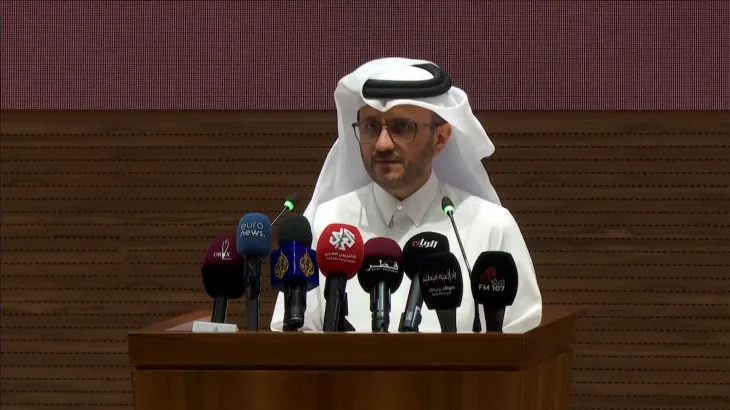
Qatar's Foreign Ministry spokesperson Majed al-Ansari stated in a briefing on Tuesday that the United States' sanctions against Iran are unilateral. Al-Ansari's comments come as Qatar continues to advocate for diplomatic solutions to regional tensions, emphasizing the need for mediation in disputes involving Iran. The spokesperson called for international efforts to de-escalate the situation and seek peaceful resolutions. This statement was made public in an article published on August 25, 2026. Qatar's consistent calls for dialogue show its commitment to fostering stability in a volatile region.
Qatar's Stance on Sanctions
Qatar considers the United States' sanctions against Iran to be unilateral, according to Majed al-Ansari, spokesperson for Qatar's Foreign Ministry. Al-Ansari articulated this position during a briefing on Tuesday. This perspective notes Qatar's view that such measures, imposed without broader international consensus, can often complicate diplomatic efforts rather than facilitate them. Qatar has consistently advocated for diplomatic solutions to regional tensions, emphasizing the importance of mediation in addressing disputes that involve Iran. The spokesperson showed the need for international efforts aimed at de-escalating the current situation and pursuing peaceful resolutions. This statement was publicly disseminated in an article published on August 25, 2026. Qatar's stance notes its ongoing role as a potential mediator in the region, particularly in matters concerning Washington D.C. And Tehran. The country has frequently called for dialogue as the primary means to resolve complex geopolitical challenges and prevent further instability. This approach is rooted in the belief that direct engagement and negotiation are more effective long-term strategies than isolation. Al-Ansari's comments reiterate Qatar's commitment to fostering an environment conducive to negotiations rather than punitive measures. The Gulf state maintains that such unilateral actions often complicate, rather than simplify, the path to lasting peace in the Middle East. It stresses that a full resolution requires inclusive discussions among all relevant parties.
Call for Mediation Efforts
Qatar urged mediation efforts to resolve the crisis involving the United States and Iran. Doha has consistently positioned itself as a neutral party in regional disputes, advocating for dialogue and diplomatic solutions. This neutrality allows Qatar to serve as a credible interlocutor, capable of facilitating communication channels between estranged parties. The call for mediation aligns with Qatar's established foreign policy, which prioritizes de-escalation and peaceful resolutions over punitive actions. This approach aims to create an environment where negotiations can address underlying issues and mitigate tensions between Washington D.C. And Tehran. Qatar believes that sustained diplomatic engagement is key for building trust and finding common ground, even amidst significant disagreements. Qatar's officials have frequently emphasized that direct engagement among all parties is essential to preventing further instability in the Middle East. They argue that an absence of open channels for communication only increases the risk of miscalculation and escalation. Such mediation efforts are viewed by Qatar as critical for fostering long-term regional security and stability.
Broader Regional Context
Qatar has frequently emphasized the need for dialogue as the primary means to resolve complex geopolitical challenges and prevent further instability in the Middle East. The country's officials have consistently advocated for diplomatic solutions, positioning Doha as a neutral party in regional disputes. This strategic neutrality enables Qatar to play a constructive role in facilitating difficult conversations and bridging divides. This approach aligns with Qatar's established foreign policy, which prioritizes de-escalation and peaceful resolutions over punitive actions. Qatar maintains that such unilateral actions often complicate, rather than simplify, the path to lasting peace in the region. The Gulf state's commitment to fostering an environment conducive to negotiations is a cornerstone of its engagement in matters concerning Washington D.C. And Tehran. It shows a belief that even the most entrenched conflicts can benefit from structured dialogue. Such mediation efforts are viewed by Qatar as critical for fostering long-term regional security and stability, ultimately contributing to a more peaceful and prosperous Middle East.