From the archive
Qatar Chamber Explores Enhanced Trade and Investment Ties with Brazil
Qatar Chamber and the Arab-Brazilian Chamber of Commerce met in Sao Paulo to boost trade and investment, focusing on agriculture, food production, and…
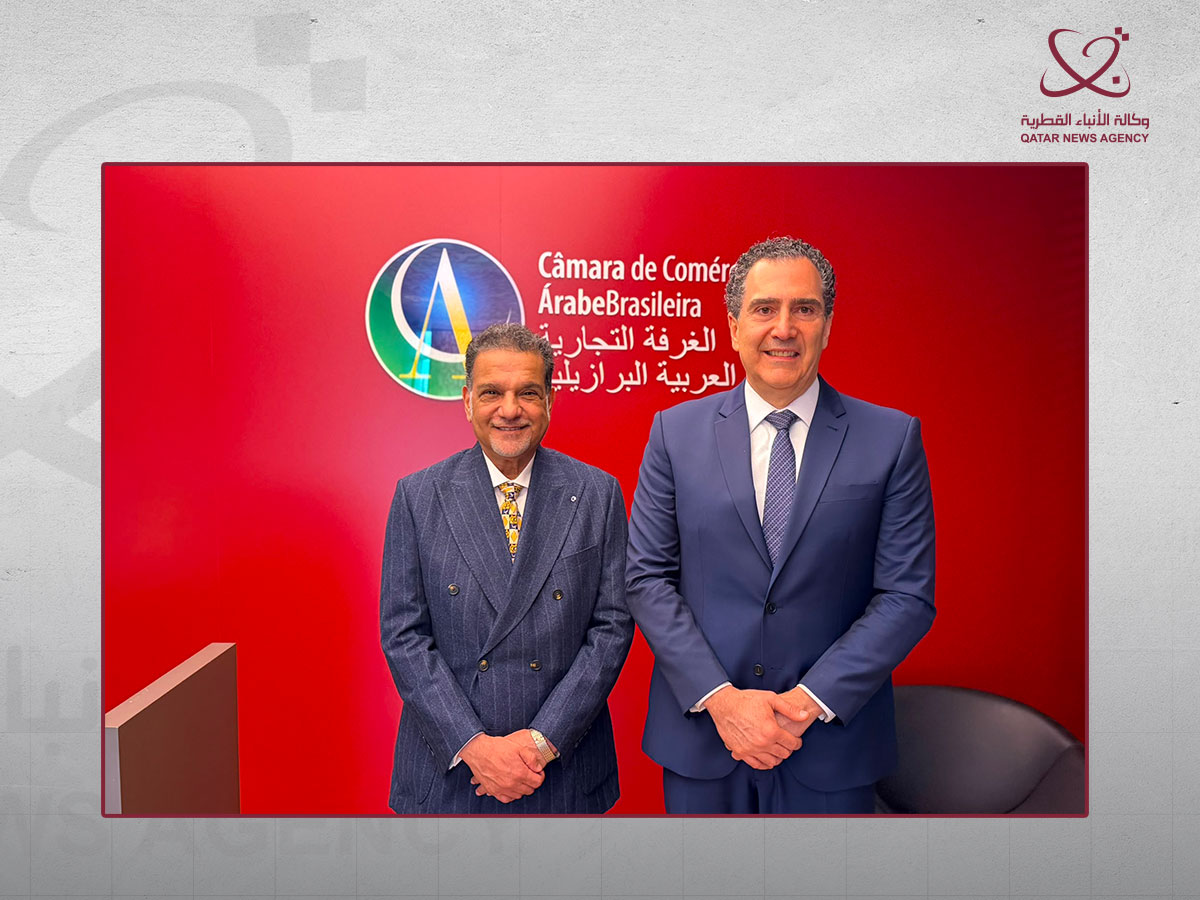
The Qatar Chamber and the Arab-Brazilian Chamber of Commerce (ABCC) met in Sao Paulo to discuss strengthening trade and investment relations between Qatar and Brazil. This significant gathering aimed to foster closer economic ties and explore new avenues for collaboration between the two nations. Discussions focused on expanding cooperation across key sectors including agriculture, food production, halal-certified products, food security, logistics, and innovation. These areas were identified as having substantial potential for mutual benefit and growth. Qatar's imports from Brazil currently include refined petroleum products, fertilizers, and aluminum, noting an existing trade relationship that both parties seek to expand. Mohamed bin Ahmed Al Obaidli, a Qatar Chamber Board Member, noted, "Qatari investments in Brazil have exceeded USD 7 billion since 2010 in several sectors and pointed to the presence of Brazilian companies operating in Qatar across various sectors." This substantial investment shows the depth of economic engagement already present.
Deepening Sectoral Cooperation
The meeting in Sao Paulo saw the attendance of Qatar Chamber Board Member Mohamed bin Ahmed Al Obaidli and Arab-Brazilian Chamber of Commerce (ABCC) President William Dib. Their presence emphasized the high-level commitment from both organizations to advancing bilateral economic goals. Mohamed bin Ahmed Al Obaidli stated that "Qatar and Brazil enjoy strong relations, noting the wide-ranging opportunities to enhance trade and investment between both nations, particularly in food security, agriculture, food production, and logistics." He elaborated on the specific areas of focus, mentioning halal-certified products and innovation as key growth sectors. These discussions showed a shared vision for diversifying and strengthening the economic partnership.
Al Obaidli also noted Qatar's potential role in regional distribution. "Leveraging its strategic location, advanced infrastructure, and well-developed transport and logistics systems, Qatar has the potential of serving as a regional hub for storing and distributing Brazilian food products to markets across the Middle East and North Africa (MENA)," Al Obaidli noted. This strategic advantage positions Qatar as a key gateway for Brazilian goods seeking wider market access. The country's advanced facilities and efficient supply chains are key assets in this regard, offering significant logistical benefits to Brazilian exporters.
William Dib confirmed that "Brazil's main exports to Qatar include agricultural and food products, while imports from Qatar include refined petroleum products, fertilizers, and aluminum." He further added that "Qatari investments in Brazil have exceeded USD 7 billion since 2010 in several sectors and pointed to the presence of Brazilian companies operating in Qatar across various sectors." This reciprocal economic activity forms a strong foundation for future collaborations. Qatar's strategic location and logistics infrastructure offer an advantage for the distribution of Brazilian food products throughout the Middle East and North Africa, reinforcing the potential for Qatar to act as a regional distribution hub. The discussions in Sao Paulo specifically addressed how to best utilize these capabilities to enhance trade flows.
Bilateral Trade and Investment Landscape
Bilateral trade between Brazil and Qatar exceeded USD 400 million last year, demonstrating a healthy and growing economic relationship. William Dib, President of the Arab-Brazilian Chamber of Commerce (ABCC), confirmed that "Brazil's main exports to Qatar include agricultural and food products, while imports from Qatar include refined petroleum products, fertilizers, and aluminum." This trade relationship forms a foundational element of the economic dialogue between the two nations, providing a framework for further expansion and diversification. The balance of trade reflects the complementary nature of their economies, with Brazil supplying agricultural goods and Qatar providing energy-related products.
Qatari investments in Brazil have surpassed USD 7 billion since 2010, indicating a significant and sustained financial commitment. Dib noted that these investments are spread "in several sectors and pointed to the presence of Brazilian companies operating in Qatar across various sectors." The substantial Qatari capital flow into Brazil reflects a strategic interest in the South American economy, encompassing diverse industries such as energy, logistics, and real estate. These investments highlight a growing financial partnership beyond the direct exchange of goods, fostering job creation and economic development in Brazil. The presence of Brazilian companies in Qatar further solidifies the economic ties, indicating a reciprocal engagement in each other's markets and contributing to the diversification of Qatar's economy. This two-way investment flow shows the mutual trust and long-term vision shared by both countries.
Future Outlook and Strategic Links
Discussions between Qatari and Brazilian representatives included potential joint partnerships and investments. These collaborations would target sectors such as food production, processing, meat, poultry, animal feed, fertilizers, cold-chain solutions, logistics, and agricultural technology. The full nature of these discussions reflects a commitment to exploring every facet of potential economic cooperation. The possibility of establishing an electronic link between Qatar Chamber and the Arab-Brazilian Chamber of Commerce (ABCC) was also considered to facilitate future exchanges, streamlining communication and transaction processes. This digital connection would serve to enhance efficiency and transparency in bilateral trade and investment initiatives.
Both organizations agreed to maintain ongoing communication and coordination to identify new opportunities for trade and investment. This commitment to continuous dialogue is key for translating discussions into tangible economic outcomes. Mohamed bin Ahmed Al Obaidli previously noted that "Qatari investments in Brazil have exceeded USD 7 billion since 2010 in several sectors and pointed to the presence of Brazilian companies operating in Qatar across various sectors." This commitment shows the existing foundation for further economic integration and notes the potential for sustained growth in their partnership. The meeting concluded with a mutual understanding of the vast potential for strengthened economic ties, paving the way for increased trade, investment, and collaboration in critical sectors.