From the archive
Qatar Condemns Drone Strikes on Khartoum Airport, Citing International Law Violations
Qatar condemns drone strikes on Khartoum International Airport, calling them a violation of international law and a threat to civilian safety.
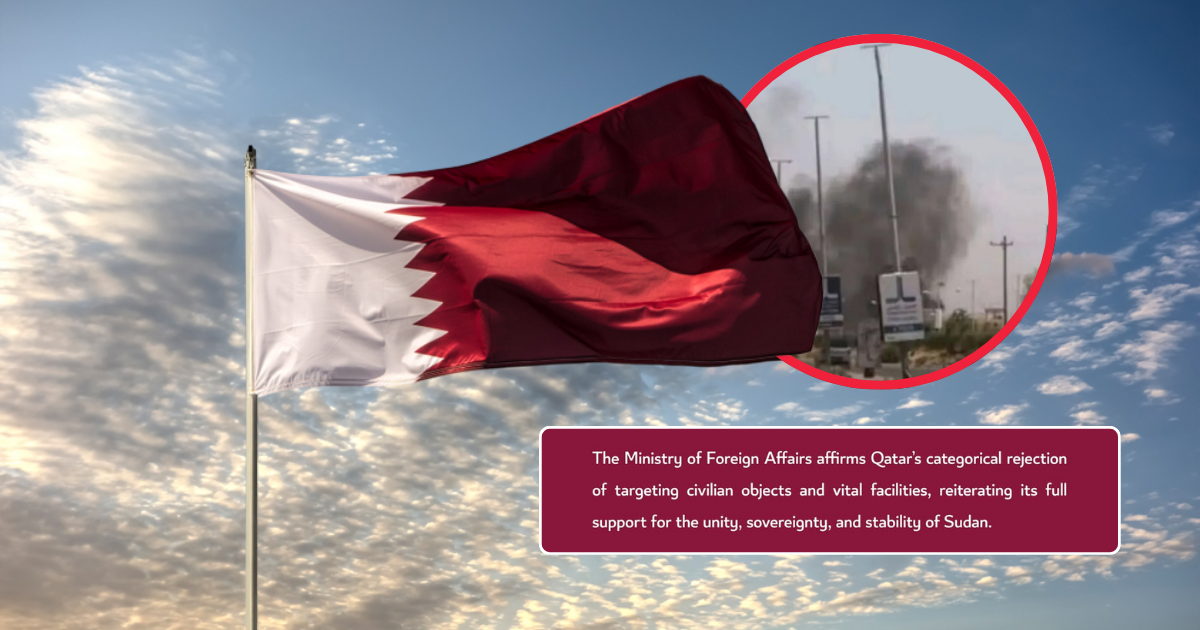
Drone attacks targeted Khartoum International Airport on Monday, marking a serious escalation just days after the airport received its first international flight in three years last week, following the army's recapture of the facility in March 2025. Social media video released on May 4, 2026, reportedly showed smoke rising after a drone attack at Khartoum airport. The recent drone strikes at the airport are being called a blatant violation of Sudan’s sovereignty, breaking fundamental rules of international law and the United Nations Charter. Sources indicated that targeting a country’s main gateway constitutes a serious escalation that puts everyone at risk. Authorities expressed categorical rejection of hitting civilian objects or vital facilities. Supporting the unity and stability of Sudan is the primary focus, with officials emphasizing that dialogue and peaceful means offer the best way forward, rather than further conflict.
Accusations Fly Amidst Escalation
Sudan's armed forces have accused Ethiopia and the United Arab Emirates (UAE) of involvement in the drone attack on Khartoum airport. Ethiopia's Foreign Ministry rejected these accusations as "baseless," denying any involvement and, in turn, accused Sudan's armed forces of supporting hostile actors and violating Ethiopia's territorial integrity. Sudan has previously alleged that Ethiopia allowed drones to be launched from its territory. In February, Reuters reported that Ethiopia was hosting a camp to train thousands of Rapid Support Forces (RSF) fighters and had upgraded the nearby Asosa airport for drone operations. Army spokesman Brigadier General Asim Awad Abdelwahab stated that the government possessed evidence indicating attacks on several states, beginning March 1, originated from Ethiopia's Bahir Dar airport. According to Abdelwahab, information from a drone downed in mid-March linked it to both Bahir Dar airport and the UAE. He further linked another drone, launched from the same airport, to the Monday attack on Khartoum. Brigadier General Abdelwahab asserted, "What Ethiopia and the UAE have done is direct aggression against Sudan and won't be met with silence."
Sudan has often accused the UAE of supporting Rapid Support Forces (RSF) paramilitaries, claims which the UAE denies. The UAE did not immediately respond to requests for comment regarding the recent allegations. Over the weekend, one drone killed five people in a civilian bus in southern Omdurman on Saturday, and another drone on Sunday killed family members of Abu Agla Keikal, a tribal militia leader allied with the army. Witnesses told Reuters that drones had struck Khartoum's twin city of Omdurman, as well as the cities of al-Obeid and Kenana, over the weekend. These strikes, launched since Friday, have hit both military targets and civilian areas across Khartoum.
Context of Sudan's Ongoing Conflict
The recent drone attack on Khartoum International Airport ended months of relative calm in the capital. Sudan's civil war is now in its third year, with strikes launched since Friday hitting both military targets and civilian areas across Khartoum. Drone warfare has become the primary tool of conflict in Sudan, according to reports. The war initially erupted after the Rapid Support Forces (RSF) and the Sudanese army disagreed over plans to integrate their forces and transition to democracy.
The RSF initially took control of Khartoum but was subsequently pushed out last year. Since then, the RSF has consolidated its control over the Darfur region and has opened a new front in the Blue Nile state. These recent attacks occur shortly after the defection of al-Nour al-Guba, a senior RSF commander. Residents in the area believed the Rapid Support Forces (RSF) were responsible for the new attacks. The RSF has not issued any comment regarding the incidents.
Humanitarian Impact and Regional Stability
The ongoing conflict has triggered what the United Nations describes as the world's worst humanitarian disaster. Protecting the region's prosperity requires an end to the violence and the adoption of a diplomatic path that respects all borders and ensures safety. There is a strong call for all sides to engage in dialogue and find a solution that addresses the aspirations of the people for peace and development. Sudan's Information Ministry previously stated that no one was wounded and no damage occurred from the latest attack on Khartoum International Airport. The international community continues to monitor the situation closely, urging de-escalation and a return to negotiations to prevent further loss of life and destabilization of the broader region.