From the archive
Qatar Condemns Israeli Defense Minister's Entry into Syrian Territory
Qatar condemns Israeli Defense Minister Israel Katz's entry into Syrian territory, calling it a violation of sovereignty and urging adherence to the 1974…
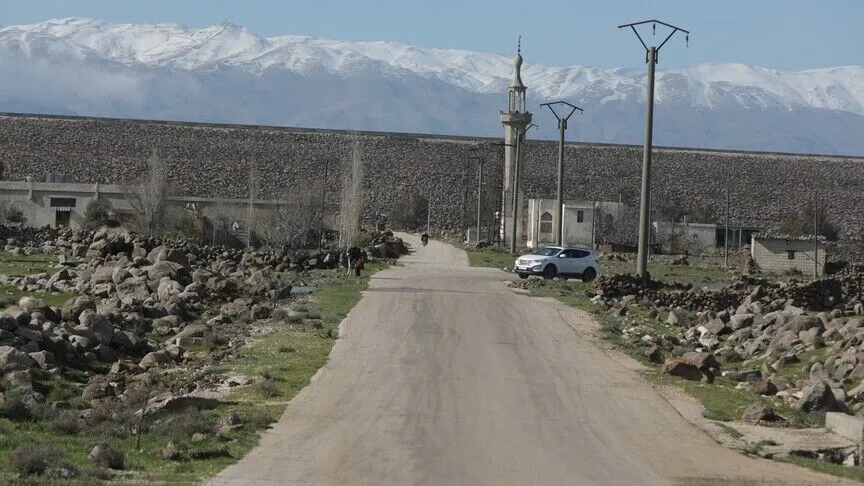
Qatar on Tuesday condemned Israeli Defense Minister Israel Katz’s entry into Syrian territory, describing it as a blatant violation of Syria’s sovereignty. The Qatari Foreign Ministry issued the condemnation, emphasizing the serious implications of such actions for regional stability. The Ministry's official statement declared, "The State of Qatar strongly condemns Israeli Defense Minister Israel Katz's illegal entry into Syrian territory and transgression of international borders. It described the move as “a violation of the sovereignty of the Syrian Arab Republic and its territorial integrity.”" This strong rebuke from Doha shows the international community's concern regarding unilateral actions that undermine established agreements and international law.
Doha further urged the international community “to move swiftly to compel Israel to adhere to international legitimacy resolutions, particularly the 1974 Disengagement Agreement, and to end its repeated aggression on Syrian territories, to prevent escalation and tension in the region.” The Qatari Foreign Ministry noted the necessity of upholding international norms to maintain peace and security in the volatile Middle East. Israeli Defense Minister Israel Katz previously stated Israel “will not leave Mount Hermon or the security zone as long as there are jihadist threats to the State of Israel,” signaling Israel's security rationale behind its actions.
Katz's Border Incursion and Regional Tensions
Israel Katz entered the Syrian buffer zone in the southwest just days after Syrian Foreign Minister Asaad al-Shaibani and the director of Israel’s Mossad spy agency, Roman Gofman, met in the Jordanian capital Amman. This high-level meeting aimed to discuss efforts to ease tensions between the two countries, making Katz's subsequent incursion particularly notable. The timing of the entry into the buffer zone, shortly after diplomatic efforts, has drawn significant attention from regional observers.
Separately, Israeli forces have conducted near-daily incursions into southern Syria. These operations have primarily focused on areas within Daraa and Quneitra provinces, involving arrests, the deployment of checkpoints, and searches of individuals. Such frequent military activities contribute to the ongoing instability in the border regions and heighten concerns about the potential for broader conflict.
Historical Context and Agreements
Damascus asserted that the seizure of the buffer zone constituted a violation of the 1974 Disengagement Agreement between Syria and Israel. This agreement, a key component of post-conflict arrangements, established a demilitarized zone in the Golan Heights following the 1973 Yom Kippur War, aiming to separate the forces of both nations and prevent further hostilities. The United Nations Disengagement Observer Force (UNDOF) was subsequently deployed to monitor the buffer zone, playing a vital role in maintaining the ceasefire and ensuring compliance with the agreement's terms.
Israel has maintained occupation of most of the Golan Heights since 1967, following the Six-Day War. The territory, strategically important due to its elevated terrain overlooking both countries, was formally annexed by Israel in 1981, a move not recognized internationally. The 1974 agreement outlined specific limitations on military forces within and near the buffer zone, which Damascus claims were breached by the recent actions. The agreement explicitly prohibited the presence of military forces beyond specified levels and types, aiming to create a stable security environment.
International Calls for Adherence
The Israeli army seized control of the buffer zone in December 2024. This action followed a significant geopolitical shift in the region. After the fall of the Bashar al-Assad regime in late 2024, Israel declared the 1974 Disengagement Agreement null and void. This declaration provided the pretext for Israel to proceed with the seizure of the buffer zone and other strategic positions within Syrian territory. These actions included the occupation of the Syrian side of Mount Hermon, further expanding Israel's control in the region and raising alarms among international bodies and neighboring states about the potential for further territorial claims and military escalation.