From the archive
Qatar Intensifies Diplomatic Push for US-Iran Talks Amid Escalation Warnings
Qatar intensifies diplomatic efforts to encourage US-Iran negotiations, warning of escalation and seeking regional stability.
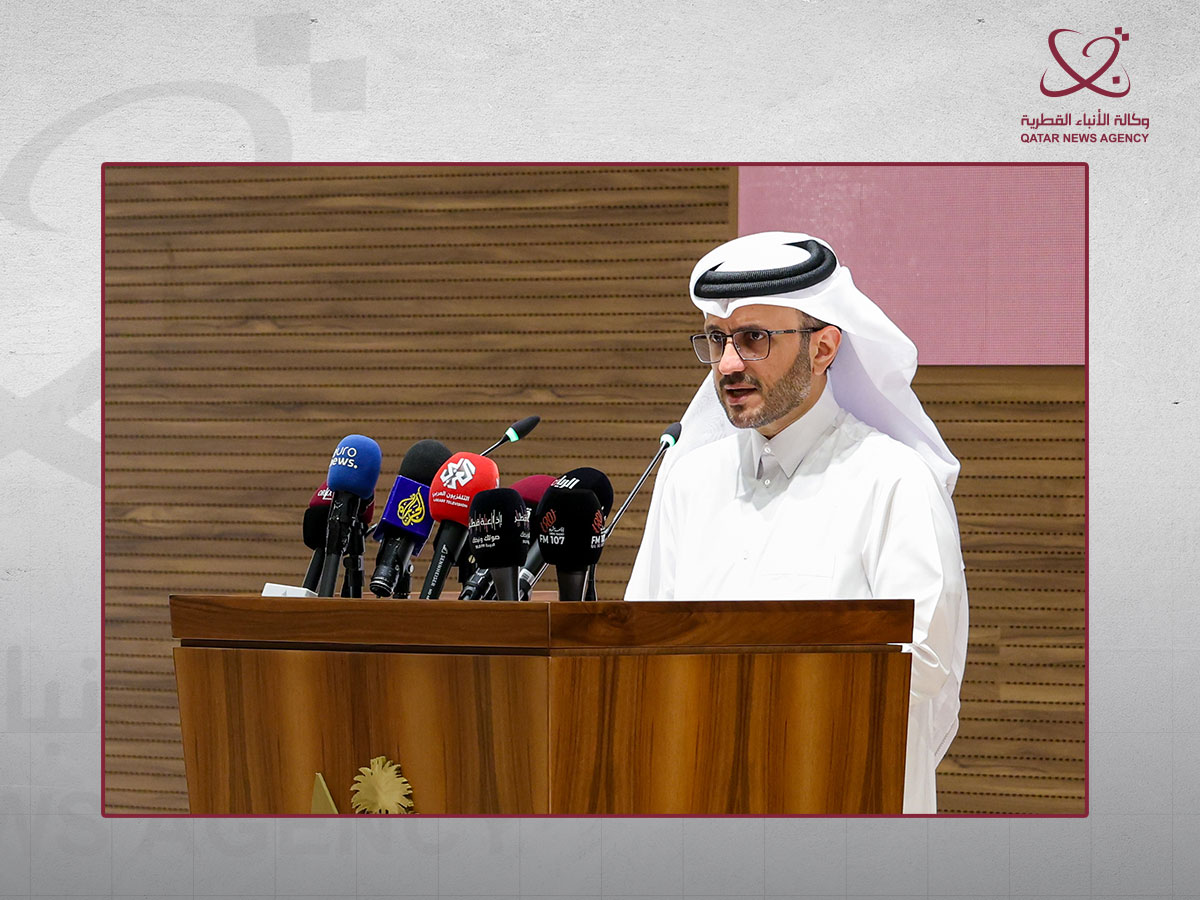
Qatar has intensified its diplomatic efforts and regional contacts to encourage a return to negotiations between the United States of America and the Islamic Republic of Iran, according to Dr. Majed bin Mohammed Al Ansari, Advisor to the Prime Minister and Official Spokesperson for the Ministry of Foreign Affairs. These efforts have spanned the "past period," as stated by Dr. Al Ansari, reflecting a sustained engagement by Doha. The State of Qatar has continued its extensive efforts and maintained regional contacts with various international parties over the past period, consistently advocating for a return to the path of negotiations between the United States of America and the Islamic Republic of Iran. These diplomatic initiatives show Qatar's commitment to de-escalation and its belief in dialogue as the most effective means to resolve complex international issues. Such sustained engagement is a cornerstone of Qatar's foreign policy, aiming to foster stability in a volatile region.
Dr. Al Ansari affirmed that a key priority for the State of Qatar is to restore normal navigation in the Strait of Hormuz. He emphasized that ensuring global energy and food security, along with maintaining the safety of supply chains, are critical objectives that directly impact the international community. Dr. Al Ansari stated, "The priority for the State of Qatar is to restore normal navigation in the Strait of Hormuz, ensure global energy and food security, and maintain the safety of supply chains, which are goals that can only be achieved through a full diplomatic solution." This full approach notes the interconnectedness of regional security with global economic stability, positioning Qatar as a proactive mediator. The Strait of Hormuz, a vital maritime choke point, is key for global trade, particularly for oil and gas shipments, making its security a critical concern for Qatar and its international partners.
Regional Diplomacy and Security Concerns
The State of Qatar had warned since the beginning of the crisis of the wide repercussions of any escalation, not only on the region, but also on the global economy, according to Dr. Majed bin Mohammed Al Ansari, Advisor to the Prime Minister and Official Spokesperson for the Ministry of Foreign Affairs. Dr. Al Ansari stated, "The State of Qatar had warned since the beginning of the crisis of the wide repercussions of any escalation, not only on the region, but also on the global economy, reiterating Qatar's continued efforts to support diplomatic solutions and reduce tension." This proactive warning shows Qatar's foresight regarding the potential destabilizing effects of heightened tensions, emphasizing its consistent call for restraint and dialogue. The Qatari government has consistently used its diplomatic channels to advocate for peaceful resolutions, believing that regional stability is intrinsically linked to global economic well-being.
Qatar has also repeatedly stressed the need to exert pressure on Israel to accept the proposed plan for a ceasefire in Gaza. Dr. Al Ansari affirmed, "The State of Qatar has repeatedly stressed the need to exert pressure on Israel to accept the proposed plan and proceed with its implementation, noting that the developments on the ground in Gaza and the West Bank do not reflect positive cooperation with the ongoing efforts." He added that developments on the ground in Gaza and the West Bank do not reflect positive cooperation with ongoing efforts, indicating a gap between diplomatic initiatives and the realities faced by civilians. Qatar's persistent advocacy for a ceasefire reflects its deep concern for humanitarian conditions and its role as a key mediator in the ongoing conflict. The nation has been actively involved in facilitating negotiations and humanitarian aid, showing its commitment to alleviating suffering and achieving a lasting peace.
Regarding regional security, Qatar categorically rejects statements by some Iranian officials concerning the targeting of countries in the region. Dr. Al Ansari emphasized Qatar's preparedness to defend its territory, stating, "The State of Qatar, with all its institutions and armed forces, is fully prepared to defend its security and sovereignty against any aggression, regardless of its source or justifications, reiterating Doha's rejection of any threat to the security and stability of the countries of the region." This firm stance notes Qatar's commitment to its own defense and its broader dedication to regional stability, opposing any rhetoric that could lead to further escalation. The statement serves as a clear message about Qatar's resolve to protect its national interests and contribute to a secure environment for all nations in the Gulf.
Communications and meetings between the Gulf Cooperation Council (GCC) countries have been ongoing since the beginning of the crisis, reflecting a coordinated regional response to the evolving security landscape. These discussions aim to foster greater understanding and unity among member states in addressing shared challenges. As part of these key diplomatic engagements, HE Prime Minister and Minister of Foreign Affairs Sheikh Mohammed bin Abdulrahman bin Jassim Al-Thani visited Riyadh last week, engaging in high-level talks to further regional cooperation and explore avenues for de-escalation. Such visits are integral to maintaining open lines of communication and building consensus on critical regional issues.
Economic Resilience and Financial Reports
The State of Qatar has disputed figures presented in a Financial Times report concerning budget reductions. Dr. Majed bin Mohammed Al Ansari, Advisor to the Prime Minister and Official Spokesperson for the Ministry of Foreign Affairs, stated, "The figures mentioned in the Financial Times report on the reduction of budgets of a number of government agencies and the reduction of funding for Qatari foreign aid were inaccurate, stressing that much of it was taken out of context." He clarified that any discussions about budget reductions, specifically up to 30 percent, pertained to precautionary measures implemented by the state at the outset of the regional crisis. This clarification is key for understanding the context of Qatar's financial management during times of geopolitical uncertainty.
Dr. Al Ansari explained that such measures are typical for any nation confronting exceptional circumstances or regional escalation, representing prudent fiscal management rather than a sign of economic distress. He further specified that the mentioned percentage of budget reduction exclusively impacted operational expenses and did not extend to salaries or capital projects. This precise understanding of the state's financial adjustments in response to regional developments shows Qatar's commitment to maintaining its long-term development trajectory and ensuring the welfare of its citizens. The talk of reducing budgets by up to 30 percent specifically relates to these precautionary measures taken by the state at the beginning of the regional crisis, affecting only operational expenses, not salaries or capital projects, thereby safeguarding essential public services and infrastructure development.
Despite the ongoing regional challenges, the State of Qatar maintains a normal economic life, according to official statements. The government continues to ensure stability across its various sectors, showing the resilience of the national economy. This economic steadiness is presented as a testament to the country's ability to manage external pressures without significant internal disruption, reflecting strong economic planning and diversification efforts. The State of Qatar continues to enjoy a normal economic life despite the regional challenges, a testament to its strong economic foundations and proactive management. This stability allows the nation to pursue its development goals without undue hindrance from external factors.
National development projects are proceeding as planned, with no reported delays or cancellations due to the regional situation. This continuity in project execution demonstrates Qatar's commitment to its long-term development strategies and its capacity to sustain investment in infrastructure and other key initiatives. The advancement of these projects contributes to the overall economic stability and growth narrative presented by Qatari officials, reinforcing confidence in the nation's economic future. National development projects are proceeding according to plans, ensuring that Qatar's vision for growth and modernization remains on track.
International Sanctions and Qatar's Stance
The sanctions under discussion were imposed by a specific party and are not United Nations sanctions. This distinction is significant for Qatar, as it emphasizes that its compliance framework is aligned with universally recognized international legal instruments. Qatar adheres to the framework of international sanctions and engages positively with the measures adopted in this context, particularly those sanctioned by the United Nations. The nation's approach emphasizes compliance with established global regulations concerning financial and trade restrictions, reflecting its commitment to international law and order. This stance aligns with Qatar's broader diplomatic efforts to maintain stability and facilitate dialogue within the international community. Qatar continues to navigate complex geopolitical landscapes by upholding its commitments to international legal frameworks, ensuring that its policies are consistent with global norms. The government's position reflects a consistent policy of respecting internationally recognized sanctions regimes while also clarifying the specific nature and origin of certain punitive measures.
Broader Peace Initiatives
Qatar has welcomed the progress achieved in the peace process within the Democratic Republic of Congo (DRC). This positive development is seen as a key step towards long-term stability in the central African nation. The State of Qatar is committed to continuing its support for efforts aimed at establishing a full and sustainable peace in the DRC. This commitment shows Qatar's broader foreign policy objectives, which include contributing to conflict resolution and stability beyond the immediate Middle East region. The nation's diplomatic engagement reflects a consistent strategy of fostering dialogue and supporting initiatives that lead to lasting peace, demonstrating its role as a global actor in promoting stability and humanitarian welfare. Qatar's involvement in the DRC's peace process exemplifies its dedication to international cooperation and its belief in the power of diplomacy to resolve protracted conflicts.