From the archive
Qatar Reaffirms Support for Pakistan-Led US-Iran Talks, Cautions on Regional Escalation
Qatar supports Pakistan-led mediation between the US and Iran, notes Gaza talks progress, and warns against Israeli attacks on Lebanon.
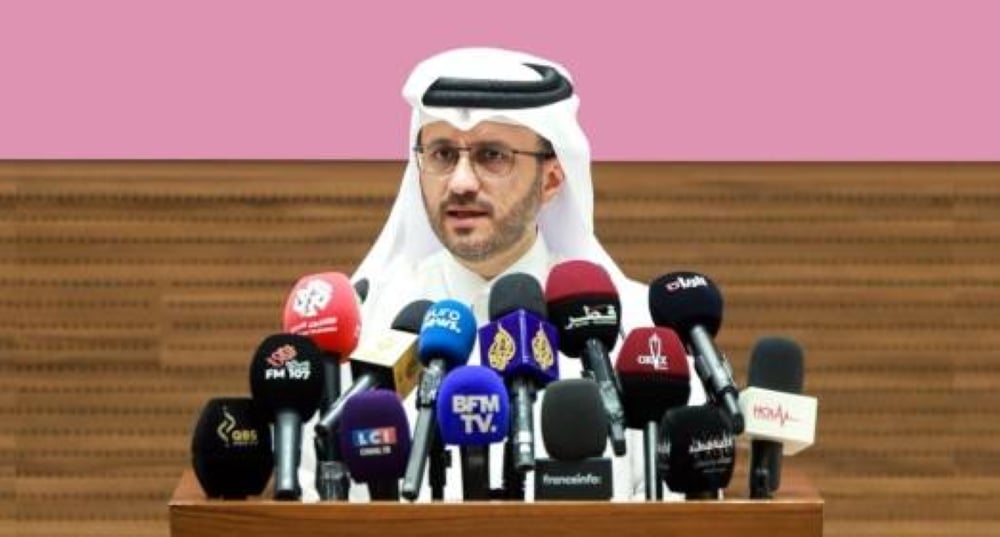
Qatar continues to support Pakistan-led mediation efforts between the United States and Iran and remains in contact with all parties to help secure the implementation of a recently agreed memorandum of understanding. Advisor to the Prime Minister and Official Spokesperson for the Ministry of Foreign Affairs Majed bin Mohammed Al-Ansari confirmed Qatar's stance during the ministry’s weekly media briefing on Tuesday. Al-Ansari also addressed regional tensions, stating there is no justification for continued Israeli attacks on Lebanon. "There is no justification for the continued Israeli attacks on brotherly Lebanon, and Lebanon’s sovereignty is a red line for all of us in the region. These attacks cannot be justified under any circumstances," Al-Ansari said. He showed the critical importance of respecting national sovereignty and international law, emphasizing that such actions only serve to destabilize an already volatile region. The continued aggression, he noted, poses a significant threat to regional peace and security, making de-escalation an urgent priority for all involved parties.
Pakistan's Mediation Role
Qatar is not conducting a separate mediation initiative between Washington and Tehran, with Pakistan remaining the principal mediator in these discussions. This clarifies Qatar's role as a supportive facilitator rather than a primary negotiator in this particular diplomatic track. Contacts between the parties involved are still ongoing, according to Qatar's Ministry of Foreign Affairs. Doha continues to communicate with the various parties within the framework of its support for the Pakistani mediation effort. This communication aims to ensure that the agreement reaches a successful outcome, reflecting Qatar's commitment to regional stability and diplomatic resolution. The Qatari government believes that sustained engagement and clear communication channels are essential for navigating complex geopolitical challenges.
Majed bin Mohammed Al-Ansari, Advisor to the Prime Minister and Official Spokesperson for the Ministry of Foreign Affairs, affirmed Qatar's position, reiterating the country's dedication to facilitating a peaceful resolution. "Contacts between the parties are still ongoing, and Qatar continues, within the framework of its support for the Pakistani mediation, to communicate with the various parties in order to ensure the agreement reaches a successful outcome," Al-Ansari stated. He also clarified that no meetings involving the concerned parties or any other parties were currently taking place in Doha, showing the nature of Qatar's supportive role. Qatar fully supported Pakistan’s role as the lead mediator between the United States and Iran, recognizing the complexities inherent in such high-stakes negotiations. This cooperative approach notes a shared regional interest in de-escalation and dialogue, with Qatar providing key diplomatic backing to Pakistan's efforts. The ongoing discussions are viewed as a vital pathway to reducing tensions and fostering greater understanding between the United States and Iran.
Gaza and Regional Concerns
Qatar continued to work with mediators to end the war and support U.S. President Donald Trump’s proposed plan for Gaza. Recent meetings held in Egypt, involving mediators, regional parties, and Palestinian representatives, resulted in positive understandings on several outstanding issues regarding Gaza. These discussions are an integral part of broader efforts to achieve a lasting ceasefire and address the humanitarian crisis in the region. Discussions on the economic dimension of the agreement extended beyond reconstruction to include future investment opportunities following the conflict. Any economic effort of this kind, according to Qatar, must be an international effort rather than a bilateral one, coming within the framework of full international coordination. This emphasizes the need for a unified global approach to rebuilding and stabilizing Gaza, ensuring that resources are pooled effectively and equitably. The Qatari government believes that such international cooperation is critical for the long-term viability and success of any economic recovery plan.
Majed bin Mohammed Al-Ansari, Advisor to the Prime Minister and Official Spokesperson for the Ministry of Foreign Affairs, specified that no Qatari money has been paid in this context. "No Qatari money has been paid in this context. What is taking place is international coordination to address the consequences of this crisis," Al-Ansari stated. This clarifies that Qatar's involvement is primarily diplomatic and coordinative, focusing on facilitating broader international efforts rather than direct financial contributions at this specific stage. Lebanon was among the issues discussed as part of the U.S.-Iran memorandum of understanding, noting the interconnectedness of regional stability. Continued escalation across the region undermines ceasefire efforts and prospects for lasting peace, making full diplomatic engagement indispensable. The ongoing discussions aim to address the root causes of conflict and promote a more secure environment for all nations in the Middle East.
Future Regional Outlook
There is no agreement between the State of Qatar and the Islamic Republic of Iran regarding electricity interconnection. Qatar maintains that the region cannot simply revert to the status quo that existed before the conflict. A new reality is required, one based on rebuilding trust, reopening communication channels, and reaching a shared understanding of the post-war phase. This approach aims to foster stability and prevent further escalations, acknowledging the profound impact of recent events on regional dynamics. The Qatari government believes that a genuine and lasting peace requires fundamental shifts in diplomatic engagement and mutual understanding. This new reality must be built on principles of cooperation and respect, moving beyond past grievances to forge a more secure future.
Majed bin Mohammed Al-Ansari, Advisor to the Prime Minister and Official Spokesperson for the Ministry of Foreign Affairs, has previously emphasized the need for international coordination in addressing the consequences of regional crises. The absence of an electricity interconnection agreement indicates that specific bilateral initiatives between Qatar and Iran are not currently part of the broader regional reconciliation efforts, which are focused on more immediate diplomatic and de-escalation objectives. The focus remains on a full approach to regional stability and de-escalation, ensuring that all parties contribute to a more secure and cooperative environment. This holistic strategy recognizes that interconnected challenges require coordinated solutions, moving towards a future where dialogue and mutual respect supersede conflict. The emphasis on rebuilding trust and establishing new frameworks for interaction is central to Qatar's vision for a stable and prosperous Middle East.