From the archive
Qatar Signals Increased LNG Exports as Tanker Returns Through Hormuz
Qatar signals increased LNG exports as a tanker returns through the Strait of Hormuz, the first since the Iran war began.
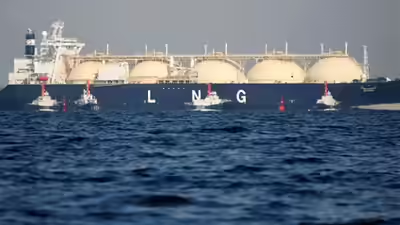
Qatar has returned an empty liquefied natural natural gas (LNG) tanker into the Persian Gulf through the Strait of Hormuz, marking the first such passage since the war in Iran began. The vessel's entry into the vital shipping lane signals Qatar's intent to resume or potentially increase LNG exports from its primary port at Ras Laffan. This development follows a period of heightened regional tensions that had impacted maritime traffic, leading to disruptions in normal shipping patterns. The Strait of Hormuz is a key chokepoint for global energy supplies, linking Gulf producers with international markets and facilitating a significant portion of the world's seaborne oil and gas trade. The move by Qatar, a key global energy supplier, comes as the nation prepares to ramp up its liquefied natural gas exports.
Tanker's Return Through Strait
The Al Hamla, a tanker owned by Qatar’s state-owned shipping company, appeared at the Ras Laffan export plant on Thursday. Its presence at the facility strongly suggests preparation for potential LNG shipments in the near future. The vessel's return through the Strait of Hormuz indicates Qatar's readiness to utilize the critical maritime chokepoint for energy exports, despite the prevailing geopolitical landscape. This movement follows a period of reduced tanker traffic in the region due to ongoing geopolitical tensions, which have prompted caution among maritime operators. The Ras Laffan plant is a significant hub for Qatar's natural gas operations, serving as the primary point from which the nation exports substantial volumes of liquefied natural gas globally. The Al Hamla's appearance at the export facility shows the operational intent behind its passage through the strait, signaling a potential uplift in loading activity.
Voyage Details and Significance
The Al Hamla, owned by Qatar’s state-owned shipping company, had ceased transmitting its signal approximately one week prior in the vicinity of western India. This cessation of signal transmission had raised questions regarding the vessel's movements and its intended destination before its reappearance in the Strait of Hormuz. Its subsequent arrival at the Ras Laffan export plant on Thursday confirmed its trajectory toward Qatar’s primary LNG production hub. The tanker's journey and its temporary signal outage were observed by industry trackers, who closely monitor vessel movements in critical shipping lanes. The vessel's re-emergence in the critical waterway and its destination at Ras Laffan show its role in Qatar's ongoing energy export operations, particularly as the nation looks to expand its global market share. The temporary disappearance from tracking systems and subsequent return through the sensitive Strait of Hormuz notes the strategic importance of this particular vessel's movements for global energy markets.
Export Preparations Underway
Qatar, a major global supplier, is preparing to significantly increase its liquefied natural gas exports. The nation's strategic moves, including the return of the Al Hamla tanker to its primary export terminal, indicate an intent to boost outgoing shipments in the coming period. This comes amid global demand for natural gas, driven by various factors including energy security concerns and the transition away from coal. Qatar's ongoing expansion projects are specifically designed to enhance its production capacity, positioning it to meet this growing international demand. The Al Hamla's presence at the Ras Laffan export plant, a key facility for processing and shipping LNG, suggests the commencement of preparations for loading and subsequent departure. Such activities are critical for a nation that plays a key role in supplying energy to international markets, influencing global prices and supply stability. The increased activity at Ras Laffan aligns with Qatar's long-term strategy to expand its share in the global LNG market, solidifying its position as a leading exporter.