From the archive
Qatar Urges De-escalation Between US and Iran Amid Regional Tensions
Qatar's Foreign Minister called for de-escalation between Washington and Tehran, emphasizing regional stability and freedom of navigation.
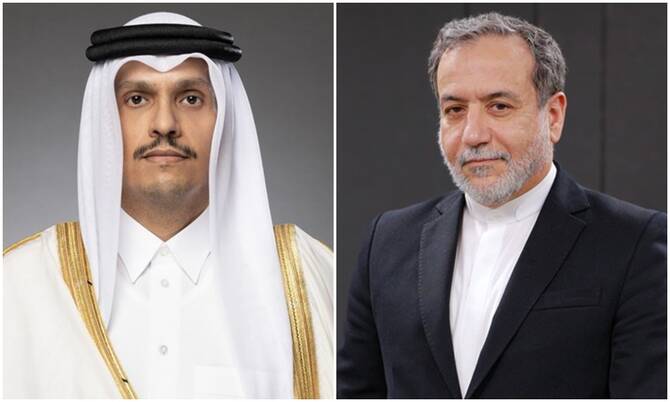
Qatar’s Prime Minister and Foreign Minister, Mohammed bin Abdulrahman Al Thani, on Saturday, May 23, called for de-escalation of tensions between Washington and Tehran during a phone call with Iran's Foreign Minister, Abbas Araghchi. During this key diplomatic exchange, Al Thani also expressed Doha’s full support for ongoing efforts to reach a full agreement between Iran and the United States. This declaration shows Qatar's commitment to fostering dialogue and finding peaceful resolutions to complex international issues. The Qatari leadership believes that such an agreement is vital for long-term stability in the region.
The Qatari Foreign Minister stressed that all parties should respond positively to current mediation efforts to achieve lasting regional peace and stability. He noted the importance of constructive engagement from all sides to move towards a resolution. Al Thani also stated that "freedom of navigation in the Strait of Hormuz is a 'fundamental and non-negotiable principle'." This statement reflects a deep concern for maritime security and the unimpeded flow of international commerce through this critical waterway.
Strait of Hormuz Concerns
The strategic importance of the Strait of Hormuz cannot be overstated, serving as a vital chokepoint for global oil shipments. Closing the Strait of Hormuz or utilizing it as a tool for pressure and bargaining would escalate the crisis, endangering the vital interests of countries across the region. Such an action would not only disrupt global energy markets but also have severe economic and security implications for all nations bordering the Persian Gulf. Qatar's Prime Minister and Foreign Minister, Mohammed bin Abdulrahman Al Thani, reiterated that freedom of navigation in this critical waterway remains a core concern. Al Thani stated that "freedom of navigation in the Strait of Hormuz is a 'fundamental and non-negotiable principle'." This stance underlines the importance of unimpeded passage through the strait for global trade and regional stability. Doha's position emphasizes that any disruption would have significant repercussions for all parties involved and for international commerce, potentially leading to widespread instability. The international community largely shares this view, recognizing the strait's role in global economic health.
Regional Stability and Diplomacy
The Qatari Foreign Minister urged all parties to adhere to international law and the principles of good neighborliness. He emphasized the necessity of prioritizing the interests of the region and its people, advocating for a diplomatic approach that focuses on collective well-being rather than unilateral actions. This call comes as diplomatic efforts have increased in recent days to continue negotiations between Iran and the United States. These intensified diplomatic activities reflect a growing recognition among international actors of the urgent need to de-escalate tensions and prevent further regional instability. Qatar's proactive role in facilitating these discussions notes its established position as a mediator in regional and international disputes. The emphasis on international law and good neighborliness is a cornerstone of Qatar's foreign policy, aiming to build trust and foster cooperation among nations in a historically volatile area.
Broader Diplomatic Landscape
The recent diplomatic engagements extend beyond the immediate US-Iran discussions. Pakistan’s Chief of Defence Forces, Asim Munir, and Interior Minister Mohsin Naqvi visited Tehran yesterday, adding to the broader diplomatic engagements in the region. The visit by the Pakistani delegation shows the ongoing dialogue among various nations concerning regional security and stability. These interactions contribute to a complex diplomatic landscape, where multiple channels are being utilized to address prevailing tensions. Such high-level visits often serve to reinforce bilateral ties and explore avenues for de-escalation, complementing the efforts made by other regional actors like Qatar. The presence of senior Pakistani officials in Tehran notes the interconnected nature of regional security dynamics and the collective interest in fostering stability through diplomatic means. These multilateral efforts demonstrate a concerted push by various regional and international players to encourage dialogue and prevent a further escalation of tensions, reinforcing the message that diplomatic solutions are critical.