From the archive
Qatar Urges Diplomatic Path Amidst US-Iran Tensions and Hormuz Crisis
Qatar urges diplomacy to de-escalate US-Iran tensions and warns against closing the Strait of Hormuz, vital for global energy security and regional…
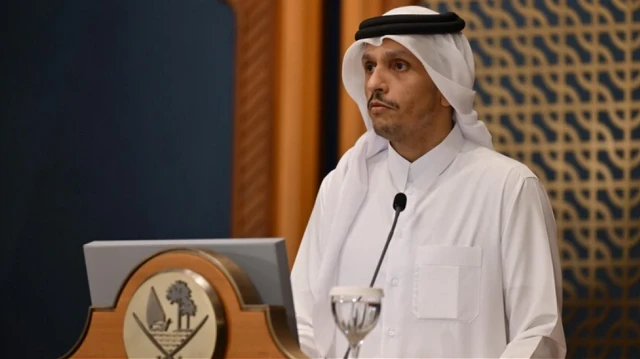
Doha has issued a strong appeal for constructive engagement in mediation efforts to resolve the escalating Middle East crisis through diplomatic channels, as US-Iran tensions intensify over the Strait of Hormuz. Qatari Prime Minister and Foreign Minister Sheikh Mohammed bin Abdulrahman Al Thani engaged in critical telephone diplomacy with Iranian Foreign Minister Abbas Araghchi on February 28 to address the deteriorating security situation in the Gulf. Qatar warned Iran on Tuesday, April 8, stating it "will not tolerate attacks on its sovereignty."
The Qatari leadership emphasized that maintaining open maritime passage through the Strait of Hormuz remains essential for regional stability and global energy security. Reports indicated that militarizing this vital waterway would deepen existing tensions between Washington and Tehran. Tehran responded by targeting United States allies throughout the Gulf region and continued to block the Strait of Hormuz, through which approximately one-fifth of global petroleum consumption flows annually. President Trump announced plans on Sunday to stop "any and all Ships trying to enter, or leave" the waterway until there is a point where all oil is allowed to go in and out without obstruction from Iran. President Trump stated, "At some point, we will reach an ‘ALL BEING ALLOWED TO GO IN, ALL BEING ALLOWED TO GO OUT’ basis, but Iran has not allowed that to happen." He added, "The United States of America will never be extorted," and pledged to "begin destroying the mines the Iranians laid in the Straits. Any Iranian who fires at us, or at peaceful vessels, will be BLOWN TO HELL!" Sheikh Mohammed continues advocating for dialogue that adheres to international legal frameworks and the United Nations Charter, with Doha positioned as a key mediator capable of facilitating communication between opposing parties.
Escalating Gulf Tensions
The diplomatic initiative from Doha emerged against a backdrop of a tense ceasefire following weeks of hostilities, which began on February 28 when American and Israeli forces launched military operations against Iranian targets. Gulf leaders convened in Saudi Arabia for the first time since the Iran war started, addressing both the Strait of Hormuz crisis and the broader regional conflict. Dr. Majed Al-Ansari, a Qatari foreign ministry official, stated that the war had fundamentally altered how countries in the region assess security risks. "The main concern right now in the region is the security of the region. The threat perception in the region has changed as a result of this war," Al-Ansari said.
He emphasized that stability had been called into question, necessitating security guarantees to prevent a return to previous situations. According to Al-Ansari, Gulf states had previously sought to ease tensions with Iran. "I don't think that there was a general GCC push for more escalation with Iran," he noted, adding, "I think if you go back to before this war has started, there was actually a rapprochement with Iran, we were attempting to find a diplomatic resolution through engagement with Iran." He further clarified, "This is a position that Qatar has always held."
However, Al-Ansari stressed Qatar's firm stance: "However, we have made it very clear that we will not be used as political punching bags in this war, that any attack on our sovereignty cannot be justified by any means, and we have taken all the necessary precautions to make sure that we are safe from this aggression that has come to our country."
Iran, on its part, issued a warning on Sunday that military vessels approaching the Strait of Hormuz would constitute a violation of the fragile ceasefire and would be met with a "strong and forceful response," according to Iran’s Islamic Revolutionary Guard Corps navy. Despite this, the Islamic Revolutionary Guard Corps navy insisted it has "full control" of the strait and that the waterway remains open for non-military vessels. The United States has also deployed minesweepers to the Strait of Hormuz. President Trump previously warned that any Iranian ship firing at the US would be "BLOWN TO HELL!" He also stated, "At some point, we will reach an ‘ALL BEING ALLOWED TO GO IN, ALL BEING ALLOWED TO GO OUT’ basis, but Iran has not allowed that to happen," adding, "The United States of America will never be extorted."
Qatar's Diplomatic Push
The Qatari leadership noted the broad economic consequences that could emerge from prolonged instability near the strategic chokepoint, emphasizing that disruptions to Hormuz traffic threaten to destabilize international energy markets, compromise food supply chains, and create volatility in global commerce. Pakistani mediation secured a cessation of violence on April 8, though subsequent negotiations in Islamabad three days later failed to produce a full settlement. US President Donald Trump recently expressed dissatisfaction with Tehran's latest ceasefire proposal, stating that Iranian negotiators demanded concessions incompatible with American positions.
Qatar's Ministry of Foreign Affairs spokesperson Dr. Majed Al-Ansari said in Doha that any attack on Qatar's sovereignty cannot be justified by any means, and that Qatar has taken all necessary precautions to ensure its safety from aggression. Dr. Al-Ansari stated that Qatar has always held a position of seeking diplomatic resolution through engagement with Iran. He added, "I don't think that there was a general GCC push for more escalation with Iran," and further elaborated, "I think if you go back to before this war has started, there was actually a rapprochement with Iran, we were attempting to find a diplomatic resolution through engagement with Iran." Dr. Al-Ansari affirmed, "I think this is a position that Qatar has always held."
Dr. Al-Ansari stated that Qatar is supportive of the process of mediation. He also said that the Strait of Hormuz "should have never been closed and it should be opened immediately regardless of other considerations going on in the region." Qatar's Ministry of Foreign Affairs spokesperson said, "We applaud our partners in Europe for taking the lead on this and ... We are continuing to engage with them" regarding efforts to secure safe navigation in the Strait of Hormuz. Dr. Al-Ansari stated, "We are supportive of all and every international effort that would lead to a diplomatic solution, and that would lead to the opening of the strait and to securing the straits in the future." Qatar calls for a full deal that would address the interests of all people in the region, including Iranians and Qataris, and the international community's concerns regarding Iran. Dr. Al-Ansari reiterated, "We want a full deal that would address the interest of all the people in the region, including the Iranians, our people, and the concerns of the international community regarding Iran."
Strait of Hormuz Significance
Dr. Majed Al-Ansari, a Qatari foreign ministry official, stated that peace in the region is incremental and affirmed that Qatar does not oppose any agreement that would sustain the current ceasefire, describing it as a "positive trajectory." Qatar actively supports Pakistan's mediation efforts, with which Doha is coordinating to facilitate ongoing discussions. Dr. Al-Ansari further emphasized that any regional conflict should be resolved through negotiations.
In line with these diplomatic efforts, Vice President JD Vance led a delegation of US negotiators to meet with Iranian officials in Islamabad, Pakistan. The meetings, held from Friday to Saturday, concluded after nearly 21 hours of deliberations without reaching a deal. Following these talks, Iranian state media indicated there are no immediate plans for another round of peace negotiations.
Despite the lack of a breakthrough, Dr. Al-Ansari reiterated Qatar's consistent stance, stating, "Our position has been clear from day one: any conflict in the region should be solved on the negotiation table." He added, "We believed in the negotiation process and we were supportive of the negotiation process and we will remain supportive of a diplomatic resolution." He also noted that Qatar "will not tolerate attacks on its sovereignty" and has taken all necessary precautions. Meanwhile, United States President Donald Trump asserted that "The United States of America will never be extorted."