From the archive
Qatar's Government Budget Posts Significant Deficit in Q1 2026 Amidst Regional Tensions
Qatar's government budget posted a 10.3 billion Qatari riyal deficit in Q1 2026, a significant fiscal imbalance driven by lower revenues and higher…
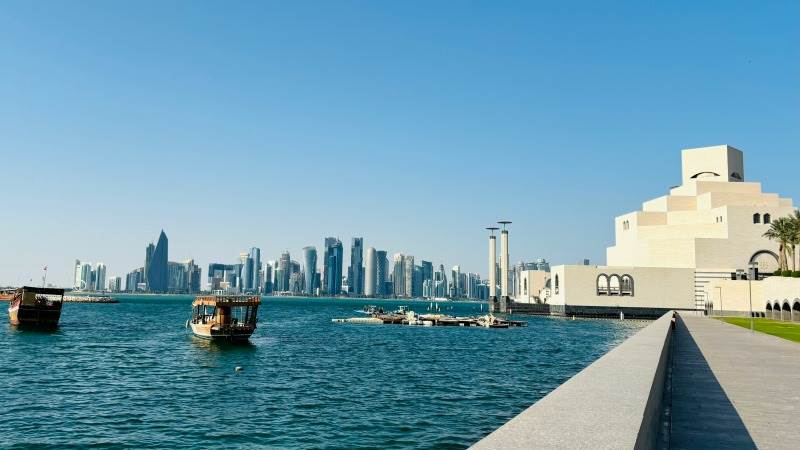
Qatar's government budget registered a financial deficit of 10.3 billion Qatari riyals, approximately $2.8 billion, during the first quarter of 2026, the Ministry of Finance announced on Monday. This significant fiscal imbalance marks a challenging period for the Gulf nation. The Ministry of Finance revealed on Monday that the Gulf country's government budget recorded this substantial financial deficit of 10.3 billion Qatari riyals (around $2.8 billion) during the first three months of 2026. The Gulf country's revenues totaled 37.8 billion Qatari riyals for the period. Total revenues during this period amounted to 37.8 billion Qatari riyals, showing the gap between income and expenditure. Total expenditures reached 48.09 billion Qatari riyals, contributing to the reported deficit.
Worsening Financial Picture
The deficit figure of 10.3 billion Qatari riyals in the first quarter of 2026 represents a sharp increase compared to the previous quarter. This pronounced rise notes a deteriorating fiscal situation. In the fourth quarter of 2025, Qatar's budget recorded a deficit of 5.3 billion Qatari riyals. The deficit figure rose sharply compared to the fourth quarter of 2025, when the budget recorded a deficit of 5.3 billion Qatari riyals. This comparison indicates a significant deterioration in the country's fiscal balance over a three-month period, nearly doubling the previous quarter's shortfall. The Ministry of Finance previously reported total revenues of 37.8 billion Qatari riyals for Q1 2026, against total expenditures of 48.09 billion Qatari riyals. The widening deficit suggests increasing pressure on the government's financial resources, potentially impacting future spending and investment plans. This trend shows the challenges faced by Qatar in maintaining fiscal stability amidst current economic conditions.
Impact of Regional Conflict
Qatar is one of the countries most directly affected by the Iran war, according to a recent analysis. The regional conflict has had tangible impacts on the nation's critical infrastructure and trade routes. These impacts have contributed to the economic pressures observed in the latest budget figures. Qatar's Ras Laffan industrial hub was directly targeted during the conflict, noting the proximity and vulnerability of its key economic assets. This targeting shows the direct security challenges posed by the ongoing regional tensions, raising concerns about the safety of vital energy production and export facilities. The Strait of Hormuz, a vital shipping lane for Qatar's energy exports, also experienced significant disruption. Qatar's first tanker was not able to pass through the Strait of Hormuz until as late as May 10, indicating delays and challenges in maritime operations. Qatar's first tanker passed through the Strait of Hormuz as late as May 10, illustrating the severity and duration of the disruptions. Such disruptions to shipping routes can affect export volumes and revenue streams for the Gulf nation, directly impacting its economic performance and contributing to the budget deficit. The delays in maritime traffic through this critical chokepoint have significant implications for global energy markets and Qatar's ability to fulfill its export commitments.
Economic Outlook and Challenges
Qatar's economic outlook is currently shaped by several challenges, including a worsening fiscal balance and regional instability. The Ministry of Finance reported a significant budget deficit in the first quarter of 2026, marking a notable increase from the previous quarter. This fiscal deterioration reflects growing pressure on the nation's financial resources, necessitating careful management of public funds. The substantial deficit observed in Q1 2026 suggests a need for strategic adjustments to national economic policies.
Adding to the economic headwinds are the repercussions of the Iran war, which has directly impacted Qatar. The Ras Laffan industrial hub, a critical economic asset, has faced direct targeting, exposing the vulnerability of key infrastructure. This direct threat to core industrial facilities creates an environment of uncertainty for investors and businesses. The Strait of Hormuz, essential for Qatar's energy exports, has experienced considerable disruption, leading to delays in maritime operations. The fact that Qatar's first tanker could not navigate the Strait until May 10 exemplifies the operational difficulties encountered. These security and trade route challenges compound the fiscal pressures, influencing the broader economic landscape for the Gulf country and demanding proactive measures to safeguard its economic interests and stability.