From the archive
Rwanda's President Kagame Arrives in Doha for Working Visit
Rwanda's President Paul Kagame has arrived in Doha, Qatar, for a working visit aimed at strengthening bilateral ties and exploring cooperation between the…
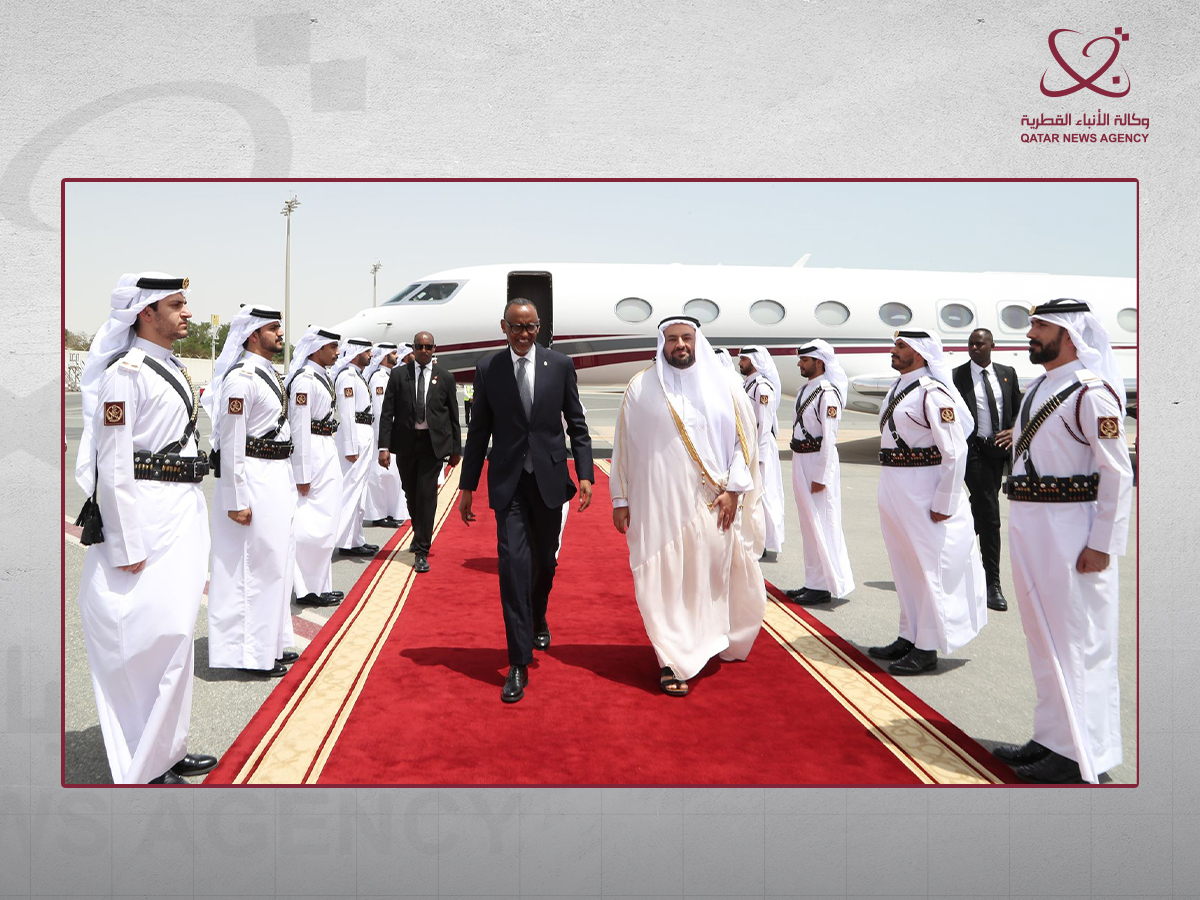
President Paul Kagame, President of the Republic of Rwanda, arrived in Doha on the morning of May 24, 2026, for a working visit to Qatar. His arrival in the Qatari capital marks the start of significant diplomatic engagements between the two nations. The visit is specifically designated as a working visit, showing its focus on substantive discussions and practical outcomes. It is widely expected to center on strengthening bilateral ties and exploring areas of mutual cooperation across various sectors. Further details on the specific agenda of this important working visit are anticipated to emerge following initial high-level meetings and discussions between the Rwandan delegation and Qatari officials. The nature of a working visit typically allows for direct, focused dialogue on key strategic partnerships and shared objectives.
Official Welcome in Doha
President Paul Kagame of Rwanda was accorded an official reception at Doha International Airport upon his arrival. The Rwandan President was personally greeted by Dr. Mohammed bin Abdulaziz Al-Khulaifi, Minister of State at the Ministry of Foreign Affairs, noting the importance Qatar places on this visit. Dr. Al-Khulaifi extended a warm welcome to President Kagame, signifying the close diplomatic relations between the two countries. Also present to receive President Kagame was Mr. Igor Marara Kanyamurasa, the Ambassador of the Republic of Rwanda to the State of Qatar, who joined in welcoming his head of state to the Gulf nation. The presence of these key officials at the airport showed the high-level nature of the visit and the mutual respect between Rwanda and Qatar. The reception set a positive tone for the upcoming discussions.
Purpose of the Working Visit
President Paul Kagame's arrival in Doha marks a dedicated working visit aimed at fostering deeper cooperation and strengthening the existing bonds between Rwanda and Qatar. This diplomatic engagement is specifically structured to address a broad range of areas of mutual interest to both nations. While the full list of specific agenda items has not been entirely disclosed to the public, such high-level visits typically involve full discussions on economic collaboration, identifying and pursuing new investment opportunities, and addressing pertinent regional and international issues. This type of working visit is particularly effective as it allows for direct, face-to-face engagement between heads of state, facilitating high-level dialogue that can lead to concrete agreements and partnerships on various bilateral and international matters. Both countries have consistently expressed a strong interest in strengthening their partnerships across multiple sectors, making this visit a key step in that ongoing effort. The discussions are expected to build upon previous engagements and explore new avenues for collaboration.
Rwanda-Qatar Relations
Diplomatic relations between Rwanda and Qatar have experienced a steady and significant expansion in recent years, characterized by a series of high-level engagements, official visits, and the signing of various agreements. Both nations have actively pursued closer ties across a diverse array of sectors, including strong economic cooperation, strategic investment, and collaborative development initiatives. The State of Qatar has emerged as a key and reliable partner for Rwanda, demonstrating its commitment through substantial investments spanning key sectors such as aviation, hospitality, and agriculture. These investments reflect a mutual interest in fostering sustainable growth and economic diversification in Rwanda.
Past interactions between the leadership of both countries have frequently included in-depth discussions on matters of regional stability and broader international cooperation. This consistent engagement positions both Rwanda and Qatar as active and influential participants in global dialogues, contributing to peace and development beyond their immediate borders. The relationship between the two nations is further characterized by a shared vision for South-South cooperation, emphasizing collaboration among developing countries, and a firm commitment to exploring new and innovative avenues for partnership. Officials from both countries have frequently noted the immense potential for further collaboration, expressing optimism that the current visit will build effectively on established frameworks to significantly enhance bilateral exchanges and achieve shared strategic goals.