From the archive
UAE-Israel Alliance Fuels Regional Tensions, Iran Airspace Concerns
The UAE-Israel alliance is increasing regional tensions, impacting diplomatic ties with Qatar and raising concerns about Iran closing its airspace.
The United Arab Emirates (UAE) and Israel have publicly declared a strategic alliance, transitioning their cooperation into an integrated defense partnership. This significant development marks a shift from previously covert collaboration to an overt, integrated defense framework. This strategic pivot followed Prime Minister Benjamin Netanyahu's secret order to deploy an Iron Dome battery and soldiers to the UAE. The decision came after a direct call with President Sheikh Mohammed bin Zayed Al Nahyan, who agreed to the deployment of an Iron Dome interceptor battery and the soldiers required to operate it. The UAE normalized ties with Israel under the Abraham Accords in 2020, becoming the first Arab nation in 26 years to do so, laying the groundwork for such advanced cooperation.
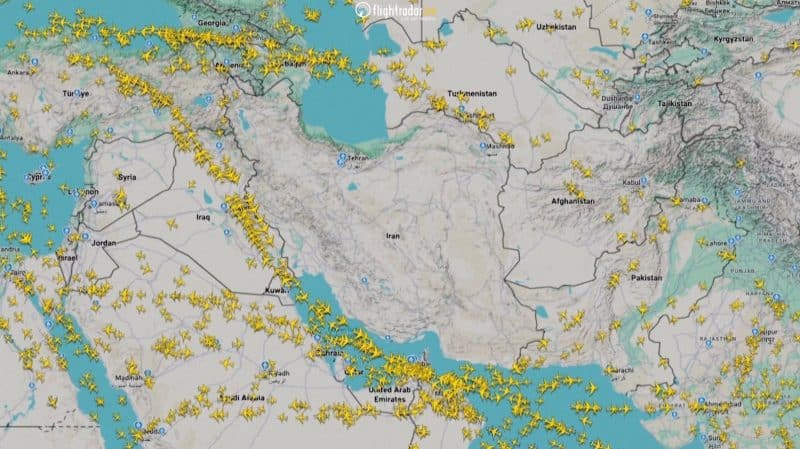
Reports indicate that the UAE-Israel alliance is consistent with an increase in "YES" outcomes for the UAE-Qatar diplomatic relations market, suggesting a positive correlation with regional diplomatic shifts. The alliance has also had a moderate impact on the Iran airspace closure market, with "YES" pricing suggesting a possibility of Iran taking defensive measures in response to these evolving dynamics. Separately, the UAE has withdrawn from OPEC, a move that is also part of its broader strategic realignment.
Deepening Defense Partnership
The United Arab Emirates' operational deployment of Israeli defense systems follows ongoing regional conflicts, including the US-Israel-Iran war. During this conflict, the Iron Dome system proved its efficacy by intercepting dozens of Iranian missiles, noting its critical defensive capabilities. While Israel has previously sold the Iron Dome system abroad, its deployment to the UAE marks the first instance of it being used operationally in another country. This deployment also signifies an unprecedented Israeli troop presence in an Arab state and the first known stationing of Iron Dome outside Israel's borders, showing the depth of this new alliance.
In 2022, Israel transferred a Barak-8 air defense battery to the UAE after Houthi rebels launched missiles at Abu Dhabi, resulting in three fatalities. This earlier transfer demonstrated a growing security partnership even before the more recent Iron Dome deployment. Beyond direct military hardware, the UAE also assists Israel with signals intelligence as part of its expanding security cooperation, indicating a multi-faceted partnership. The Emirates has deepened its partnership with both the United States and Israel, evidenced by these defense arrangements and intelligence sharing. A building in Dubai was later hit by a drone, showing the persistent regional security concerns that drive these alliances. Separately, the Iran airspace closure market for May 8 shows odds of 13.5%, a decline of 3¢ since its publication, with a 24-hour volume of $580K. Despite the close collaboration, Israel was compelled to decline a request from Abu Dhabi for additional Iron Dome batteries, suggesting a high demand for the system even among its closest allies.
Shifting Alliances and Arab Relations
The United Arab Emirates' strategic pivot is underlined by its rift with the Saudi-led Gulf Cooperation Council (GCC) and its withdrawal from OPEC. UAE officials and state-linked commentators have publicly rebuked Arab nations for failing to support the UAE during Iran's attacks, citing disappointment with some of its closest Arab partners regarding their stance on the Iran war. This public criticism notes a significant divergence in regional allegiances. Abu Dhabi intends to become closer to Israel and nations that provided strong support during the conflict, including France, the United States, and the United Kingdom, as it re-evaluates its traditional alliances.
The UAE is reassessing its ties with the Arab League and the Organization of Islamic Cooperation (OIC), reflecting a broader re-evaluation of its role in regional blocs. While the nation is revising the relevance and utility of its role and contribution in some organizations, it is not considering any withdrawals from them at this stage. A UAE official stated that no additional withdrawals from organizations are planned, indicating a selective approach to engagement rather than a complete disengagement from Arab and Islamic bodies.
The UAE came under a relentless Iranian attack during the US-Israeli war on Tehran, with Iran launching approximately 2,800 drones and missiles at the UAE during the conflict. This intense period of aggression solidified the UAE's resolve to strengthen its defensive capabilities and strategic alliances. Separately, the Will Reza Pahlavi Enter Iran market for June 30 has odds of 3%, remaining unchanged at 0.0¢, with a 24-hour volume of $85,000, reflecting ongoing geopolitical speculation.
Geopolitical and Economic Realignments
Anwar Gargash, a prominent UAE official, wrote on X that the collective international will and international law are the main guarantors of freedom of navigation in the Strait of Hormuz, emphasizing that unilateral Iranian arrangements cannot be relied upon. This statement shows the UAE's concern over maritime security in a critical global waterway. French Foreign Minister Jean-Noël Barrot said in Abu Dhabi that a U.S. Plan to form a coalition to reopen the strait would not compete with a mission being advanced by France and Britain. Reports indicated the Franco-British initiative for securing the strait is at an "advanced" stage, with dozens of countries expressing intent to participate, signaling a multinational effort to ensure maritime stability.
A U.S. State Department official confirmed that the administration asked its embassies to persuade allies to join an international coalition to secure the strait, to be called the Maritime Freedom Construct (MFC). This diplomatic push notes the international community's concern over the Strait of Hormuz. A senior U.S. Official also stated on Wednesday that the White House is considering maintaining a blockade of Iran’s ports “for months if necessary,” indicating a strong stance against potential Iranian disruptions. In response to these developments, oil prices jumped yesterday to more than $125 a barrel, reflecting market anxiety over potential supply disruptions. The UAE has practical reasons for leaving OPEC, including that production quotas constrain about 30% of its output capacity. Leaving OPEC provides the UAE with flexibility to increase oil production and invest in pipelines designed to bypass the Strait of Hormuz, further securing its energy exports independently of regional choke points. The article is provided for informational purposes only and does not constitute investment advice.