From the archive
Doha Book Fair Seminar Stresses Islamic Values in Intercultural Dialogue
A seminar at the Doha Book Fair emphasized grounding intercultural dialogue in Islamic values and preserving cultural identity for peaceful coexistence.
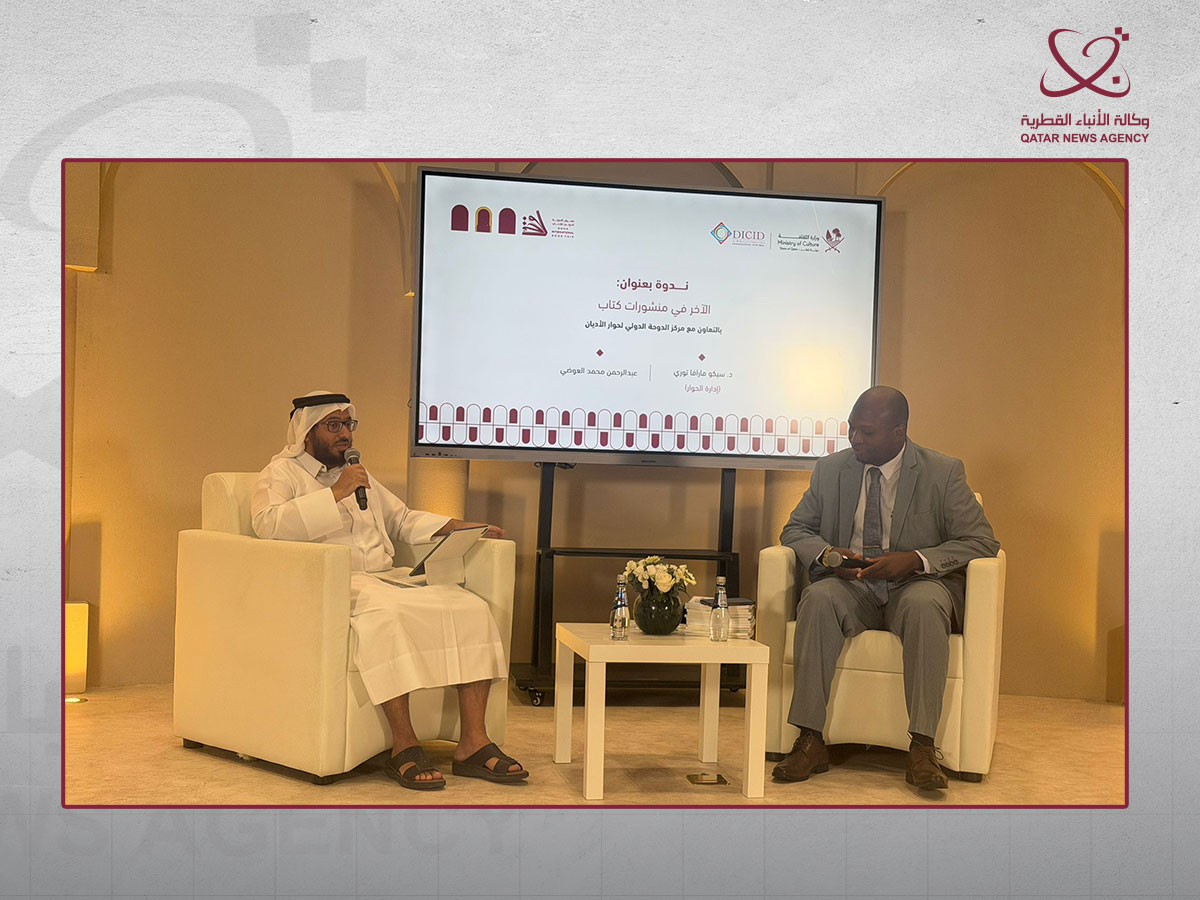
The Cultural Salon at the 35th Doha International Book Fair hosted a seminar on intercultural and interfaith dialogue, organized in collaboration with the Ministry of Endowments and Islamic Affairs and the Doha International Center for Interfaith Dialogue (DICID). The panel emphasized that engagement with other cultures must be grounded in Islamic values and the preservation of cultural identity. Discussions explored principles for navigating intellectual differences and fostering civilizational engagement. The seminar, a key event within the fair, showed the importance of a principled approach to global interactions.
Foundations for Engagement
Abdulrahman Al Awadhi, Head of the Islamic Studies Department at the Ministry of Endowments and Islamic Affairs, spoke at the seminar, contributing significantly to the discourse. He noted the necessity of maintaining religious, cultural, and political distinctions when engaging with other cultures, often referred to as 'the other'. Al Awadhi emphasized that meaningful dialogue and peaceful coexistence depend on a firm intellectual foundation and the preservation of Islamic terminology within contemporary discourse. He elaborated that this foundational strength is key for ensuring that dialogue remains authentic and rooted in core beliefs.
Speakers at the event showed that constructive dialogue does not entail compromising core beliefs or equating differing values. Instead, they stated that it involves respecting cultural specificities while operating from an Islamic baseline. This approach, they argued, allows for strong engagement without diluting one's own identity or principles. The seminar provided a platform for in-depth exploration of these principles, reinforcing the idea that true dialogue emerges from a position of strength and clarity, not concession. The discussions also delved into the practical application of these principles in various intercultural settings, ensuring that theoretical concepts were linked to tangible outcomes.
Broader Civilizational Outlook
The panel at the 35th Doha International Book Fair seminar discussed the concept of Islamic civilizational witness, asserting that effective global engagement requires both a strong sense of pride in Islamic heritage and an objective openness to the achievements of other civilizations. This approach, they argued, ensures a balanced intercultural dialogue, allowing for mutual respect and understanding. The concept of Islamic civilizational witness notes the responsibility of Muslims to present their civilization's contributions to humanity while also appreciating the contributions of others. This dual perspective is considered vital for fostering genuine cross-cultural understanding and collaboration.
Abdulrahman Al Awadhi, Head of the Islamic Studies Department at the Ministry of Endowments and Islamic Affairs, further emphasized the need to integrate educational and promotional dimensions into interfaith discussions, aiming to broaden understanding and engagement. He stressed that education plays a critical role in dispelling misconceptions and building bridges between different communities. Promotional efforts, he added, can help disseminate accurate information and foster a more inclusive global narrative. The seminar participants agreed that a proactive stance in both education and promotion is essential for advancing the goals of interfaith and intercultural dialogue in the contemporary world.
Future Initiatives
Dr. Sekou Marfa Toure, Senior Researcher at the Doha International Center for Interfaith Dialogue (DICID), ably moderated the seminar, guiding the discussions through complex topics with expertise. The discussions concluded with a strong call for coordinated intellectual, institutional, and community-led initiatives. These initiatives aim to foster deeper cultural and civilizational awareness among various communities, both locally and internationally. The seminar emphasized that such concerted efforts are essential for advancing meaningful intercultural and interfaith dialogue. Participants noted the importance of collaboration across different sectors to ensure that these initiatives are full and impactful, leading to a more harmonious global society.