From the archive
Gulf Security Needs More Than US Alliances, Official Says
A Qatari official stated that strategic alliances with the United States are no longer sufficient for Gulf security, urging regional unity.
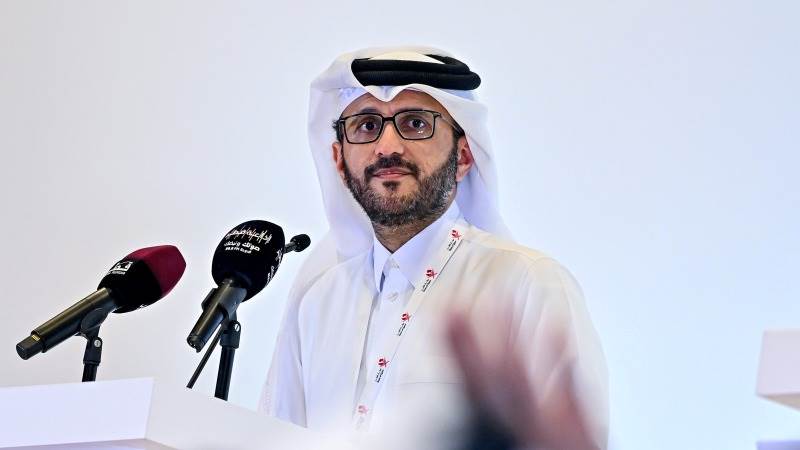
Qatari Foreign Affairs Ministry spokesperson and Prime Minister Mohammed bin Abdulrahman Al Thani's advisor, Majed al-Ansari, stated on Monday that strategic alliances with the United States are no longer sufficient to guarantee the Gulf's security. Speaking at the Hili Forum in Abu Dhabi, al-Ansari described the current period as a "key moment" for the region. He emphasized that regional states are "absorbing" the new reality where traditional partnerships alone cannot ensure stability. His remarks showed a shifting perspective on security dynamics in the Gulf.
Call for Regional Unity
Majed al-Ansari emphasized the necessity for Gulf states to demonstrate internal unity in the face of various regional threats, including the ongoing conflict in Iran. The Qatari official noted that such solidarity is key for the region's stability. Al-Ansari commended the Gulf countries for their ability to manage and respond to what he described as Iranian aggression. He stated that the region has been successfully "absorbing" these challenges, indicating a resilience and capacity to withstand external pressures through collective action. This call for unity suggests a move towards self-reliance in regional security matters, complementing existing international partnerships.
Strait of Hormuz Concerns
Majed al-Ansari, the Qatari Foreign Affairs Ministry spokesperson, spoke out against the militarization of the Strait of Hormuz. He stated that the increasing military presence in the critical waterway represents a global crisis rather than solely a regional issue. Al-Ansari emphasized that the Strait of Hormuz's strategic importance means any instability or conflict there would have effects that spread far beyond the Gulf region itself. The official's remarks noted concerns over the potential for broader international repercussions stemming from heightened military activity in the shipping lane. His comments show the interconnectedness of regional security with global stability, particularly concerning vital maritime passages like the Strait of Hormuz, through which a significant portion of the world's oil transits.
Broader Security Landscape
Majed al-Ansari, spokesperson for the Qatari Foreign Affairs Ministry and an advisor to Prime Minister Mohammed bin Abdulrahman Al Thani, characterized the current regional situation as a "key moment" for the Gulf. Speaking at the Hili Forum in Abu Dhabi, al-Ansari’s comments showed a significant shift in the strategic outlook for security in the Gulf states. He indicated that the traditional reliance on alliances, particularly with the United States, is no longer considered sufficient to ensure full regional stability.
Al-Ansari noted that Gulf countries are actively "absorbing" a new reality where security paradigms are evolving. This evolving landscape necessitates a re-evaluation of how regional stability is maintained, moving beyond historical frameworks. His remarks suggested a growing consensus among Gulf nations that internal unity and self-reliance are increasingly vital in addressing various challenges, including those emanating from Iran. The Qatari official’s assessment points to a period of strategic recalibration, where regional actors are taking a more proactive role in defining and securing their own interests amidst complex geopolitical dynamics. This perspective suggests a future where Gulf states aim to bolster their collective capabilities to manage security threats independently, while still acknowledging the importance of international partnerships.