From the archive
Migrant Workers Strike in Qatar Over Eight Months of Unpaid Wages
Eighty-five migrant workers in Qatar have gone on strike after not being paid for eight months by employer Intertectra Qatar WLL, facing severe financial…
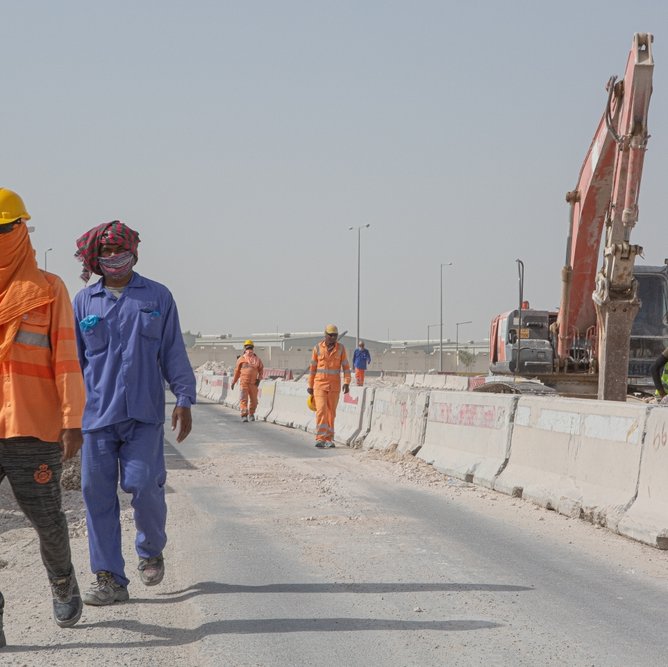
In May, approximately 85 migrant workers, including at least 36 Nepali migrant workers, initiated a strike against their employer, Intertectra Qatar WLL, in Qatar. The workers ceased operations due to eight months of unpaid wages, a situation that has led to a severe humanitarian and financial crisis for those involved. Among those affected, 36 individuals are confirmed to be from Nepal, noting the international scope of the labor dispute. The decision to strike was a direct response to the prolonged period of non-payment, which left the workers without their primary source of income and unable to meet their basic needs or send remittances home. This action shows the growing desperation among the migrant workforce facing such challenges in the region.
Extent of Financial Hardship
The striking workers at Intertectra Qatar WLL were left unpaid for eight months, leading to significant financial distress and a profound impact on their livelihoods. The cumulative outstanding dues owed to the workers exceed Rs20.5 million, which is approximately 540,000 Qatari Riyals. This substantial amount represents the lost income over the extended period, encompassing not only basic salaries but also other critical components of their remuneration package. The financial hardship extends beyond the immediate lack of income, affecting the workers' ability to support their families and cover essential living expenses. The total number of individuals impacted by these unpaid wages stands at 85, each experiencing considerable personal and economic strain.
A significant portion of the affected workforce originates from the Asia & Pacific region, with 48 workers specifically identified as being from this area. These individuals are part of the broader group facing severe financial hardship due to the prolonged non-payment of wages. The eight-month period without pay has resulted in considerable economic strain for the migrant workers and their families, impacting their ability to cover essential living expenses and remittances. The total sum of unpaid wages shows the scale of the financial challenge confronting those involved in the labor dispute with Intertectra Qatar WLL. The lack of payment for such an extended duration has not only affected their current financial stability but also their future prospects, as many workers rely on these earnings to pay off recruitment debts and support dependents in their home countries. The combined outstanding dues, exceeding Rs20.5 million or around 540,000 Qatari Riyals, represent a significant burden on the workers and their families, pushing many into precarious financial situations.
Negotiations and Standoff
The unpaid dues for the migrant workers at Intertectra Qatar WLL were not limited to basic salaries but also included overtime payments, gratuities, and food allowances, according to reports. This full failure to meet contractual obligations has exacerbated the workers' plight. Specifically, workers have not received food allowances for a period of 10 months, a critical component for their daily sustenance. Overtime payments owed to the workers have not been disbursed for the past two years, indicating a long-standing pattern of non-compliance by the employer regarding these additional earnings. These accumulated non-payments contribute significantly to the severe financial hardship experienced by the employees.
In their efforts to resolve the situation, the striking workers have appealed to both the Nepali embassy in Qatar and Nepal’s Ministry of Labour, Employment and Social Security, seeking diplomatic and governmental intervention. Officials from the Nepali embassy recently engaged in discussions with representatives of Intertectra Qatar WLL regarding the ongoing dispute, attempting to broker a resolution. During these discussions, the company reportedly conveyed that it would clear the outstanding dues only if the workers agreed to continue their employment for an additional two months. This condition presented a significant challenge to the workers seeking immediate resolution and full payment, as it would require them to continue working under the same employer who had failed to pay them for months. The workers viewed this as an unacceptable proposition given the existing trust deficit and their urgent need for their earned wages.
In response to the unresolved issues and the company's conditional offer, the workers have formally escalated their case by taking it to the labour office located in Sanaiya, Doha. This action signifies a further step in their efforts to seek official intervention and ensure the payment of their wages and other entitlements through established legal channels. The involvement of the labour office indicates a formal dispute resolution process is now underway, following the workers' direct appeals to diplomatic and governmental bodies. The workers' decision to approach the labour office notes their determination to recover the payments they claim are owed to them, encompassing various components of their remuneration package, including the long-overdue salaries, overtime, gratuities, and food allowances. This move reflects their commitment to pursuing all available avenues to secure their rightful earnings.
Worker Accounts and Demands
The ongoing dispute affects 85 individuals who have not received their full entitlements, leading to widespread distress. Among the grievances, workers report not having received food allowances for a period of 10 months, directly impacting their ability to afford daily meals. Additionally, overtime payments owed to the workers have not been disbursed for the past two years, contributing significantly to the severe financial hardship experienced by the employees, as these payments often constitute a substantial part of their total earnings. The cumulative impact of these unpaid sums has left many workers in a precarious state, struggling to meet their basic needs and support their families back home. The total number of individuals affected by this extensive non-payment, 85 workers, shows the systemic nature of the problem within Intertectra Qatar WLL.
As part of their efforts to secure outstanding wages, the workers demanded a written commitment from Intertectra Qatar WLL regarding the payment of their dues. This demand was key for the workers to have a legally binding assurance that their entitlements would be paid, especially after the company's previous failures and conditional offers. The company, however, refused to provide this written assurance, leading to a continued impasse in negotiations and deepening the workers' distrust. Faced with this refusal and the unresolved issues, the workers have stated their intention to escalate the matter further. They plan to move the case to the Labour Court if the dispute is not resolved to their satisfaction through current channels, demonstrating their resolve to pursue justice through the highest available legal avenues. This step would initiate a formal judicial process, seeking a court order to compel the company to fulfill its financial obligations to the 85 affected migrant workers. The workers remain steadfast in their demand for full and unconditional payment of all outstanding wages and allowances.