From the archive
Nepali Workers in Qatar Face Wage Crisis, Demand Unpaid Dues
36 Nepali workers in Qatar have not received wages for eight months from employer Intertectra Qatar WLL, filing a formal complaint for unpaid dues.
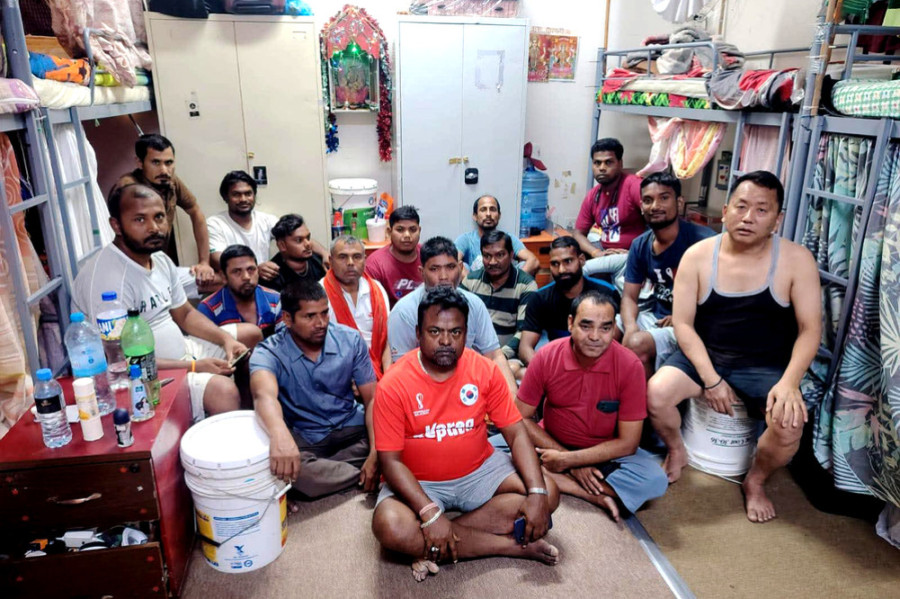
At least 36 Nepali migrant workers in Qatar have not received their wages for eight months, prompting a formal complaint to be filed with the labour office in Qatar. These workers, employed by Intertectra Qatar WLL, have reported that the company has failed to clear their salaries, overtime payments, gratuities, and food allowances. The group of workers, some of whom are from Siraha, has been seeking their dues for a prolonged period. The complaint lodged with the Qatari authorities details the financial hardship faced by the individuals due to the non-payment. This situation notes the ongoing challenges faced by migrant workers regarding timely and complete compensation for their labor. The workers are seeking intervention to recover their unpaid earnings. The plight of these 36 Nepali migrant workers shows a critical issue within the migrant labor sector in Qatar, where instances of wage non-payment continue to surface despite regulatory frameworks designed to protect workers. Their collective struggle for unpaid wages, gratuities, and allowances has drawn attention from both Nepali and Qatari authorities, initiating a complex process of dispute resolution.
Worker Grievances and Company Response
The combined outstanding dues for the Nepali workers at Intertectra Qatar WLL exceed Rs20.5 million, which translates to approximately 540,000 Qatari Riyals. Ram Dayal Raya, a worker from Siraha, stated that the company owes each individual between 15,000 and 40,000 Riyals in unpaid salaries and benefits. Raya detailed the extent of the non-payment, saying, "The company owes each worker between 15,000 and 40,000 Riyals in unpaid salaries and benefits. Besides the eight months of unpaid wages, we have not received food allowances for 10 months and overtime payments for the past two years." The extensive period of non-payment has created severe financial distress for the workers and their families back home.
Workers have also not received food allowances for 10 months and overtime payments for the past two years. This prolonged deprivation of essential earnings has forced many into precarious financial situations. The company reportedly indicated it would clear the outstanding dues if the workers continued their employment for another two months. This proposal, however, was met with skepticism by the workers, who had already endured months of non-payment. In response to this proposal, the workers demanded a written commitment from Intertectra Qatar WLL, which the company subsequently refused to provide. This refusal further eroded trust between the employees and the company, solidifying the workers' resolve to pursue their claims through official channels. Initial estimates placed the total outstanding amount owed to the workers at around 540,000 Riyals, a significant sum that represents years of labor for many of these individuals.
Raya further described the severe financial hardship faced by the workers due to the lack of payment. "We do not even have money for food," he said, explaining, "We survived by borrowing from friends, and now the Non-Resident Nepali Association is helping us with meals." This immediate assistance from the Non-Resident Nepali Association has been key for the workers' daily sustenance. He emphasized the importance of recovering their earnings, stating, "We cannot abandon the money we earned through hard work in this extreme heat. Our families back home have survived on loans all these months. If we return without our wages, moneylenders will immediately come after us." The workers were deployed at infrastructure project sites located in Lusail, Ras Laffan, and Doha, enduring challenging working conditions often characterized by extreme heat, making their unpaid labor particularly galling. The prospect of returning home empty-handed, burdened by debt, is a significant concern for these migrant workers, noting the profound impact of wage theft on their lives and the lives of their dependents.
Official Appeals and Legal Actions
The workers, employed by Intertectra Qatar WLL, have escalated their situation by appealing to the Embassy of Nepal in Doha. They have also formally approached Nepal’s Ministry of Labour, Employment and Social Security to seek intervention in the ongoing wage dispute. These appeals highlight the workers' efforts to secure their unpaid dues through official channels in both Qatar and Nepal, demonstrating their commitment to exhaust all available avenues for redress. The Embassy of Nepal in Doha has been actively engaged in advocating for the rights of its citizens, recognizing the severe implications of such wage disputes. Similarly, Nepal’s Ministry of Labour, Employment and Social Security plays a key role in protecting the interests of Nepali migrant workers abroad, often coordinating with diplomatic missions to resolve such crises.
In Qatar, the workers have also taken their case to the labour office located in Sanaiya, Doha, following the company's failure to pay their salaries and benefits. This legal step within Qatar's labour dispute resolution system aims to compel Intertectra Qatar WLL to settle the outstanding financial obligations. The labour office is the primary governmental body responsible for mediating and resolving labor disputes, and its involvement is a critical step towards a potential resolution. Prior to this, the workers had also approached the police regarding the non-payment of their wages. This earlier engagement with law enforcement indicates the severity of the situation and the workers' attempts to seek redress through various avenues available to them, showing the desperation felt by those deprived of their rightful earnings. The initial police report served as an official documentation of the dispute, laying the groundwork for subsequent legal and administrative actions.
Officials from the Nepali embassy have engaged in discussions with representatives of Intertectra Qatar WLL. These meetings were held in an effort to mediate the dispute and facilitate the payment of the outstanding wages and benefits owed to the Nepali workers. The embassy's involvement shows the diplomatic efforts being made to resolve the crisis and ensure the welfare of its citizens abroad. The discussions with the company are a critical step in the ongoing process to recover the overdue payments for the aggrieved employees, aiming for a resolution that satisfies the workers' demands. The embassy's role often extends to providing consular support, legal guidance, and humanitarian assistance to its nationals facing difficulties in foreign lands, making its intervention in this case indispensable.
Systemic Issues and Broader Context
Eighty-five migrant workers from various countries, including the 36 Nepalis, have ceased reporting to work in protest over the non-payment of wages. This collective action by a larger group of workers from different nationalities signals a broader issue within the company's operations regarding worker compensation. These workers were deployed at infrastructure project sites located in Lusail, Ras Laffan, and Doha, key areas of development in Qatar, indicating that such issues can affect even large-scale projects. The Non-Resident Nepali Association is currently providing assistance to the workers by supplying them with meals, addressing an immediate need for sustenance. This humanitarian aid notes the urgent and basic needs of workers who have been left without income for an extended period. The association's support is vital in mitigating the immediate suffering of these workers while their wage claims are being processed.
Qatar introduced its Wage Protection System (WPS) more than a decade ago, intended to ensure timely payment of salaries to workers. The WPS mandates that employers pay wages through banks, allowing the Ministry of Labour to monitor payment compliance electronically. Despite this system, issues of unpaid wages persist, as evidenced by the current situation with Intertectra Qatar WLL and its employees. A December report by Human Rights Watch indicated that delayed payments by Qatari government entities and large companies to contractors contribute significantly to the problem of unpaid wages for migrant workers. This suggests a systemic challenge where payment delays at higher levels of the supply chain can cascade down, ultimately impacting the wages of workers at the project level. Human Rights Watch stated, "Qatari authorities are failing migrant workers both as clients that delay payments and as regulators that fail to enforce labour protections effectively." This notes a broader systemic challenge within the labor market, where payment delays at higher levels can cascade down, affecting the wages of workers at the project level. The report shows the need for more stringent enforcement mechanisms and greater accountability across all levels of the contracting chain to safeguard migrant workers' rights effectively. The ongoing struggle of these Nepali workers, alongside their international counterparts, serves as a stark reminder of the vulnerabilities faced by migrant laborers and the persistent gaps in wage protection systems, despite regulatory efforts.