From the archive
Qatar Advances Biodiversity Conservation Amidst Global Environmental Challenges
Qatar launches new initiatives for biodiversity conservation and ecological balance, focusing on wildlife and ecosystems for 2025-2026.
Qatar marked the International Day for Biological Diversity, an event celebrated annually on May 22, by focusing on future conservation efforts and noting its commitment to environmental stewardship. The Ministry's full plans for 2025 and 2026 prioritize enhancing wildlife and preserving biodiversity across Qatar's terrestrial and marine environments. These strategic initiatives are a major focus for the nation, as articulated by Dr. Dhafi Heedan, Assistant Director of the Wildlife Development Department, who showed the importance of these upcoming efforts. The Ministry's detailed roadmap aims to ensure the long-term health and sustainability of Qatar's diverse ecosystems.
Saif Al Hajari, Head of the Nature Conservators Centre, emphasized that biodiversity preservation in the State of Qatar requires a joint effort from various sectors. He noted the extensive collaboration already underway, involving government agencies, ministries, universities, and their affiliated research centers. These entities work in concert with civil society organizations and nature reserves to maximize their impact. These integrated initiatives are specifically designed to protect endangered species and preserve vital natural habitats. Efforts are concentrated on iconic species such as the Arabian oryx, which has been a symbol of successful conservation, the sand gazelle, the houbara bustard, and the ostrich. Some of these species have been carefully released into reserves as part of reintroduction programs, aiming to bolster their populations in their natural environments.
Global Biodiversity Crisis Shows Urgency
The global environmental landscape presents a stark picture of biodiversity loss, showing the urgency of conservation efforts worldwide. The global terrestrial environment has seen approximately 75% of its area significantly altered by human actions, a statistic that notes the profound impact of human activity on natural ecosystems. Similarly, a substantial 66% of the marine environment has been impacted, indicating widespread changes across the world's oceans and coastal areas. These extensive alterations to both terrestrial and marine environments have contributed to a devastating crisis, with conservation data indicating that nearly one million species of animals and plants are currently threatened with extinction. This alarming figure represents a significant loss of global biodiversity and warns of potential ecological collapses if trends continue unchecked.
In response to this global crisis, international efforts to protect natural habitats have been significantly ramped up. A key component of these efforts is the establishment of UNESCO-designated sites, which play a critical role in global conservation strategies. These sites collectively span nearly 10 million square kilometers across 195 countries, demonstrating a truly global commitment to safeguarding natural heritage. Within this framework, World Heritage Sites, Biosphere Reserves, and UNESCO Global Geoparks collectively cover 6% of the Earth's landmass, serving as vital sanctuaries for countless species and ecosystems. The network of these protected areas continues to grow, with there currently being 229 UNESCO Global Geoparks established in 50 countries worldwide, each contributing to the preservation of geological heritage and sustainable development.
Specific ecosystems are also facing acute threats, necessitating targeted conservation actions. For instance, approximately 26% of the world’s mangrove forests are found in Latin America and the Caribbean, making these regions key for the health of these unique and vital coastal ecosystems. Mangrove forests provide essential habitats, protect coastlines, and play a significant role in carbon sequestration. Recognizing the importance of marine ecosystems globally, discussions and collaborations on their preservation and restoration are set to continue at the 7th World Conference on Marine Biodiversity. This significant international event is scheduled to be organized in Bruges, Belgium, between November 17 and 20, 2026, and is expected to bring together leading experts and policymakers to address critical issues facing marine life.
Qatar's Proactive Conservation Efforts
In its commitment to environmental protection, Qatar is actively implementing full management plans designed to conserve a significant portion of its land area. The nation aims to conserve more than 25% of its total land area by 2030, a target that reflects a proactive and ambitious approach to environmental stewardship. These efforts are part of a broader, national strategy to protect and enhance biodiversity across the entire country, ensuring the health of both its terrestrial and marine environments.
Key projects within this strategy include safeguarding sea turtles at Fuwairit Beach, a critical nesting site for these vulnerable marine creatures. The initiatives at Fuwairit Beach involve rigorous monitoring of nesting sites to ensure the successful hatching of eggs and the safe passage of hatchlings to the sea. Additionally, efforts are made to rescue injured turtles, providing them with necessary care and rehabilitation before their release back into their natural habitat. The scope of these projects extends beyond sea turtles to include protecting vital mangrove trees, which serve as key nurseries for marine life and act as natural coastal defenses. Various other marine habitats are being safeguarded, along with a range of endangered species that call Qatari waters home.
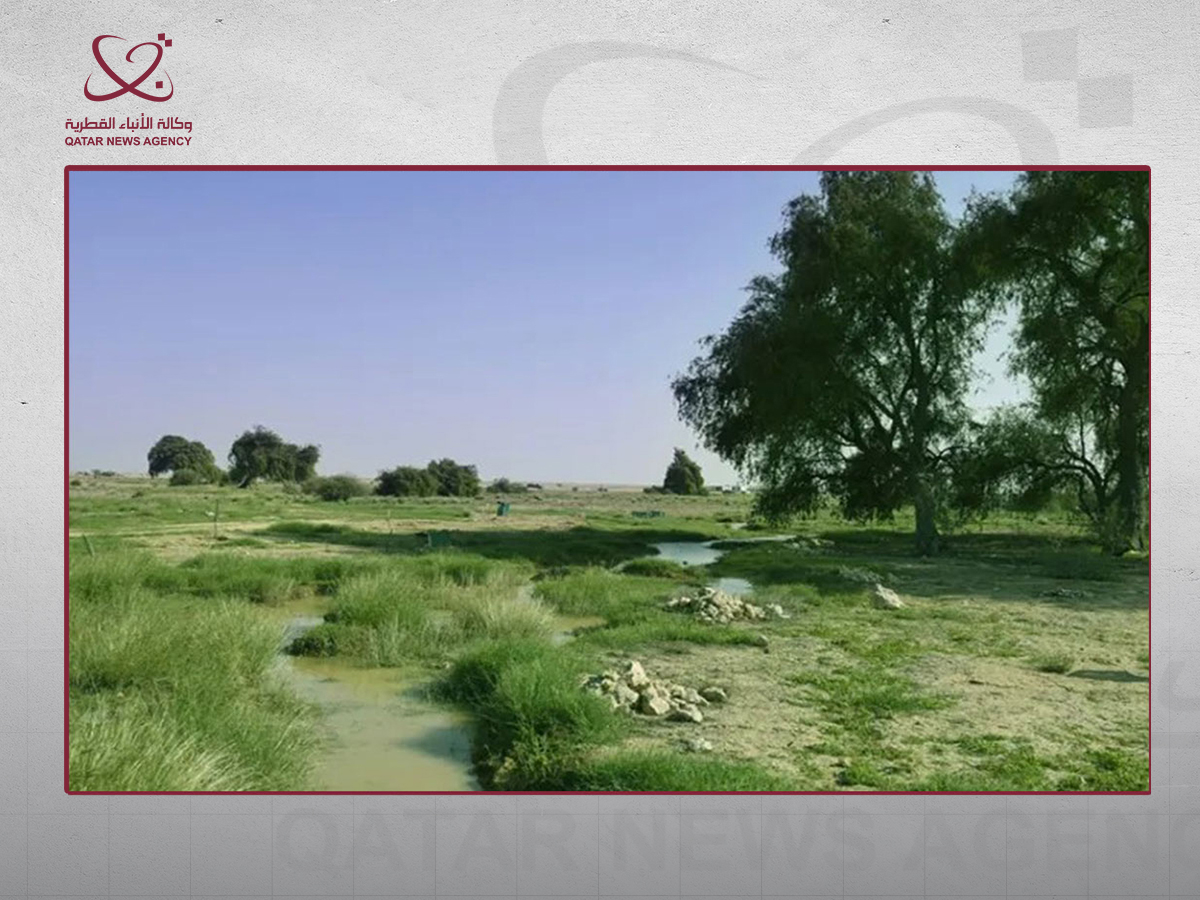
The State of Qatar has also launched a significant seed dispersal initiative, specifically designed to support and enhance natural vegetation cover across the country. This program aims to bolster the nation's flora by promoting the growth of native plants, which are well-adapted to the local environment and provide essential resources for local wildlife. Concurrently, a national campaign was initiated to remove the harmful mesquite tree (Prosopis juliflora), an invasive species known to negatively impact local ecosystems by outcompeting native plants and altering soil composition. This dual approach, focusing on both the promotion of indigenous species and the mitigation of threats from non-native plants, demonstrates a holistic strategy for ecological restoration and preservation.
Conservation efforts for specific species have been ongoing for several years, noting Qatar's long-term commitment to biodiversity. The protection of the hawksbill sea turtle (Eretmochelys imbricata), a critically endangered species, began in 2003. These long-term programs are absolutely key for the recovery and survival of vulnerable marine life in Qatari waters, providing consistent monitoring, protection, and research. The sustained focus on monitoring and protecting nesting sites at locations like Fuwairit Beach shows the dedicated resources and strategic planning allocated to marine conservation, ensuring the continuation of these vital species.
Another significant development in Qatar's expanding conservation framework is the inclusion of the Arabian Oryx Sanctuary under UNESCO protection. This prestigious designation recognizes the sanctuary's immense importance in preserving the Arabian oryx (Oryx leucoryx), a species that has been successfully brought back from the brink of extinction through dedicated and sustained conservation programs. The UNESCO protection provides an international framework for the sanctuary's continued preservation and management, ensuring its long-term viability and the ongoing success of the Arabian oryx reintroduction efforts. These multifaceted initiatives collectively show Qatar's unwavering commitment to environmental stewardship and the protection of its rich and unique biodiversity.
International Cooperation and Strategic Alliances
The Qatar National Environment and Climate Change Strategy (QNECC) is a cornerstone of the nation's environmental policy, aiming to significantly improve efforts to conserve and restore natural ecosystems and protect their unique characteristics. This national strategy is meticulously aligned with international commitments made by the State of Qatar, demonstrating its role as a responsible global citizen in addressing environmental challenges. The State of Qatar has actively engaged with global environmental agreements, having ratified the Convention on Biological Diversity (CBD), which sets out international legal obligations for biodiversity conservation. It has ratified the Cartagena Protocol on Biosafety, which governs the safe transfer, handling, and use of living modified organisms, and the Nagoya Protocol on Access and Benefit-sharing, which establishes frameworks for the fair and equitable sharing of benefits arising from the utilization of genetic resources. These ratifications show Qatar's deep engagement with global efforts to protect biodiversity and promote sustainable use of natural resources.
International organizations are also contributing significantly to ecosystem restoration efforts, often working in partnership with national governments and local communities. A notable example is UNESCO's 'MangRes' project, which is dedicated to restoring vital mangrove forests in seven World Biosphere Reserves across various regions. This project employs scientific initiatives led by local communities, recognizing that local engagement is critical for sustainable conservation practices. The 'MangRes' project focuses on community involvement to ensure that restoration efforts are not only ecologically sound but also culturally appropriate and economically beneficial for the local populations. Since 2021, UNESCO projects have supported more than 42 initiatives aimed at rehabilitating ecosystems and creating sustainable job opportunities for local communities. These initiatives contribute to both environmental recovery and economic development within the regions they operate, fostering a synergistic approach to conservation.
Citizen science plays an increasingly important and effective role in these international efforts, harnessing the power of public participation for scientific research and conservation. The UNESCO eDNA Expeditions sampling campaign, for instance, successfully engaged 250 citizen scientists across 19 countries. Participants in this innovative campaign utilized environmental DNA (eDNA) sampling techniques, which involve collecting genetic material present in water or soil samples, to identify species. Through their dedicated efforts, these citizen scientists identified over 4,000 species, providing invaluable data for biodiversity monitoring and conservation research. This collaborative approach not only expands the reach of scientific data collection but also fosters greater public awareness and engagement in protecting the planet's rich biodiversity.