From the archive
Qatar Boosts Logistics Sector to Become Regional Trade Hub
Qatar is investing heavily in its logistics sector, enhancing infrastructure and offering incentives to become a key regional trade hub.
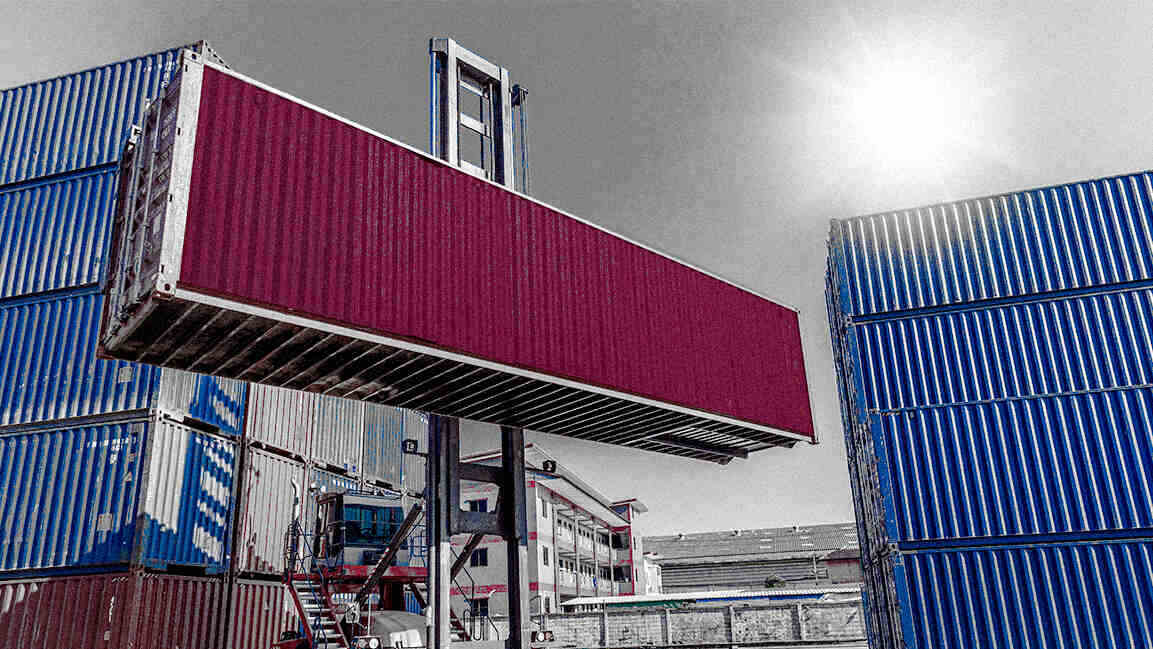
Qatar is actively enhancing its logistics sector to establish itself as a prominent regional trade hub, with its logistics market currently valued at over $2 billion. This strategic focus aims to boost the nation's economic diversification and connectivity across the Middle East. Investments in infrastructure, including key facilities like Hamad Port, Hamad International Airport, Ras Bufontas, and Umm Alhoul, are central to this expansion. The development initiatives are designed to streamline trade operations and attract international businesses, positioning Qatar as a critical link in global supply chains. The nation's logistics market is currently valued at more than $2 billion, showing the significant economic activity and potential within this sector.
Strategic Location and Connectivity
Qatar's geographical positioning provides significant advantages for global trade and logistics. Businesses operating from the nation can access nearly 60% of the world’s population within an eight-hour flight radius. This strategic location significantly reduces transit times for goods and services, enhancing efficiency for international commerce. This allows businesses established in Qatar to reach nearly 60% of the world’s population within an 8-hour flight, noting the country's unparalleled access to major global markets.
Within a 3,000-kilometer radius, businesses established in Qatar can reach markets comprising more than 2 billion consumers. This extensive market access shows the country's potential as a central distribution point, connecting various continents and facilitating widespread commercial reach. The proximity to such a large consumer base is a key factor in Qatar's ambition to become a leading regional trade hub, enabling companies to tap into markets of over 2 billion consumers.
Key Infrastructure Assets
Qatar is developing an integrated logistics ecosystem that centers on Hamad Port, Hamad International Airport, modern road networks, and specialized logistics zones. These assets are key to the nation's strategy for enhancing its trade capabilities. Hamad Port, a cornerstone of this infrastructure, has the capacity to handle more than seven million containers annually, supporting extensive maritime trade operations. This substantial capacity makes Hamad Port a vital hub for international shipping and trade. Complementing this, Hamad International Airport was designed to serve over 50 million passengers and manage significant air cargo volumes, facilitating global air freight and passenger movement. The combination of these facilities and networks aims to streamline the movement of goods and people, reinforcing Qatar's position as a key player in international logistics. The development of modern road networks further enhances connectivity, ensuring efficient inland transportation of goods to and from these major gateways.
Financial Incentives and Support
Qatar has launched a $1 billion investment incentives program designed to cover up to 40% of investment costs in strategic sectors, including logistics. This initiative aims to attract foreign and local capital into key areas of economic development. The $1 billion investment incentives program is a significant commitment to fostering growth and innovation across various strategic sectors, with logistics being a primary focus. Separately, in 2025, the nation introduced further incentives by reducing annual land rental fees by up to 50% in selected industrial and logistics zones. These measures are intended to reduce operational costs for businesses and enhance Qatar's appeal as a destination for logistics operations. The financial support forms a critical component of Qatar's broader strategy to diversify its economy and strengthen its position as a regional trade and logistics hub.
Expert Endorsements
The strategy to enhance Qatar's logistics sector is anchored by two free zones: Ras Bufontas, which is located adjacent to Hamad International Airport, and Umm Alhoul, situated near Hamad Port. These zones are central to the nation's efforts to attract international businesses and streamline trade operations. The strategic placement of Ras Bufontas next to Hamad International Airport capitalizes on air cargo efficiencies, while Umm Alhoul's proximity to Hamad Port leverages maritime trade advantages, creating a powerful multimodal logistics network.
Both the Ras Bufontas and Umm Alhoul free zones offer significant incentives for investors and companies. Businesses operating within these zones benefit from 100% foreign ownership, allowing international entities full control over their operations without the need for a local partner. Additionally, the free zones provide a streamlined business setup process, designed to simplify administrative procedures and accelerate the establishment of new ventures. These provisions aim to create an attractive environment for foreign direct investment and bolster Qatar's position as a regional trade and logistics hub. The availability of 100% foreign ownership and a streamlined business setup process in these free zones are key factors in attracting global enterprises seeking to establish a presence in the region.