From the archive
US Relocates Aircraft to Israel Amid Escalating Iran Tensions and Strait of Hormuz Incidents
US aircraft, including refueling tankers, moved from Qatar to Israel amid escalating Iran tensions and Strait of Hormuz incidents.
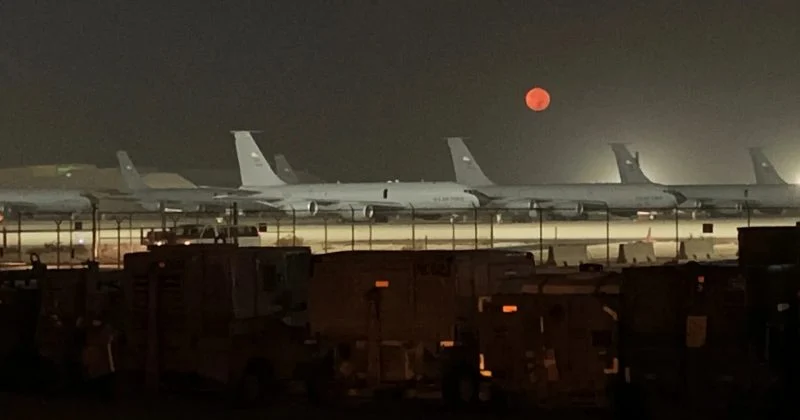
The United States has reportedly evacuated aircraft from Al Udeid Air Base in Qatar, relocating them to Ovda Air Base in Israel, amid heightened tensions in the US-Iran conflict. This strategic move follows a series of incidents in the critical Strait of Hormuz, a vital maritime chokepoint for global oil shipments. US Central Command attributes recent vessel "accidents" and other disruptions in the strait to Iranian actions as the conflict escalates. The rerouting of military assets is seen as a significant strategic adjustment in response to these perceived threats, signaling a strong posture in the region.
Strategic Aircraft Redeployment
At least four refueling tankers were specifically identified as being relocated to Ovda Air Base in southern Israel. This particular transfer marks the second time this year that the United States has evacuated aircraft from Al Udeid Air Base in Qatar, indicating a recurring pattern of asset repositioning in response to regional instability. The strategic relocation of these refueling tankers to Israel suggests a forward-deployed posture for potential U.S. And Israeli military operations, according to military analysts closely observing the situation. This repositioning allows for greater operational flexibility and reduced response times should further escalation occur. Despite these recent incidents and the heightened military activity, the US Central Command maintains its official stance that the Strait of Hormuz waterway remains open for international shipping, showing the importance of unimpeded global trade through this key passage.
The decision to move these critical refueling assets to Ovda Air Base, a facility located within Israel, notes the deepening security cooperation between the United States and Israel in addressing regional challenges. Such a move provides a logistical advantage, enabling longer-range missions and increased air support capabilities for potential operations in the broader Middle East. The frequency of these evacuations from Al Udeid Air Base, specifically the fact that this is the second instance this year, points to an evolving threat assessment by U.S. Military planners regarding the security of their assets in Qatar. This repeated relocation suggests a proactive approach to mitigating risks associated with the escalating US-Iran tensions and the volatile security environment in the Persian Gulf.
Escalation in Strait of Hormuz
The United States launched strikes in southern Iran, targeting areas in Bandar Abbas and Qeshm Island amid rising tensions. These strikes are part of a broader escalation in the US-Iran conflict over the strategic Strait of Hormuz, a waterway through which a significant portion of the world's oil supply passes. The Islamic Revolutionary Guard Corps (IRGC) has reported "accidents" involving vessels in the Strait of Hormuz, a critical maritime passage that has been a flashpoint in the ongoing tensions. The US attributes these vessel 'accidents' to Iranian actions amid heightened tensions, viewing them as deliberate provocations designed to disrupt international shipping and exert regional influence.
The US has intensified its military actions in the region under Operation Project Freedom, which commenced in May 2026. This operation aims to ensure the safe passage of merchant ships through the strait, a declared objective to protect global commerce and freedom of navigation. The increased military presence and operational tempo under Operation Project Freedom show the gravity with which the United States views the threats to maritime security in the Strait of Hormuz. The strikes against Bandar Abbas and Qeshm Island represent a direct response to perceived Iranian aggression and a clear signal of Washington's resolve to counter such actions. The strategic importance of these Iranian locations, particularly Bandar Abbas as a major port and naval base, indicates that the US military actions are targeting key logistical and operational hubs.
In response to US military actions, Iran has retaliated against US bases located in Kuwait, Bahrain, Jordan, and Qatar. These retaliatory strikes demonstrate Iran's capability and willingness to engage in a broader regional conflict, directly targeting countries hosting American forces. The escalation follows a period of heightened military activity from both sides, creating a precarious security situation across the Middle East. Market analysis indicates a 60.5% probability of Iranian military action against a Gulf state occurring on July 22, showing the perceived risk and the high level of concern among financial markets regarding potential conflict. These developments contribute to the broader context of increasing US-Iran tensions and military posturing in the Middle East, with both nations demonstrating a readiness to respond to perceived threats.
Broader Geopolitical Context
Tensions between the United States and Iran are escalating, contributing to a volatile regional security environment marked by uncertainty and increased military readiness. In Washington, President Donald Trump is reportedly considering military action against Iran’s nuclear program, a development that could dramatically alter the trajectory of the conflict. This consideration comes amid broader unrest within Iran, where internal protests and government crackdowns continue, adding another layer of complexity to the already strained external relations. The internal instability within Iran could influence the regime's decision-making regarding its regional activities and its nuclear ambitions.
Market pricing reflects this increased instability, suggesting heightened expectations of Iranian military action against Gulf states. This market sentiment is a tangible indicator of the perceived risk, with investors factoring in the potential economic and geopolitical consequences of further escalation. These tensions are particularly acute ahead of the July 22 date, with regional observers closely monitoring developments for any signs of direct confrontation or de-escalation. The possibility of military action against Iran's nuclear program represents a significant escalation point, potentially leading to widespread regional destabilization. The confluence of external military pressure, internal dissent, and economic sanctions creates a complex and unpredictable environment for the Iranian regime. The international community watches closely, concerned about the potential for a wider conflict that could have severe repercussions for global energy markets and regional stability.