From the archive
Qatar Champions Mediation as Strategic Foreign Policy Tool at GLOBSEC Forum
Qatar's Minister of State at the Foreign Ministry emphasized mediation as a strategic foreign policy tool and necessity at the GLOBSEC Forum in Prague.
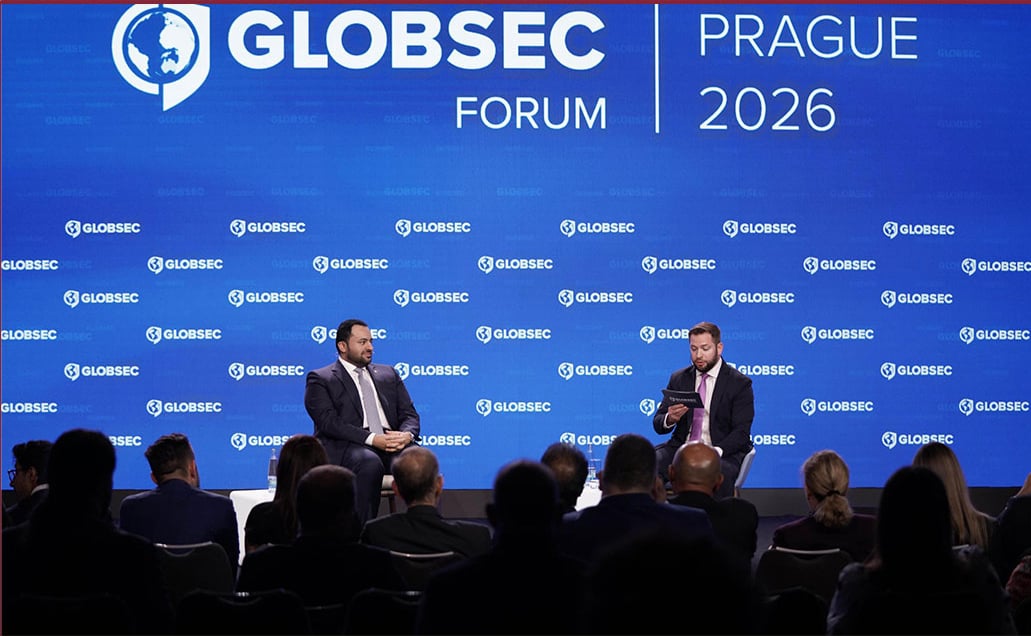
Qatar’s Minister of State at the Foreign Ministry Mohammed bin Abdulaziz Al-Khulaifi participated in the GLOBSEC Forum 2026 in Prague, where he articulated Qatar's approach to international relations. Al-Khulaifi spoke during a session titled “Pursuing Peace in the Middle East and Beyond,” emphasizing the country's commitment to diplomacy. He stated that mediation forms a core part of Qatar’s national identity and foreign policy. For Qatar, peace-making is considered not only a moral duty but also a strategic necessity in global affairs. This perspective shows a deep-seated belief that fostering peace is fundamental to global stability and human well-being. Al-Khulaifi noted that mediation serves as a strategic tool for Qatar to contain escalation, protect civilians, secure detainee releases, preserve dialogue, and create opportunities for stability. These efforts are often critical in de-escalating burgeoning crises and preventing their expansion into wider regional or international conflicts.
Qatar's Mediation Philosophy
Qatar's approach to mediation is rooted in Article 7 of the country’s constitution, providing a foundational legal basis for its diplomatic efforts. The nation has actively engaged in mediation, dialogue, and facilitation across various global flashpoints, including Gaza, Afghanistan, Iran, Lebanon, Sudan, Chad, Venezuela, and Ukraine. This broad involvement shows a core tenet of Qatari foreign policy: conflicts within the Middle East rarely remain localized, often impacting the Gulf, Red Sea, Levant, and other regions rapidly. The interconnectedness of these regions means that any instability can quickly ripple outwards, affecting trade routes, energy supplies, and broader geopolitical balances.
For Qatar, establishing and maintaining trusted communication channels represents the first priority for diplomatic tools aimed at fostering peace and stability. These channels are key for opening avenues for dialogue even among deeply entrenched adversaries. The country emphasizes that patience and confidentiality are essential qualities for effective mediation processes. Mediators must be prepared for protracted negotiations and maintain strict discretion to build trust among all parties involved. Qatar’s role in Iran-related files, for instance, stems directly from its demonstrated ability to maintain credible communication with diverse parties involved. This ability to engage with all sides, regardless of their political alignment, is a cornerstone of its mediation strategy. Without serious mediation efforts, the country asserts that many wars tend to become longer, more violent, and significantly harder to resolve, leading to prolonged suffering and instability.
The Human and Global Cost of Conflict
Humanitarian collapse, encompassing displacement, hunger, trauma, hostage-taking, family separation, and damage to civilian infrastructure, frequently emerges as the initial consequence of conflict. In Gaza, the humanitarian dimension is not secondary to diplomatic efforts but forms their core. The immediate and devastating impact on civilian populations necessitates urgent and sustained humanitarian interventions, which often run parallel to, or even precede, broader diplomatic initiatives. The destruction of essential services and the mass displacement of populations create a complex web of challenges that mediators must address alongside political solutions.
Prolonged wars can foster public distrust in diplomacy, leading to perceptions of dialogue as weakness and mediation as merely symbolic gestures. When conflicts drag on without resolution, the international community and affected populations can become cynical about the efficacy of diplomatic processes. Conflicts also exert significant pressure on the global economy by disrupting energy and food supplies, impacting investment, aviation, maritime security, and migration patterns. The ripple effects of regional conflicts can be felt worldwide, affecting commodity prices, supply chains, and financial markets. Even limited agreements, such as ceasefires, humanitarian truces, prisoner releases, or the establishment of communication channels, can contribute to preventing wider escalation. These smaller steps are critical in mitigating the broader impacts of conflict on both human lives and global stability, offering key breathing room and building blocks for more full peace. Such incremental successes can also help to restore faith in the diplomatic process.
Partnerships and Lasting Peace
Humanitarian diplomacy, encompassing efforts such as civilian releases, medical evacuations, humanitarian access, and family reunification, can reduce tensions and build trust among conflicting parties, according to officials. These actions demonstrate goodwill and can create a more conducive environment for political negotiations. Qatar has collaborated with Egypt, Turkey, and the United States in Gaza to facilitate ceasefire and humanitarian arrangements. These multinational partnerships highlight the complex and collaborative nature of effective mediation, where multiple actors often pool their resources and influence. Success in mediation is not always measured by the signing of a final agreement; it can also be defined by preventing escalation, opening communication channels, or saving lives. The immediate relief provided by humanitarian corridors or temporary ceasefires, for instance, can be a vital achievement in itself, even if a full peace deal remains elusive.
Lasting solutions to conflicts require political will from the parties involved and sustained support from regional and international partners. Without a genuine commitment from the warring factions to seek peace, even the most skilled mediation efforts can falter. Partnerships are essential for peace-building, providing political backing, humanitarian assistance, security guarantees, and investment for post-conflict recovery. These multifaceted collaborations ensure that peace, once achieved, has the necessary infrastructure and support to endure. Peace without reconstruction, employment opportunities, and strong institutions remains fragile, it was observed. A full approach that addresses the root causes of conflict and builds sustainable societal structures is critical for long-term stability.
Mohammed bin Abdulaziz Al-Khulaifi, Qatar’s Minister of State at the Foreign Ministry, stated that "Mediation can open the door to peace, but partnerships are what stop that door from closing again." This powerful analogy shows the critical role of sustained international cooperation in transforming temporary truces into enduring peace. Qatar will continue to work with its partners to maintain open communication channels, alleviate suffering, and support broader peace efforts, the Minister affirmed. This commitment reflects Qatar's ongoing dedication to its role as a key diplomatic facilitator on the global stage, leveraging its unique position and experience to contribute to a more stable and peaceful world.