From the archive
Qatar Condemns Israeli Offensive in Southern Lebanon as 'Dangerous Escalation'
Qatar condemns Israel's expanding ground offensive in southern Lebanon as a dangerous escalation and a breach of international law.
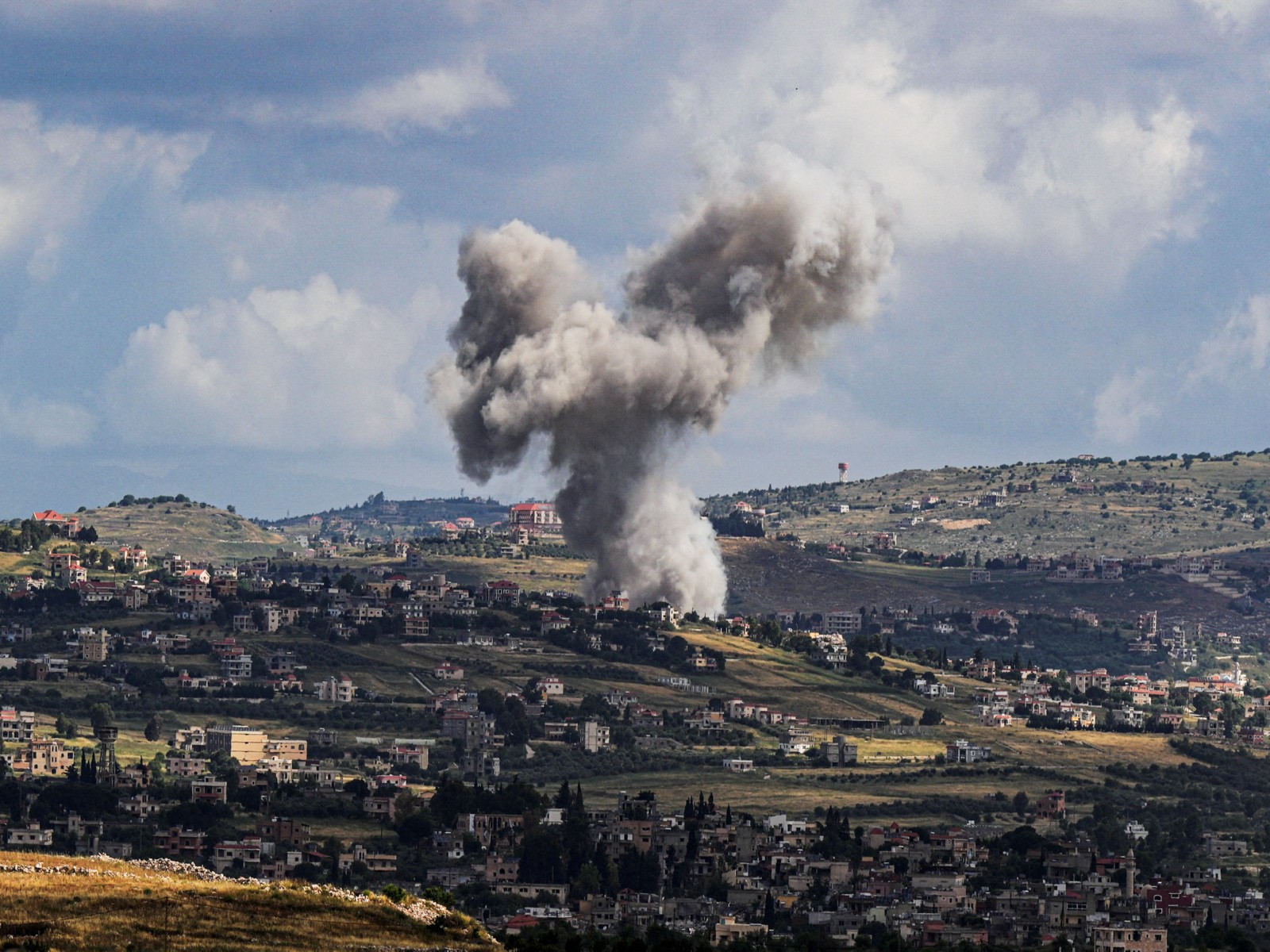
Qatar's Foreign Ministry strongly condemned Israel's ongoing "aggressions on Lebanon and the expansion of the scope of the occupation army's ground incursion in the south of the country and the targeting of civilians." The statement from Doha noted concerns over the escalating situation, describing Israel's actions as a "dangerous escalation and a flagrant violation of the sovereignty of the sister Lebanese Republic and a clear breach of the rules of international humanitarian law." Concurrently, Israeli Prime Minister Benjamin Netanyahu confirmed that Israeli forces have crossed the Litani River, indicating a significant advance in military operations. The developments show a deepening of the conflict in southern Lebanon, prompting international calls for de-escalation.
Israel Expands Ground Operations
Prime Minister Benjamin Netanyahu has instructed the Israel Defence Forces (IDF) to further "expand the incursion" in Lebanon, signaling an intensification of military operations. This directive comes as Israeli forces are currently operating near Nabatieh, a location identified as a Hezbollah stronghold in southern Lebanon. Netanyahu confirmed that Israeli forces have secured dominant terrain during these operations, asserting control over strategically important areas. The expansion of these ground incursions marks a critical phase in the ongoing military engagement.
The IDF elaborated on the scope and objectives of the offensive, stating that operations commenced several days ago in the Beaufort Ridge and Wadi al-Saluki area, both situated in southern Lebanon. These initial movements laid the groundwork for the broader incursion. The military's stated aims for the offensive include expanding the Forward Defence Line, degrading Hezbollah's military capabilities, and removing launch infrastructure used by the group. These actions follow earlier confirmations by Prime Minister Netanyahu that Israeli forces had crossed the Litani River, pushing deeper into Lebanese territory. The expanded ground incursions represent a significant development in the ongoing conflict in the region, aiming to reshape the security landscape along the border.
The strategic importance of these locations, particularly the Beaufort Ridge, is evident in the Israeli military's focus. The IDF's operations are designed to directly challenge Hezbollah's established presence and operational capacity in southern Lebanon. By targeting infrastructure and strongholds, Israel seeks to diminish the group's ability to pose a threat to its northern border. The scale of the current operations indicates a deliberate and sustained effort to achieve these objectives, with forces engaging in areas previously considered under firm Hezbollah control.
Netanyahu's Strategic Aims
Qatar considers the military campaign a "dangerous escalation and a flagrant violation of the sovereignty of the sister Lebanese Republic and a clear breach of the rules of international humanitarian law." Israeli Prime Minister Benjamin Netanyahu stated on Sunday that Israeli forces have "captured" Beaufort Castle in southern Lebanon. Mr. Netanyahu affirmed the capture of the Beaufort Ridge, stating, "Last night, our heroic fighters captured the Beaufort Castle. They proudly raised the flag of the State of Israel and the flag of the Golani Brigade there." He added, "I remind you that 44 years ago, this place was a symbol of a heroic battle by our fighters, but it was also a symbol of deep division among us. Today, we returned to Beaufort differently. We returned united, determined, and stronger than ever." This statement shows the historical significance of the location for Israel and frames the current operation as a unifying national effort.
Mr. Netanyahu stated that he has instructed the Israel Defence Forces (IDF) to "deepen and expand our hold on places that were under Hezbollah's control." This directive reflects a broader strategy to establish a more strong security buffer zone and dismantle Hezbollah's operational network. He claimed that since the beginning of the "War of Redemption," 8,000 Hezbollah terrorists have been eliminated. This figure notes the intensity and scope of the conflict as perceived by Israeli leadership. Mr. Netanyahu claimed that since Operation Roaring Lion, 3,000 Hezbollah terrorists have been eliminated, indicating a significant reduction in the group's fighting force during that specific campaign. He further claimed that in the past month alone, 700 Hezbollah terrorists have been eliminated, suggesting an accelerated pace of engagements and casualties for the militant group.
Mr. Netanyahu described the capture of Beaufort as "a dramatic stage and a dramatic change in the policy we are leading. We have broken the barrier of fear. We are taking the initiative; we are operating on all fronts - in Syria, in Gaza, and in Lebanon. We have established security zones beyond our borders to protect our communities." This full approach, as articulated by the Prime Minister, signifies a shift towards proactive military engagement across multiple fronts to enhance Israel's security posture. The establishment of security zones beyond Israel's borders is presented as a measure to safeguard Israeli communities from potential threats.
Addressing operations in Gaza, Mr. Netanyahu stated that Israel is "tightening" its grip on Hamas and currently controls around 60 per cent of Gaza. This claim provides an update on the progress of military operations in the Palestinian territory. His directive is to move to take 70 per cent of Gaza, indicating a clear objective for the next phase of the campaign there. Mr. Netanyahu concluded, "It will take time, but we will complete the mission," emphasizing a commitment to the stated military goals despite the anticipated duration of the conflict.
International and Regional Reactions
Qatar urged global intervention, demanding that foreign governments and international organisations exert pressure on Israel to cease its military operations. The call from Doha emphasized the necessity of international action to de-escalate the conflict and protect civilian lives. This demand follows Qatar's condemnation of the Israeli offensive as a "dangerous escalation" and a "flagrant violation" of Lebanese sovereignty and international humanitarian law. The Qatari Foreign Ministry's statement showed the potential for further destabilization in the region if the military actions continue unchecked.
In a related development, Qatar's Minister of State at the Ministry of Foreign Affairs, Mohammed bin Abdulaziz bin Saleh Al-Khulaifi, held a phone call with Lebanon's Deputy Prime Minister, Tarek Mitri. The discussion between the two officials focused on the ongoing regional developments and the implications of the intensified military actions in southern Lebanon. This diplomatic engagement shows Qatar's active role in addressing the crisis through bilateral channels, seeking to coordinate responses and explore avenues for a peaceful resolution. The phone call noted the shared concerns between Qatar and Lebanon regarding the escalating situation and the imperative to protect civilian populations. The international community continues to monitor the situation closely, with calls for restraint and adherence to international law growing louder as the conflict expands.