From the archive
Qatar Council of Ministers Tackles Regional Security, Economic Strategy, and International Cooperation
Qatar's Council of Ministers met to discuss regional security, economic strategy, and international cooperation, condemning Iranian attacks and approving…
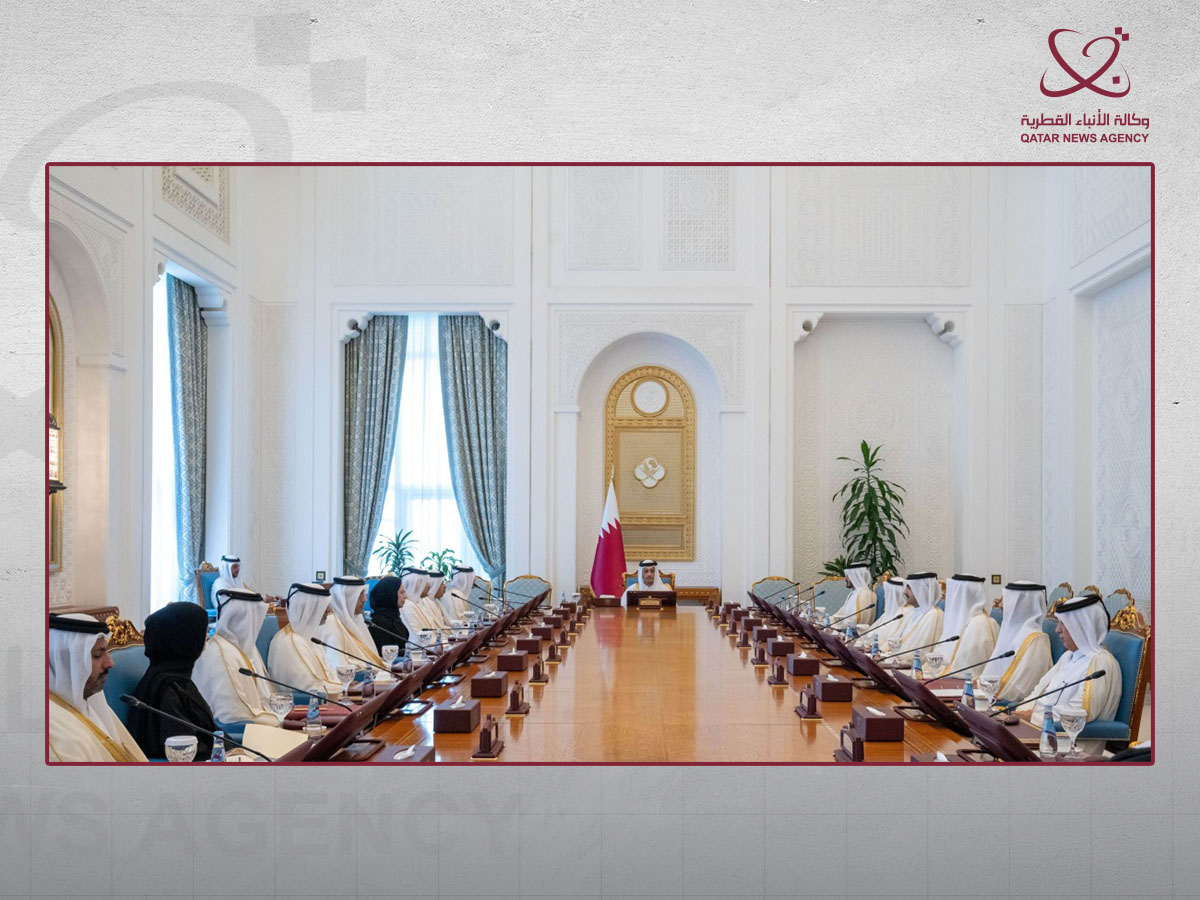
The Council of Ministers, chaired by the Prime Minister and Minister of Foreign Affairs, H.E. Sheikh Mohammed bin Abdulrahman bin Jassim Al Thani, convened its regular meeting at the Amiri Diwan. This significant session, which took place on June 10, 2026, addressed a range of critical issues, from regional security concerns to national economic strategies and international cooperation efforts. During the session, the Council reiterated Qatar's condemnation of Iranian attacks that targeted Kuwait, Bahrain, and Jordan on Wednesday. Qatar's Council of Ministers described these actions as a flagrant violation of sovereignty and international law, emphasizing the serious nature of such breaches in regional stability.
Condemnation of Regional Attacks
The Council of Ministers' regular meeting, held on June 10, 2026, saw Qatar renew its strong stance on recent regional events. The Council expressed full solidarity with Kuwait, Bahrain, and Jordan following the attacks, showing the importance of collective security in the Gulf region. Qatar affirmed its unwavering support for any measures taken by these nations to preserve their sovereignty and security in the face of external aggression. This declaration followed the Council's condemnation of Iranian attacks that targeted Kuwait, Bahrain, and Jordan on Wednesday, which it described as a flagrant violation of sovereignty and international law. The Council's statement noted the need for adherence to international norms and principles to maintain peace and stability in the Middle East.
Economic and Legal Advancements
In a move set to modernize national regulatory frameworks, the Council of Ministers received information regarding the Shura Council's endorsement of a draft law concerning measurement. This key legislative proposal was meticulously prepared by the Qatar General Organization for Standards and Metrology in close coordination with the Ministry of Commerce and Industry. The new draft law is set to supersede Law No. (21) of 1972, which previously governed the unification and determination of standards, measures, and weights. The replacement of the outdated legislation signifies Qatar's commitment to updating its legal infrastructure to meet contemporary economic and industrial requirements, ensuring more accurate and standardized practices across various sectors. The Council was informed that this new law aims to enhance precision and reliability in commercial transactions and industrial production.
In another significant development aimed at bolstering the national economy, the Council of Ministers approved the general policy and strategy for national local content. This full policy and strategy were developed collaboratively by the Ministry of Finance in coordination with the National Planning Council. The adopted framework aims to strengthen national local content within government procurement processes, thereby stimulating local industries and businesses. The strategy is designed to foster the creation of sustainable local value, contributing to economic diversification and self-reliance. This initiative is expected to play a vital role in enhancing the competitiveness of Qatari products and services. Additionally, the Council heard a presentation from the Minister of Municipality. The Minister outlined the application of Geographic Information Systems (GIS) as an effective instrument for both planning initiatives and decision-making processes, showcasing how technology is being leveraged for urban development and resource management.
International Agreements and Cooperation
Furthering Qatar's global engagement, the Council of Ministers approved a draft memorandum of understanding for cooperation between the Ministry of Justice in Qatar and the Ministry of Justice in the Hong Kong Special Administrative Region of the People's Republic of China. This agreement aims to foster collaboration on legal matters between the two jurisdictions, facilitating mutual assistance and knowledge exchange in judicial and legal fields. The memorandum is expected to strengthen bilateral relations and enhance legal frameworks.
Separately, the Council of Ministers also approved a draft memorandum of understanding between the Qatar Financial Centre Regulatory Authority and the Agency for Regulation and Development of the Financial Market in Kazakhstan. This initiative is designed to enhance cooperation and regulatory oversight in the financial sectors of both Qatar and Kazakhstan. This agreement will promote best practices, ensure financial stability, and facilitate investment flows between the two nations, reinforcing Qatar's position as a regional financial hub.