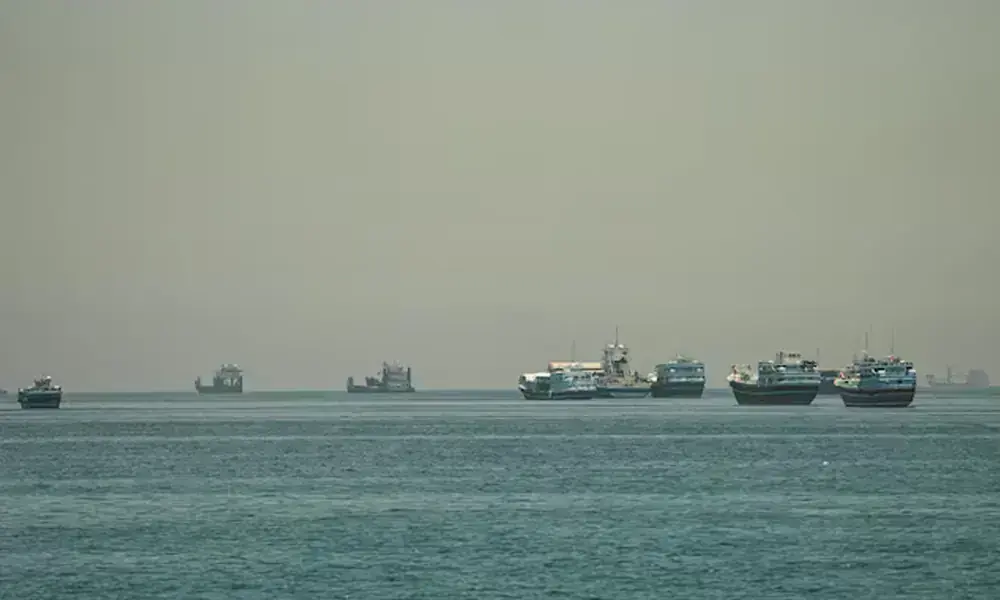
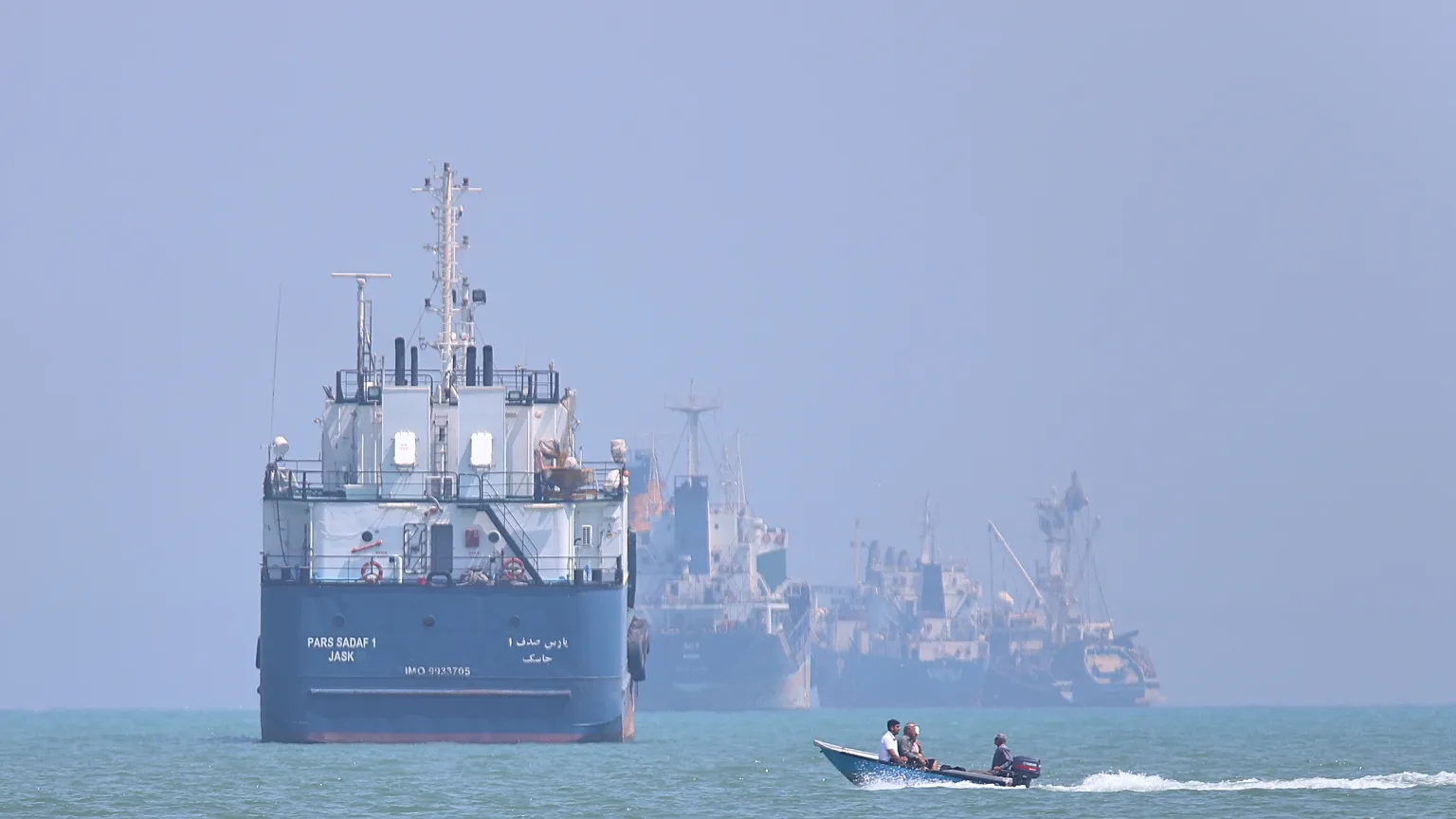
From the archive
Qatar: Gaza War is 'Nucleus' of Regional Conflict, Only a Deal Will Resolve It
Qatar states the Gaza war is the 'nucleus' of regional conflict, including Iran's actions, and a comprehensive deal is the only resolution.
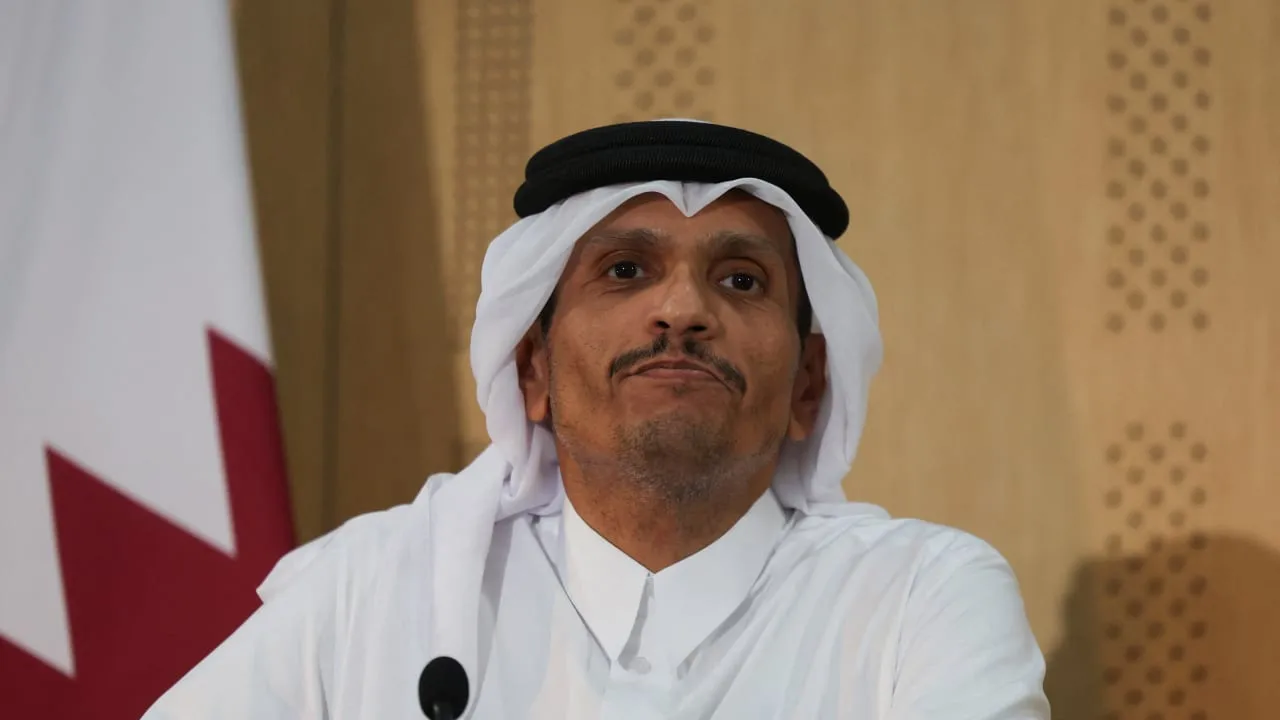
Qatari Foreign Ministry Spokesperson Majed al-Ansari stated Monday on CNN that the conflict involving Iran would "only be resolved through a deal." Ansari emphasized that the war Israel fought in Gaza is the "nucleus" of the broader regional crisis, showing its central role in escalating tensions. He argued that the recent developments, including those in the Strait of Hormuz, stem from the Gaza conflict and require a solution to the Palestinian issue. Speaking on CNN, Ansari explicitly stated that the Iran conflict will 'only be resolved through a deal.'
"We've said always in Qatar and in the region, the nucleus of this issue was what happened in Gaza, and we need to go back to that, starting with the recent developments in the Strait of Hormuz and ending with finding a solution to the Palestinian issue," al-Ansari said. He added that the Gaza situation "cannot be dealt with as an afterthought" and requires careful regional and international collaboration. According to al-Ansari, any leverage used by either side will ultimately become part of a signed agreement, and reaching that agreement sooner would mitigate suffering for the international economy and the region's people.
The Case for a Deal
Majed al-Ansari, Qatar's Foreign Ministry Spokesperson, argued that any leverage employed by either side in the regional conflict would ultimately become part of a final agreement. "Whatever leverage is used on either side will end up as an item on an agreement that is signed at the end," Ansari stated, reasoning that such a resolution is inevitable. He further emphasized the urgency of reaching such a resolution, asserting that "The sooner we get to that agreement, the less suffering that will be had on the international economy, [and] also on the peoples of this region." This perspective notes Qatar's view that prolonged conflict only exacerbates global and regional hardships.
Ansari expressed doubts about an immediate solution to the ongoing crisis, suggesting that the "stalemate" between Washington and Tehran could only be phased out over time. This indicates a recognition of the deep-seated nature of the tensions between the two powers. He also cautioned CNN that the closure of the Strait of Hormuz must not become an accepted norm. "We need to kill this in its infancy. It cannot become the new normal in war for countries to just close waterways in this way," Ansari warned, showing the potential for severe global repercussions if such actions are allowed to persist. He stressed that Qatar’s two main priorities were ensuring the strait remains open and preventing 'no military escalation in the region, whether it be the missiles falling on our residential areas in the Gulf or the attacks on Iran.'
He noted the widespread impact of disruptions to maritime security, noting that the world is already experiencing significant challenges. "We've seen death and destruction at unbelievable levels as a result of maritime security being affected," Ansari said. He added that the current situation, with only one strait impacted, is causing "inflation problems, is facing energy security problems, food security problems." Ansari warned, "The world today, with just one strait being affected like this, is facing inflation problems, is facing energy security problems, food security problems. We are facing an industrial catastrophe if this continues, and this is just one waterway." Ansari concluded that if such disruptions persist, the world faces "an industrial catastrophe," emphasizing the critical role of the Strait of Hormuz as just one waterway and the broader implications of its closure.
Gaza as the Core Issue
Qatar's Foreign Ministry Spokesperson Majed al-Ansari stated that the primary concerns for Qatar involve ensuring the Strait of Hormuz remains open and preventing any military escalation in the region. This includes averting missile impacts on residential areas in the Gulf and attacks on Iran. Ansari emphasized that Qatar consistently views the situation in Gaza as central to regional instability, asserting that the 'nucleus' of the broader regional crisis was the war Israel fought in Gaza.
"We've said always in Qatar and in the region, the nucleus of this issue was what happened in Gaza, and we need to go back to that, starting with the recent developments in the Strait of Hormuz and ending with finding a solution to the Palestinian issue," al-Ansari stated. He reiterated that the ongoing conflict in Gaza is not a secondary concern but the core driver of broader tensions, including those affecting vital shipping lanes. Addressing the Palestinian issue is therefore key for regional stability.
Al-Ansari further stressed that the Gaza situation demands immediate and focused attention, rather than being treated as a peripheral issue. "This cannot be dealt with as an afterthought. It has to be something that we work on carefully, regionally, and working with the international partners," he said. He noted the necessity of collaborative efforts involving both regional actors and international partners to effectively address the crisis. This approach, according to al-Ansari, is essential for de-escalating tensions and achieving a lasting resolution in the Middle East. He also claimed that sanctions against Iran had not 'yielded the results that have been expected,' suggesting a need for alternative diplomatic strategies.
Regional Dynamics and Economy
Qatar has experienced repeated attacks from Iran since Israel and the United States struck Iran in late February. Doha's economy and energy infrastructure were not spared from Iranian drones and missiles during these incidents. Majed al-Ansari, Qatar's Foreign Ministry Spokesperson, claimed that sanctions against Iran had not "yielded the results that have been expected," reinforcing his call for a negotiated settlement. These attacks show the direct impact of regional tensions on Qatar's security and economic stability.
In recent weeks, three liquefied natural gas (LNG) cargoes loaded in Qatar and the United Arab Emirates were transferred between ships outside the Strait of Hormuz for delivery to India and Japan. These transfers highlight the strategic importance of Gulf energy exports and the efforts to ensure their continued flow despite regional volatility. Dr. Ariel Admoni suggested that Ansari’s stance toward the Islamic Republic could be connected to Qatar's LPG shipments to India and Japan, indicating potential economic motivations behind Doha's diplomatic positioning. Former Wilson Center global fellow Thomas O’Donnell informed the Post that US officials assessed the Strait of Hormuz was losing its strategic value, a perspective that contrasts with Ansari's warnings about its critical importance. Admoni also stated that Gulf Cooperation Council (GCC) states had been less "convincing" on presenting a unified approach toward Iran in the latest round of conflict, suggesting a divergence in regional diplomatic strategies.
Analyst Perspectives
Dr. Ariel Admoni observed that Qatar's Foreign Ministry Spokesperson Majed al-Ansari's characterization of the regional crisis as a "spillover" from the Gaza conflict enables Doha to adopt an "I told you so" position regarding the broader tensions. Admoni stated that Ansari's framing of Gaza as the 'spillover' from the Gaza war allows Doha to adopt an 'I told you so' stance, implying a certain vindication of Qatar's long-held views on the centrality of the Palestinian issue. Admoni further cautioned that Doha's proposed path to peace would necessitate security concessions from both Israel and Western nations. These concessions, according to Admoni, would form the basis of the Qatari vision for regional stability, noting a specific diplomatic approach that may require significant shifts in policy from other international actors. Admoni warned that Doha’s version of peace would rely on security concessions from Israel and the West, showing the demanding nature of Qatar's proposed framework for de-escalation and resolution.