From the archive
Qatar Mediates U.S.-Iran Diplomacy Amidst Sanctions and Strait Tensions
Qatar mediates U.S.-Iran diplomacy amid sanctions and tensions. U.S. states no talks are underway, demanding Iran show meaningful engagement first.
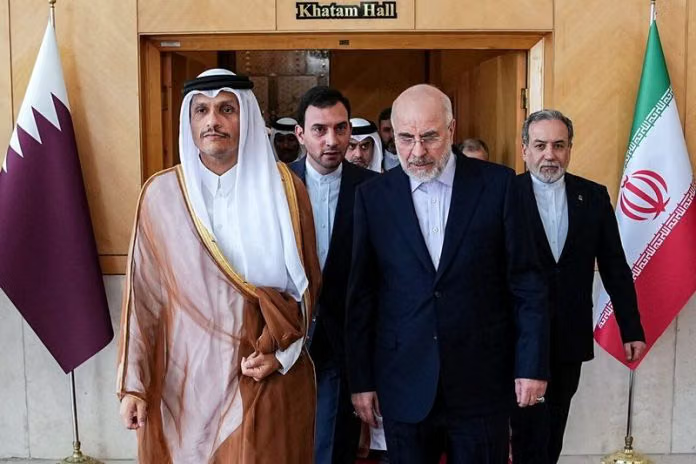
Qatar’s prime minister visited Tehran on Thursday, seeking to revive stalled diplomacy six months into the war. The visit by Qatar’s Prime Minister Sheikh Mohammed bin Abdulrahman Al Thani occurred as U.S. President Donald Trump stated Washington was not currently engaging in discussions with Iran. "We don’t want to speak to them. We’re not looking to meet or anything," President Trump said, emphasizing a firm stance from the White House. White House press secretary Karoline Leavitt affirmed this position, stating that no negotiations are currently underway between the United States and Iran. Leavitt added, "No negotiations are happening right now, and this will continue until the president feels that maybe they come to the table in a meaningful way. We have not seen that yet." This statement showed the administration's demand for a substantive shift from Tehran before any dialogue could commence.
The diplomatic mission by Qatar’s prime minister, visiting Tehran on Thursday, was explicitly aimed at reviving stalled diplomacy, which has seen little progress six months into the ongoing conflict. This effort comes amidst a backdrop of persistent tension and the U.S. Administration's unwavering pressure campaign.
Diplomatic Push and U.S. Pressure
The U.S. Economic campaign against Tehran will persist until Iran decides to negotiate meaningfully, according to U.S. Officials. This strategy forms a cornerstone of Washington’s approach to the Islamic Republic. White House press secretary Karoline Leavitt stated on Thursday that President Donald Trump "continues to retain all options on the table" regarding Iran, indicating that all potential actions remain under consideration by the administration. Leavitt elaborated on the administration's approach, saying, "We’ve had Operation Epic Fury to destroy their military. Now we have Operation Economic Outcast to destroy their economy." These operations signify a two-pronged strategy targeting both Iran's military capabilities and its economic infrastructure.
Trump, who is facing political pressure domestically over rising energy prices ahead of November congressional elections, has reportedly chosen to emphasize economic sanctions as a primary tool to exert pressure on Iran. This focus on economic measures is seen as a way to address both foreign policy objectives and domestic concerns. The U.S. Economic campaign against Tehran would continue until Iran decides to negotiate meaningfully, a condition reiterated by U.S. Officials.
In Tehran, Qatar’s Prime Minister Sheikh Mohammed bin Abdulrahman Al Thani urged a return to diplomacy during talks with Iran’s top negotiator Mohammad Baqer Qalibaf on Thursday. He showed the importance of de-escalation and finding a peaceful resolution to the ongoing conflict. Iran, for its part, called on regional neighbors to prevent the U.S. From using their territory to carry out military or economic attacks against the Islamic Republic. This appeal notes Iran's concern over potential regional involvement in the conflict and its desire to isolate any U.S. Actions. Mohsen Rezaei, the secretary of Iran’s Supreme National Security Council, conveyed to the Qatari prime minister that Tehran would strike U.S. Military and economic interests if Washington engaged in "mischief" against Iran. This warning from a high-ranking Iranian official signals a readiness to retaliate against perceived provocations. Leavitt had previously indicated that "No negotiations are happening right now, and this will continue until the president feels that maybe they come to the table in a meaningful way. We have not seen that yet," reinforcing the U.S. Position that the onus for initiating meaningful dialogue rests with Tehran.
Strait of Hormuz Impasse
Major combat operations have been paused for several weeks, yet little progress has been made toward a broader peace agreement or the reopening of the Strait of Hormuz, a critical shipping route. This lack of advancement shows the deep-seated disagreements that persist between the parties. Iran is currently preparing a list of conditions for reopening the Strait of Hormuz, following requests from mediators to outline its requirements. This move suggests a potential pathway for negotiation, provided Iran's demands can be addressed. A June memorandum of understanding between Washington and Tehran previously collapsed, partly due to disagreements over the future of the Strait of Hormuz, the narrow waterway between Iran and Oman through which approximately a fifth of global energy supplies transited before the conflict. The failure of this prior agreement illustrates the complexity of finding common ground on this vital maritime passage.
Iran has sought to assert control over the strait and impose fees on vessels it authorizes, while Washington maintains that it should remain an open international waterway. This fundamental difference in interpretation of maritime law and sovereignty has been a significant point of contention. Qatar’s Prime Minister Sheikh Mohammed bin Abdulrahman Al Thani stated on X that he emphasized the importance of freedom of navigation through the Strait of Hormuz during his discussions. His statement aligns with the international community's general position on open maritime passages. He and the Iranian foreign minister also discussed a proposal to establish a temporary joint Iranian-Omani shipping corridor through the strait, alongside a joint project to clear mines. This initiative suggests a potential diplomatic solution aimed at ensuring safe passage and shared responsibility.
Iran’s Revolutionary Guards announced on Wednesday that Iran and Oman had reached an agreement in principle regarding the administration of traffic in the strait and the sharing of revenues. This bilateral agreement, if fully implemented, could represent a significant step towards de-escalation and a more structured approach to managing the strait. The International Maritime Organization has reported 70 incidents in the strait since February 28, which have resulted in the deaths of 19 seafarers. These incidents highlight the volatile and dangerous nature of the waterway amidst the ongoing tensions. The fact that Iran has sought to exert control over the strait and charge fees to ships it authorizes, while Washington insists it should remain an open international waterway, remains a central challenge to any lasting resolution.
Historical Context and Conditions
Six months after U.S. And Israeli forces launched an attack on Iran, resulting in the death of its supreme leader and severe injury to his son and successor, the Iranian government remains under economic siege, according to reports. Despite these immense pressures, Tehran has maintained its hold on power and has demonstrated little urgency to engage in negotiations. This resilience, despite significant losses, indicates a strong internal resolve within the Iranian leadership. Iran's conditions for dialogue include an end to the U.S. Blockade on Iranian ports, financial compensation, and the removal of existing sanctions. These demands represent significant concessions that the U.S. Has so far been unwilling to grant.
Mohsen Rezaei, the secretary of Iran’s Supreme National Security Council, stated that the United States must first meet Iran’s conditions before Tehran would consider reopening the Strait of Hormuz. These conditions include an end to the U.S. Blockade on Iranian ports, compensation for damages, and the removal of existing sanctions. This firm stance from Tehran indicates that it expects concrete actions from Washington before any significant diplomatic progress can be made on vital issues like the strait. Iran has been subject to various forms of U.S. Sanctions since the Islamic revolution in 1979, a historical context that shapes its current negotiating posture and deep-seated mistrust.
Thousands of individuals have also died, primarily in Iran and Lebanon, since the U.S. And Israel initiated their attack on Iran. This human cost shows the severe impact of the conflict on the region. The stated goals of these actions were to prevent Iran from acquiring a nuclear weapon, support efforts to overthrow the Iranian government, and dismantle Tehran’s missile program. These objectives highlight the multifaceted nature of the U.S. And Israeli strategy against Iran, encompassing both military and political dimensions. The ongoing economic siege has been a central component of this strategy, aiming to compel Iran to change its policies or leadership. However, despite the significant pressure, the Iranian government has continued to hold power, showing little urgency to negotiate on terms dictated by its adversaries.