From the archive
Qatar Mourns 'Godfather of LNG' Abdulla bin Hamad al-Attiyah, Architect of Energy Dominance
Qatar mourns Abdulla bin Hamad al-Attiyah, the 'godfather of LNG,' who transformed the nation's energy sector into a global leader.
Qatar’s former oil minister, Abdulla bin Hamad al-Attiyah, a key figure in the nation's economic transformation, passed away on May 27. His death resulted from complications related to a double lung transplant he received over a decade ago. Affectionately known as the "godfather of LNG," Mr. Al-Attiyah was a key architect in the country's energy sector development, whose vision propelled Qatar onto the global stage. He had stepped back from the political limelight in 2015, concluding more than 20 years of dedicated service that profoundly shaped Qatar's liquefied natural gas industry. Reflecting on the nation's remarkable energy achievements, Mr. Al-Attiyah once stated, "We achieved a miracle," a sentiment that encapsulates the scale of his contributions. His legacy is one of strategic foresight and relentless execution, transforming a small Gulf state into a global energy powerhouse.
Transforming a Nation's Economy
When Abdulla bin Hamad al-Attiyah assumed his ministerial role in 1992, Qatar’s economy faced a significant crisis, grappling with severe financial pressures. Oil prices had plummeted below $10 per barrel, a stark indicator of the challenging global energy market. Concurrently, the nation’s oil production had dramatically collapsed from 600,000 barrels per day to approximately 350,000 barrels per day, further exacerbating the economic downturn. At that critical juncture, Qatar had not yet begun to exploit the vast gas resources located offshore the tiny peninsula, which would later become the bedrock of its prosperity.
It was against this backdrop that Sheikh Hamad Bin Khalifa al-Thani, Qatar’s ruler at the time, issued a key directive. He tasked Mr. Al-Attiyah with the formidable challenge of developing the country’s energy sector without relying on state financial support, pushing for innovative solutions and international partnerships. In response, Mr. Al-Attiyah embarked on an ambitious outreach effort, seeking foreign investment and expertise. ExxonMobil, Shell, and Total became the first international oil companies to heed his call and invest in Qatari gas projects, recognizing the immense potential of the North Field. This marked the beginning of a series of strategic alliances that would define Qatar's energy future. Mr. Al-Attiyah initially approached BP, which was the first multinational company he engaged, presenting them with the opportunity to participate in Qatar's nascent gas industry. However, the company ultimately turned down the opportunity, a decision that would later be seen as a significant missed chance. BP remains the only major international energy company without a stake in the existing Ras Laffan complex or its two ongoing expansion projects, noting the long-term implications of that early decision. Under Mr. Al-Attiyah's leadership, this strategic approach laid the groundwork for Qatar's future as a global energy powerhouse, demonstrating a remarkable ability to attract essential capital and technology when domestic resources were constrained.
Rise to Global LNG Leadership
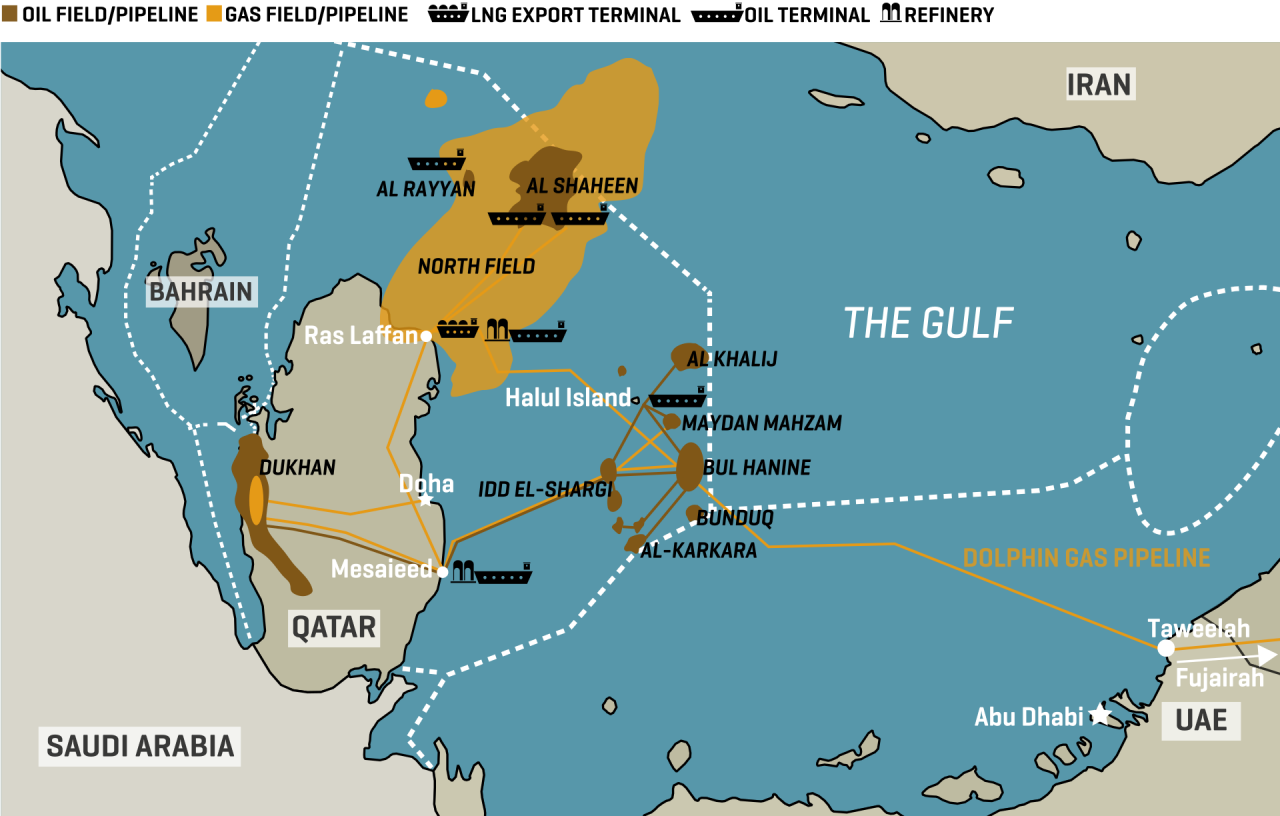
The commissioning of the first liquefied natural gas (LNG) train at Ras Laffan in 1997 marked a significant milestone in Qatar's energy development, signaling the nation's entry into the global LNG market. This event laid the foundation for the country's ambitious expansion in the global energy market, transforming its economic landscape. Under the visionary guidance of Abdulla bin Hamad al-Attiyah, Qatar rapidly scaled its LNG production capabilities, investing heavily in infrastructure and technology. By December 2010, the nation had achieved a remarkable feat, increasing its LNG output from a starting point of zero to an astonishing 77 million tonnes per year (t/y). This rapid and unprecedented expansion propelled Qatar onto the global stage as a dominant force in the energy sector, demonstrating unparalleled growth in a relatively short period.
Qatar's strategic investments and development efforts culminated in the country becoming the world's largest LNG exporter, a testament to its abundant natural gas reserves and Mr. Al-Attiyah's leadership. This leadership position was solidified by 2006 when Qatar successfully overtook established players like Indonesia and Malaysia to become the world’s largest LNG producer. This achievement showed Mr. Al-Attiyah's vision and the nation's unwavering commitment to leveraging its vast natural gas reserves for economic prosperity and global influence. The scale of this transformation was immense, moving from an unexploited resource to global dominance within a decade. Even after being surpassed in 2020 by Australia and the USA, Qatar maintained its prominent standing, remaining firmly in the top three global LNG producers. This enduring position reflects the foundational work and sustained growth initiated during Mr. Al-Attiyah's tenure, ensuring Qatar's continued relevance in the international energy landscape. His strategic foresight in developing long-term supply contracts and fostering strong relationships with international partners was key in securing Qatar's market share and establishing its reputation as a reliable energy supplier.
Regional Impact and Legacy
Qatar’s energy strategy under Abdulla bin Hamad al-Attiyah had significant regional implications, fostering greater energy interconnectedness in the Gulf. Dolphin Energy, for instance, became the first cross-border gas project in the Gulf, a new initiative that supplied pipeline gas from Qatar’s prodigious North Field to key economic hubs such as Abu Dhabi, Dubai, and onward to Oman. This project exemplified regional cooperation and Qatar's role as a vital energy provider. The United Arab Emirates also frequently turned to Qatar for additional supplies to meet its soaring electricity demand, particularly during peak consumption periods, noting the critical and interconnected nature of regional energy needs. These collaborations showcased Qatar's key role in supporting the energy security of its neighbors. However, the region’s geopolitical landscape presented challenges for Qatar's energy infrastructure, showing the inherent vulnerabilities of such critical assets. In a significant incident, Iranian projectiles struck Ras Laffan in March 2026 during the US-Israeli war on Iran. This attack resulted in two liquefied natural gas (LNG) trains being knocked out of commission, causing substantial disruption. This incident forced a declaration of force majeure on all exports from the facility, illustrating the profound impact of geopolitical tensions on energy supply chains and the global market. Mr. Al-Attiyah's efforts in diversifying Qatar's export markets and building strong infrastructure helped mitigate some of these risks, but the 2026 incident served as a stark reminder of the external pressures on energy production.
Recognition and End of an Era
Abdulla bin Hamad al-Attiyah received numerous honors and accolades from governments and institutions he engaged with internationally, a testament to his global standing and diplomatic acumen. These recognitions showed his significant contributions to the global energy dialogue and his role in fostering international cooperation. In 2008, Emperor Akihito of Japan awarded him Japan’s Grand Cordon of the Order of the Rising Sun, one of the highest honors bestowed by the Japanese government, recognizing his instrumental contributions to strengthening energy ties between Qatar and Japan. This award noted his success in securing long-term LNG contracts that were vital for Japan's energy security. His passing marks the end of an era for Qatar's energy sector, leaving behind a profound and indelible legacy of transformation, strategic vision, and national prosperity. His influence extended beyond economic growth, shaping Qatar's international relations and its identity as a leading global energy player.