From the archive
Qatari LNG Resumes Pakistan Supply Amid Regional Tensions
Qatari LNG shipment arrives in Pakistan, first through Strait of Hormuz since July, offering temporary relief to the country's power sector.
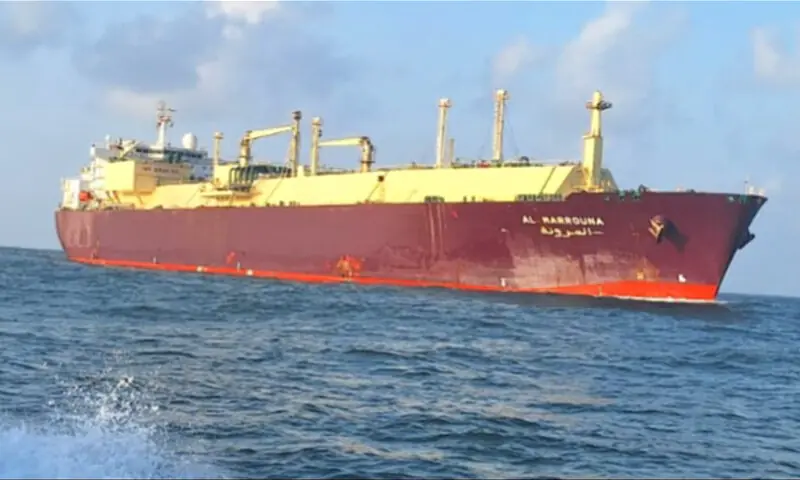
A cargo ship transporting approximately 82,000 tonnes of liquefied natural gas (LNG) from Qatar arrived in Pakistan on Thursday morning, marking the first such shipment through the Strait of Hormuz since July. The substantial volume of LNG carried by the vessel shows the significance of this delivery for Pakistan's energy security. The vessel docked at the Engro LNG Terminal at Port Qasim, delivering a key energy supply that is expected to alleviate some of the immediate pressures on the country's power infrastructure. This delivery follows a period of reduced Qatari LNG flows to Pakistan, which had raised concerns among energy planners. The new shipment is anticipated to significantly boost the country's LNG supplies, providing a much-needed injection into the national grid. Industry observers suggest the arrival will provide temporary relief to Pakistan's power sector, which has faced persistent energy challenges and supply shortfalls. The resumption of these deliveries is expected to help stabilize domestic energy availability, supporting both industrial operations and household consumption.
Shipment Details and Route
The vessel, named Al Marrouna, transported liquefied natural gas (LNG) from Qatar’s Ras Laffan terminal, one of the world's largest LNG production facilities. The ship successfully transited through the Strait of Hormuz on Monday, navigating the critical maritime chokepoint before reaching its destination later in the week. This delivery marks the first Qatar-origin LNG cargo to arrive in Pakistan since July 11, noting a gap in regular shipments that had impacted Pakistan's energy reserves. The previous shipment, which arrived on July 11, had also originated from Qatar, showing the long-standing energy partnership between the two nations. The current procurement was secured under a government-to-government arrangement between Pakistan and Qatar, facilitating the renewed energy supply and demonstrating a commitment from both sides to maintain this vital trade route. The Al Marrouna's journey through the Strait of Hormuz was closely observed due to regional dynamics, given the strategic importance of the waterway for global energy shipments. The successful and uneventful transit of the vessel through this sensitive area provides a positive signal for future energy deliveries.
Pakistan's Energy Crisis Context
Pakistan is presently experiencing power outages lasting between six and 12 hours across several regions of the country, severely impacting daily life and economic activity. These electricity disruptions are occurring amidst soaring fuel prices, which authorities attribute to fresh hostilities in the Strait of Hormuz. The geopolitical tensions in the region have directly contributed to volatility in global energy markets, making it more expensive for Pakistan to secure essential fuel imports. In response to the volatile crude oil market and the escalating cost of energy, Islamabad is now implementing a daily fuel price mechanism. This measure aims to reflect international price fluctuations more immediately in domestic fuel costs, though it adds to the financial burden on consumers. The economic impact of rising costs is also evident in the transportation sector, where goods transporters have announced a 10 percent increase in freight charges due to a spike in inflation. This increase in transportation costs is expected to cascade through the economy, further driving up prices for essential goods. The country has also recently engaged in acquiring crude oil from the United States in small quantities, seeking to diversify its energy import portfolio and reduce reliance on a single source or region. This purchase from the US contributes to Pakistan's efforts to manage its fuel requirements in a challenging global market environment. The ongoing energy challenges underline the broader economic pressures faced by the nation, making reliable and affordable energy supplies critically important for stability and growth.
Easing Supply Concerns
Scheduled cargoes from Qatar Energy had previously faced disruptions due to the prevailing regional situation, impacting energy supplies to Pakistan. These interruptions had raised significant concerns in Islamabad regarding the reliability of liquefied natural gas (LNG) shipments, a key component of the nation's energy mix. Amid these challenges, both Islamabad and Doha have been playing an active role in mediation efforts between the United States and Iran, aiming to de-escalate tensions in the Gulf region. This diplomatic engagement shows the broader geopolitical context influencing energy transit and notes Pakistan's commitment to regional stability. The recent arrival of the Qatari LNG cargo has significantly eased concerns over a prolonged disruption of these key supplies through the Strait of Hormuz. This delivery provides a measure of stability for Pakistan's energy sector, which relies heavily on imported LNG to meet its industrial and domestic power demands, particularly for electricity generation. The successful transit of the vessel through the Strait of Hormuz is seen as a positive indicator for future deliveries, potentially mitigating the risk of further supply chain interruptions and ensuring a more predictable flow of energy resources. The resumption of these shipments is vital for Pakistan to manage its energy crisis and maintain economic stability, providing a critical lifeline for its energy-dependent economy.