From the archive
Qatar and Oman Champion Islamic Finance for Global Infrastructure
Qatar and Oman are leading Middle East-backed Islamic finance to fund global infrastructure projects in the Global South, fostering development.
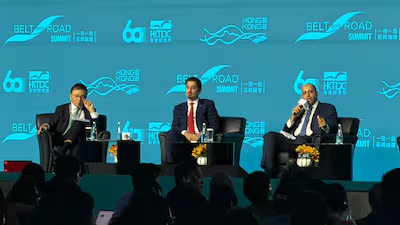
Qatar and Oman are promoting Middle East-backed financing, specifically Islamic financial instruments, to support critical infrastructure projects across the Global South. This initiative aims to foster development in regions including Asia, Africa, and Latin America. Muneer Al Muneeri, deputy president for operations at the Oman Investment Authority (OIA), discussed the OIA's involvement in this effort. Al Muneeri stated, "Ultimately … we want to make sure that these regions develop and continue bringing opportunities and on a long-term basis." The OIA plays a role in channeling investments to achieve these development objectives.
Islamic Finance Growth and Potential
The Islamic finance industry experienced a 21 per cent year-on-year growth, reaching an estimated $5.98 trillion in 2025. This expansion notes the increasing role of Sharia-compliant financial products in global markets. The Oman Investment Authority (OIA) has actively contributed to the development of these financial mechanisms, particularly in emerging economies. The OIA notably assisted in establishing Uzbekistan's first private equity investors, a move that introduced new investment avenues aligned with Islamic finance principles. This initiative shows the OIA's efforts to foster economic development and integrate Islamic financial instruments into diverse investment landscapes, supporting infrastructure and growth projects internationally. The growth trajectory reflects a broader acceptance and demand for ethical and interest-free financial solutions.
Middle East Capital Hub
Saudi Arabia leads globally in sukuk issuance, contributing 17 per cent to the total volume of these Sharia-compliant financial certificates. This significant share notes the kingdom's role as a major player in the Islamic finance market, which is increasingly utilized for infrastructure funding. The Oman Investment Authority (OIA) further demonstrates the region's financial reach, holding investments across more than 20 distinct funds. These investments enable the OIA to diversify its portfolio and support various developmental projects aligned with its strategic objectives. The collective activities of these Middle Eastern entities show their growing influence in channeling Islamic finance towards global infrastructure needs.
Bridging Funding Gaps
Accessing Shariah-compliant financial instruments could enable countries across Asia, Africa, and Latin America to address existing funding gaps for infrastructure development. This approach leverages the principles of Islamic finance to provide alternative capital sources for significant projects in the Global South. By offering financing structures that align with Islamic law, these instruments can attract investment from a broader pool of investors, including those specifically seeking Shariah-compliant opportunities. The availability of such funding mechanisms is seen as key for supporting sustainable development and economic growth in regions that often face challenges in securing conventional financing for large-scale infrastructure needs. This strategy aims to unlock capital that might otherwise remain untapped, channeling it into vital projects designed to improve living standards and foster economic stability.
Voices from the Summit
Mansoor Al Khater, chief executive of the Qatar Financial Centre, addressed the Belt and Road Summit in Hong Kong on Thursday. Al Khater stated that "Islamic finance is really going to be an additional vehicle that would complement the existing conventional financing model." He added, "Especially when we look at the [Global] South, what they are looking for is access to capital, and the Middle East can be one of the regions that can provide that capital because we are on a high balance sheet and we have good income statements."