From the archive
Qatar's Emir Discusses Regional Stability with Saudi and UAE Leaders Amidst Reports of US-Iran Deal
Qatar's Emir spoke with Saudi and UAE leaders about regional stability amid reports of a US-Iran deal, highlighting de-escalation efforts.
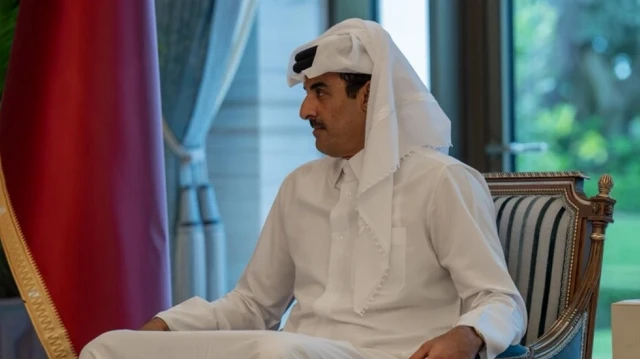
Qatar's Emir Sheikh Tamim bin Hamad Al Thani engaged in separate telephone conversations with Saudi Crown Prince Mohammed bin Salman and United Arab Emirates President Sheikh Mohammed bin Zayed Al Nahyan on Saturday. The discussions occurred amidst reports of a potential agreement between the United States and Iran, focusing on regional stability and de-escalation efforts. The calls from Doha show ongoing diplomatic efforts between the Gulf Cooperation Council states regarding broader security concerns and highlight the proactive role Qatar is playing in regional diplomacy. These high-level contacts are key for fostering dialogue and understanding among key regional players during a period of complex geopolitical shifts.
Diplomatic Exchanges Deepen
Sheikh Tamim bin Hamad Al Thani and Saudi Crown Prince Mohammed bin Salman exchanged views on strengthening cooperation during their telephone conversation. Their discussion also covered supporting political solutions aimed at addressing the root causes of regional crises. This engagement notes a shared interest in fostering stability within the Gulf region and beyond, emphasizing the importance of collaborative approaches to shared challenges. The leaders showed the necessity of sustained dialogue to navigate the intricate regional landscape and promote a more secure future for all nations in the Gulf. The exchange further cemented the growing ties between Qatar and Saudi Arabia, reflecting a broader trend of reconciliation and cooperation within the GCC.
During a separate call with United Arab Emirates President Sheikh Mohammed bin Zayed Al Nahyan, Sheikh Tamim discussed ongoing diplomatic efforts. These efforts are focused on easing tensions and advancing political settlements across the region. Both leaders emphasized the importance of reinforcing regional security through sustained diplomatic tracks, reiterating their commitment to peaceful resolutions. The conversations show a collective approach among Gulf states to address complex geopolitical challenges, including those stemming from broader international dynamics. These high-level exchanges indicate a concerted push towards de-escalation and the pursuit of peaceful resolutions in the current regional climate, demonstrating a unified front in promoting stability. The discussions also reaffirmed the strategic partnership between Qatar and the UAE, noting their shared vision for a prosperous and secure region.
Regional Mediation Efforts
The recent diplomatic engagements occurred just hours after Pakistan Army Chief Field Marshal Asim Munir concluded a visit to Tehran. During his trip, Field Marshal Munir met with Iranian President Masoud Pezeshkian and Parliament Speaker Mohammad Bagher Ghalibaf. Islamabad led these high-level discussions as part of ongoing mediation efforts between Washington and Tehran. The visit by the Pakistani Army Chief signifies the multifaceted nature of regional diplomacy, where various actors contribute to de-escalation and dialogue. Field Marshal Munir's meetings with senior Iranian officials were aimed at exploring avenues for reducing tensions and fostering understanding between the United States and Iran, reflecting Pakistan's long-standing role as a mediator in international affairs. The timing of these meetings suggests a broader, interconnected diplomatic push aimed at de-escalating regional tensions and fostering stability. The Qatari Emir's calls, therefore, are set against a backdrop of active regional and international efforts to address complex geopolitical dynamics, illustrating how different diplomatic tracks converge to influence the regional security architecture. This sequence of events notes the multifaceted nature of current diplomatic initiatives across the Gulf and beyond, demonstrating a concerted push from multiple capitals to address pressing security concerns.
US-Iran Deal Developments
The Qatari Emir's calls with Saudi and UAE leaders aimed to discuss regional stability and de-escalation efforts, occurring amid reports of a potential agreement between the United States and Iran. US President Donald Trump stated on Saturday that an agreement with Iran had been "largely negotiated." Trump added that final details of the understanding would be announced shortly, indicating that significant progress had been made in the diplomatic process. Donald Trump further indicated that the Strait of Hormuz "will be opened" as part of the understandings currently under discussion, a key point given the strait's strategic importance for global energy supplies. These developments follow reports that Tehran had presented a new formula for a possible deal, suggesting a renewed willingness from the Iranian side to engage constructively. The prospect of such an agreement has significant implications for regional security, potentially easing long-standing tensions and reshaping geopolitical alignments. The ongoing discussions between the US and Iran, facilitated by various intermediaries, show the complex and delicate nature of international diplomacy aimed at resolving protracted disputes. The potential reopening of the Strait of Hormuz, if confirmed, would have a substantial impact on international trade and energy markets, further noting the global ramifications of these negotiations.