From the archive
Qatar's Strategic Value: Indispensable Networks in an Era of Disruption
Qatar's strategic value stems from its indispensable global networks, from LNG to capital, making continuity its key asset amid disruption.
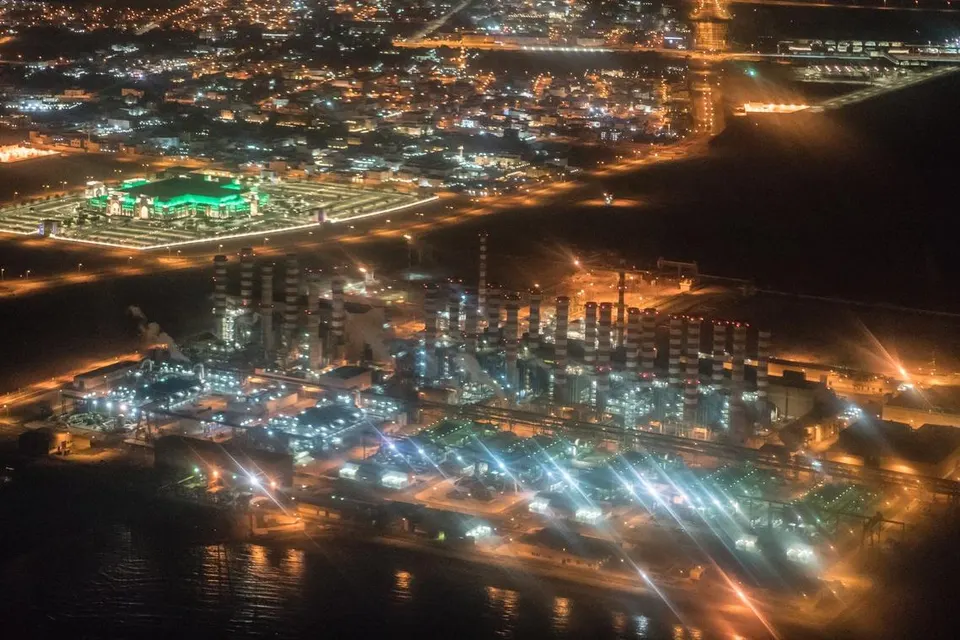
Qatar, a major global liquefied natural gas (LNG) producer, has seen its shipments impacted by regional instability, with U.S. LNG exporters reportedly offsetting the disruption. Qatar's current LNG production capacity stands at 77 million tons per year, a figure set to increase to 142 million tons by 2030 following the expansion of its North Field. This significant expansion shows Qatar's long-term commitment to maintaining its position as a leading global energy supplier. QatarEnergy sells LNG to 18 countries, and in 2024, the nation shipped over 1,000 LNG cargoes. These shipments highlight the extensive reach of Qatar's energy network, supplying critical fuel across continents. Reports indicated that approximately 93% of Qatari LNG transits the Strait of Hormuz. This critical maritime choke point is central to Qatar's export strategy, making its security critical for global energy stability. The passage of Qatari LNG through the Strait of Hormuz accounts for close to a fifth of all global LNG trade. The sheer volume of this trade shows Qatar's indispensable role in the international energy landscape. According to reports, U.S. LNG exporters have so far in 2026 single-handedly offset the drop in liquefied natural gas exports from Qatar following Iranian attacks on its facilities and the closure of key Middle East shipping lanes, ensuring that total supplies remain at record highs. This demonstrates the dynamic nature of global energy markets and the rapid responsiveness of alternative suppliers to maintain stability. The ability of U.S. Exporters to compensate for the Qatari shortfall has been a critical factor in preventing more widespread energy market disruptions.
Global Energy Hub Under Pressure
Approximately 81% of Qatari liquefied natural gas (LNG) exports are directed to Asia, with 13% going to Europe and 6% to the Middle East and Africa. This geographical distribution notes Asia's key reliance on Qatari energy supplies, while also showing Qatar's strategic importance to European and regional markets. To support its global distribution, QatarEnergy has 128 LNG vessels on order, including 24 of the larger QC-Max class. This substantial investment in its shipping fleet is designed to enhance Qatar's logistical capabilities and ensure efficient delivery of its expanding LNG production. Reuters reported force majeure declarations and extensions on some Qatari LNG sales in early 2026, indicating disruptions to its export schedule. These declarations signify a significant challenge to Qatar's ability to meet its contractual obligations due to unforeseen circumstances. QatarEnergy's CEO stated last month that "The attacks wiped out 17% of Qatar's LNG export capacity for up to five years." This statement shows the severe and prolonged impact on Qatar's production capabilities, necessitating a global response to fill the supply gap.
In response to this supply gap, U.S. Exporters have increased liquefaction capacity and adjusted vessel loading schedules to generate additional volumes. U.S. Exporters have plugged the supply gap by cranking liquefaction capacity to the maximum and tightening vessel loading schedules to squeeze out additional volumes. This aggressive operational optimization has been key to their ability to ramp up exports quickly. Data from commodities intelligence firm Kpler indicates that U.S. Exporters are projected to load a record 32.15 million metric tons of LNG during the first four months of 2026. This impressive figure reflects a strong expansion in U.S. Export capabilities. This figure represents a 28% increase compared to the same period in 2025, marking the largest year-over-year tonnage increase for those months since 2020. Such a rapid acceleration in export volumes notes the U.S.'s growing influence as a swing producer in the global LNG market. The approximately 7 million metric tons of additional LNG shipped by the U.S. So far this year surpasses the 6.93 million ton drop in shipments loaded by Qatar during the same period. This direct comparison demonstrates the extent to which U.S. Supplies have directly compensated for the Qatari shortfall, preventing a net reduction in global supply.
Total global seaborne LNG export volumes are expected to reach a new high of just over 149 million tons for the January to April window, reflecting a 6% year-over-year rise. This overall increase indicates a resilient global supply chain, despite regional disruptions. The U.S. Accounts for a record 18% of these global volumes. This growing market share solidifies the U.S.'s position as a dominant force in international LNG trade. Cheniere Energy's Sabine Pass terminal in Louisiana loaded approximately 25% of all U.S. LNG exports during the first quarter of the year. The Sabine Pass terminal, owned by Cheniere Energy, is a cornerstone of U.S. Export infrastructure, consistently contributing a significant portion of the nation's total LNG shipments. Venture Global's Plaquemines LNG terminal has also reported a significant increase, posting a 240% year-over-year jump in export volumes this year. This dramatic growth from Plaquemines notes the rapid commissioning and ramp-up of new U.S. Liquefaction facilities. Plaquemines loaded nearly 6.5 million tons of LNG during the first quarter, compared to less than 2 million tons during the same period in 2025. This substantial increase from Plaquemines has played a key role in boosting overall U.S. Export capacity. The upswing of around 4.5 million tons from Plaquemines helped lift total quarterly U.S. Shipments above 31 million tons for the first time. This achievement marks a new milestone for U.S. LNG exports, showcasing the country's expanded capacity and operational efficiency. This expansion in U.S. LNG exports has effectively offset the reduced output from Qatar, maintaining overall global supply levels. The increased capacity and operational adjustments by U.S. Facilities have played a critical role in stabilizing the international LNG market amidst the disruptions faced by Qatari exports. European nations emerged as the top buyers of U.S. Liquefied natural gas (LNG) so far in 2026, with nine of the top ten buyers located in the region. This strong European demand shows the continent's ongoing need for diversified energy sources and its reliance on U.S. LNG to bolster its energy security. European gas inventories are currently only around 30% full following steep drawdowns this past winter. This low inventory level further emphasizes Europe's vulnerability and the critical importance of consistent LNG imports, particularly from the U.S. To meet its energy requirements.
Beyond Energy: Diverse Global Flows
Beyond its role in global energy markets, Qatar maintains significant influence across other international sectors. Hamad International Airport served 54.3 million passengers in 2025, recording 282,975 aircraft movements in the same year. These figures show Qatar's position as a major international aviation hub, connecting travelers and cargo across the globe. The airport's strong performance reflects Qatar's investment in world-class infrastructure and its strategic location as a transit point.
The Qatar Investment Authority (QIA), established in 2005, represents another pillar of the nation's global engagement. The Qatar Investment Authority was founded in 2005 with the mandate to strengthen the country's economy by diversifying its investments globally. The QIA holds a 20% stake in Heathrow's holding company, demonstrating its investment in international infrastructure. This significant ownership position in one of the world's busiest airports notes QIA's strategy of acquiring stakes in critical global assets. It also maintains a 6.98% voting position in Spain's Iberdrola, a multinational utility company. This investment in a major utility provider further illustrates QIA's diversified portfolio and its interest in stable, essential services. The QIA manages a $1 billion Fund of Funds program, further extending its financial reach. This program allows the QIA to invest in a variety of private equity funds, expanding its exposure to different sectors and geographies.
Qatar's economy relies heavily on its international labor force. Migrant workers constitute 94% of Qatar's labor force, according to available data. This demographic contributes to substantial outbound financial flows, with approximately $11.5 billion in personal remittances paid out from Qatar in 2024. These remittances represent a significant economic link between Qatar and the home countries of its expatriate workers, illustrating the global nature of its economy.
The International Monetary Fund (IMF) stated in February 2026 that Qatar had shown "strong resilience" despite global economic challenges. This assessment from the IMF provides an external validation of Qatar's economic stability and its ability to navigate complex global environments. The resilience noted by the IMF speaks to the effectiveness of Qatar's economic diversification efforts and its strategic financial management.
Navigating Geopolitical Turbulence
Regional instability has led to significant increases in maritime insurance costs. War-risk insurance for Gulf voyages escalated from 0.2-0.3% to approximately 0.5% of a vessel's value within a week during a period of regional turbulence in June. This sharp increase reflects the heightened perceived risk for shipping operations in the region, directly impacting operational costs for maritime transport. By July, Red Sea war-risk insurance premiums had climbed toward 0.7%. The continued escalation of these premiums shows the persistent and expanding nature of maritime security concerns in key global shipping lanes. Beyond shipping, subsea cable failures near Jeddah in September 2025 disrupted internet traffic between Europe and Asia. These incidents highlight the vulnerability of critical digital infrastructure to regional disturbances. Microsoft acknowledged that these cable disruptions resulted in higher latency for its Azure customers due to necessary traffic rerouting. This acknowledgement from a major technology provider illustrates the tangible impact of such disruptions on global digital services and the broader economy, affecting everything from cloud computing to international communications. The need for traffic rerouting shows the interconnectedness of global networks and the ripple effect of localized failures.
In this context of evolving global energy supply dynamics, the approximately 4.5 million tons upswing from Plaquemines helped lift total quarterly U.S. Shipments above 31 million tons for the first time. This achievement by the Plaquemines terminal, a key U.S. Facility, signifies a substantial contribution to global energy security. European nations emerged as the top buyers of U.S. Liquefied natural gas (LNG) so far in 2026, with nine of the top ten buyers located in the region. This strong demand from Europe shows its strategic shift towards diversifying energy sources and reducing reliance on traditional suppliers. European gas inventories are currently only around 30% full following steep drawdowns this past winter. This low level of reserves notes Europe's ongoing vulnerability to supply shocks and its critical dependence on consistent LNG imports, particularly from the U.S. To ensure energy stability through the coming seasons. The confluence of increased U.S. Export capacity and sustained European demand paints a clear picture of the recalibration of global energy flows in response to geopolitical pressures and regional instability.