From the archive
Trump Postpones Iran Strike Amidst Diplomatic Push
President Trump postponed a planned strike on Iran for Tuesday following requests from leaders in Qatar, Saudi Arabia, and the UAE, citing ongoing…
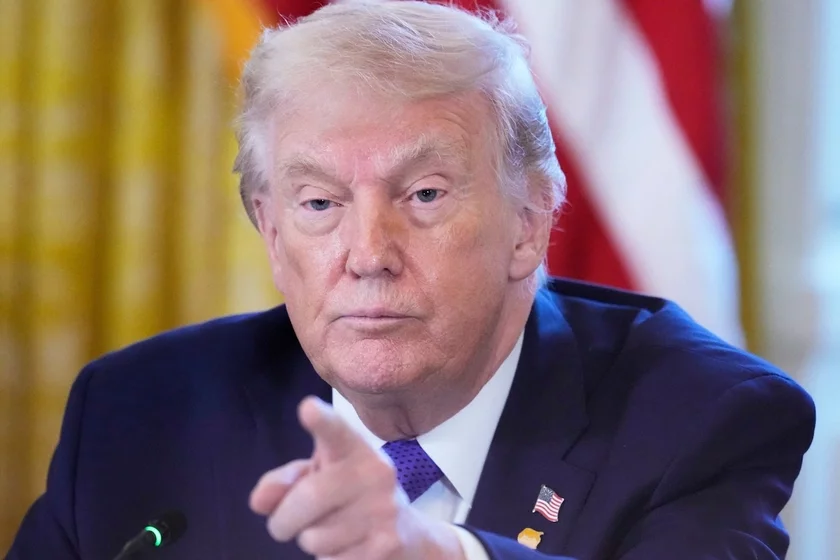
U.S. President Donald Trump announced he postponed a new strike on Iran, planned for Tuesday, following requests from leaders in Qatar, Saudi Arabia, and the UAE, as "serious negotiations are now underway," according to BBC. Mr. Trump stated that he made this decision at the request of these regional leaders, indicating a significant diplomatic push is in progress. Trump instructed Pentagon chief Pete Hegseth, Chairman of the Joint Chiefs of Staff Dan Kane, and the U.S. Armed forces not to strike Iran on Tuesday. "IRAN MUST NOT HAVE NUCLEAR WEAPONS!" Trump stated, showing a core demand of his administration. He added, "But I also ordered them to be ready to immediately launch a full-scale offensive on Iran if an acceptable agreement is not reached." He warned, "the clock is ticking for Iran, and they better hurry, or there will be nothing left of them."
Diplomatic Maneuvers Detailed
U.S. President Donald Trump stated on his social network Truth Social that he postponed a planned attack on Iran for Tuesday following requests from regional leaders. According to Mr. Trump, Qatari Emir Tamim bin Hamad Al Thani, Saudi Crown Prince Mohammed bin Salman, and UAE President Sheikh Mohammed bin Zayed Al Nahyan all urged him to delay military action. This collective appeal from key Middle Eastern allies noted the regional desire for a diplomatic resolution to the escalating tensions. Mr. Trump indicated he had been informed about the potential for reaching a deal that would be "fully acceptable" to the United States. He emphasized that any agreement must ensure Iran has no access to nuclear weapons, reiterating, "IRAN MUST NOT HAVE NUCLEAR WEAPONS!" This demand remains a central pillar of the U.S. Strategy concerning Iran.
Mr. Trump also confirmed that while negotiations are underway, he has instructed military leaders to remain prepared for any eventuality. "But I also ordered them to be ready to immediately launch a full-scale offensive on Iran if an acceptable agreement is not reached," he stated, maintaining a strong posture. He issued a stark warning to Tehran, saying, "the clock is ticking for Iran, and they better hurry, or there will be nothing left of them." The Axios publication, citing a high-ranking U.S. Government source, reported that if Iran's position remains unchanged, the U.S. Might be compelled to continue negotiations "with the help of bombs." This suggests that despite the current pause, military options are still actively considered.
Context of Escalation
Reports have emerged in recent days indicating that the U.S. And Israel were allegedly preparing to resume a military campaign against Iran. These reports coincided with U.S. President Donald Trump's increasingly harsh rhetoric directed at Tehran. The possibility of such a campaign has fueled international concern and intensified diplomatic efforts to de-escalate the situation. Mr. Trump had previously issued strong warnings to Iran, stating, "the clock is ticking for Iran, and they better hurry, or there will be nothing left of them." This threat showed the seriousness of the U.S. Position and the potential for military confrontation.
The U.S. President has consistently emphasized a core demand concerning Iran's nuclear program. "IRAN MUST NOT HAVE NUCLEAR WEAPONS!" Mr. Trump declared, showing a key objective for any potential diplomatic resolution. He has repeatedly stressed that this is a non-negotiable point for the United States. His public statements have linked this demand to the ongoing military readiness of U.S. Forces, suggesting that a failure to meet this condition could lead to military action.
Mr. Trump also confirmed that while efforts for a diplomatic solution are underway, military options remain on the table. He stated, "But I also ordered them to be ready to immediately launch a full-scale offensive on Iran if an acceptable agreement is not reached." This readiness notes the dual approach of diplomacy alongside the explicit threat of military action, aiming to exert maximum pressure on Tehran.
Regional and International Reactions
Iran has not yet publicly commented on U.S. President Donald Trump's latest statement regarding the postponed strike. The absence of an immediate response from Tehran leaves observers uncertain about Iran's willingness to engage in the "serious negotiations" mentioned by Mr. Trump. The U.S. President has maintained a firm stance on Iran's nuclear ambitions, stating, "IRAN MUST NOT HAVE NUCLEAR WEAPONS!" This unwavering position sets a clear benchmark for any future discussions. Mr. Trump indicated that while diplomatic efforts are underway, military readiness remains a priority for the United States. He affirmed, "But I also ordered them to be ready to immediately launch a full-scale offensive on Iran if an acceptable agreement is not reached." Mr. Trump also issued a warning to Tehran, saying, "the clock is ticking for Iran, and they better hurry, or there will be nothing left of them." The lack of an immediate response from Iran leaves the next steps in the diplomatic process unclear, with the international community closely watching for developments.