From the archive
Turkish Foreign Minister Fidan Visits Qatar to Bolster Ties, Discuss Regional Security
Turkish Foreign Minister Hakan Fidan visits Qatar to strengthen bilateral ties, discuss regional security, economic cooperation, and the Palestinian issue.
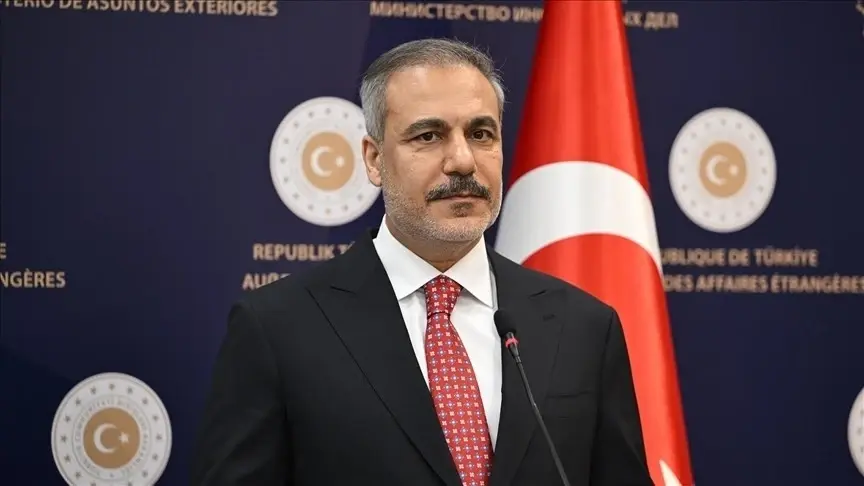
Turkish Foreign Minister Hakan Fidan will pay a one-day visit to Qatar on May 12, aiming to bolster Ankara's full bilateral relations with Doha. The visit is intended to express Türkiye's continued support to Qatar following its recent targeting by Iranian missiles. During his trip, Mr. Fidan is scheduled to meet with Qatari Foreign Minister Sheikh Mohammed bin Abdulrahman Al Thani, alongside other Qatari officials. The two foreign ministers will also discuss the latest developments concerning Palestine. This high-level engagement shows the strategic importance both nations place on their partnership.
The visit, which is a key diplomatic initiative for Ankara, is expected to reinforce the already strong ties between Türkiye and Qatar. It serves as a clear indication of Türkiye’s commitment to its regional allies and its proactive stance on critical geopolitical issues. Foreign Minister Fidan's agenda is packed with discussions that will touch upon both bilateral cooperation and pressing regional challenges, reflecting the multi-faceted nature of the relationship between Ankara and Doha. The full bilateral relations between the two countries encompass a wide array of sectors, from economic partnerships to security cooperation and cultural exchanges, all of which stand to be further strengthened by this visit.
Strategic Committee Preparations
The primary reason for Foreign Minister Fidan's visit is to review preparations for the 12th High Strategic Committee meeting between Türkiye and Qatar. This significant bilateral meeting is slated to take place later this year in Türkiye. The upcoming committee meeting is anticipated to be a landmark event, further solidifying the cooperative framework between the two nations. President Recep Tayyip Erdoğan and Qatari Emir Sheikh Tamim bin Hamad Al Thani will co-lead the High Strategic Committee meeting, showing its importance to both nations and noting the highest level of commitment from both governments. Their direct involvement signifies the strategic weight attributed to the outcomes of these discussions.
The High Strategic Committee itself was established in 2015, serving as a key mechanism for enhancing cooperation. Since its inception, the committee has been instrumental in fostering closer ties and coordinating policies across various domains. The committee's stated aim is to deepen and enrich bilateral ties across all possible domains, particularly economy, trade, and energy sectors, reflecting a shared commitment to expanding mutual benefits. This holistic approach ensures that the partnership is full and resilient, capable of addressing diverse challenges and opportunities. The focus on economic collaboration is particularly pronounced, with both countries seeking to maximize their commercial interactions. A common objective articulated by both sides is to increase the annual trade volume between Türkiye and Qatar to $5 billion. This ambitious target notes the economic potential seen in their partnership and the strategic importance of strengthening commercial links. Achieving this goal would signify a substantial boost to both economies, creating new opportunities for businesses and investors.
The upcoming 12th meeting will therefore focus on concrete steps and initiatives to advance these goals and further solidify the full relationship between Ankara and Doha. Discussions will likely include specific projects, investment opportunities, and policy adjustments aimed at streamlining trade and economic cooperation. The energy sector is a critical area of collaboration, given Qatar's position as a major energy producer and Türkiye's growing energy needs. The committee provides a platform for strategic dialogue on energy security, diversification, and potential joint ventures. This sustained engagement through the High Strategic Committee demonstrates a long-term vision for a strong and mutually beneficial partnership, extending beyond immediate concerns to encompass a broad strategic alignment.
Regional Security and Strait of Hormuz
Iran fired missiles at Qatar and other regional countries in late February in retaliation for American and Israeli attacks. This event has heightened regional tensions and brought maritime security to the forefront of diplomatic discussions. Turkish Foreign Minister Hakan Fidan and Qatari Foreign Minister Sheikh Mohammed bin Abdulrahman Al Thani are set to discuss these recent developments concerning the Strait of Hormuz during their meeting. The Strait of Hormuz is a critical global chokepoint for oil shipments, and any disruption there has broad implications for international trade and energy markets. Maritime security has been almost disrupted due to Iranian and American blockades in the Strait of Hormuz, according to Turkish officials. These blockades have created an atmosphere of uncertainty and risk for commercial shipping, necessitating urgent diplomatic intervention and strategic planning.
Mr. Fidan will underline Türkiye’s expectation for the establishment of maritime security and free passage from the strait. This stance reflects Türkiye's commitment to the principles of free navigation and the unimpeded flow of global commerce. The ongoing crisis in the Strait of Hormuz has demonstrated that alternative routes will become more essential in the future. The vulnerability of traditional shipping lanes to geopolitical tensions shows the need for strategic foresight and investment in alternative infrastructure. In response to this, Türkiye and Qatar are currently engaged in discussions over a proposed pipeline that would pass through Syria to Türkiye. This ambitious infrastructure project aims to provide a secure and reliable alternative for energy transit, reducing reliance on the volatile Strait of Hormuz and enhancing regional energy security. The pipeline discussions are a testament to the forward-thinking approach of both nations in addressing long-term strategic challenges.
The two ministers will also evaluate strengthening joint efforts to prevent further crises in the region under the concept of “regional ownership.” This concept emphasizes the importance of regional actors taking primary responsibility for their security and stability, fostering collaborative solutions rather than relying solely on external interventions. This approach seeks to build a more resilient and self-reliant regional security architecture. The discussions will delve into practical mechanisms for implementing this concept, including intelligence sharing, joint exercises, and coordinated diplomatic initiatives aimed at de-escalating tensions and promoting peaceful resolutions to conflicts.
Palestinian Issue and Lebanon
Turkish Foreign Minister Hakan Fidan and Qatari Foreign Minister Sheikh Mohammed bin Abdulrahman Al Thani are expected to address the ongoing Israeli efforts to disrupt the ceasefire and stability across the region. Discussions will focus on the broader implications of these actions for regional peace. The ministers will examine the current situation, which Turkish officials note includes persistent challenges to stability, particularly in the Palestinian territories. The humanitarian situation and the continuous cycle of violence are pressing concerns that demand immediate attention and concerted international efforts.
Mr. Fidan is set to emphasize the necessity of increasing efforts to bring Israeli unlawful actions in Gaza and the West Bank more forcefully onto the international agenda in a stronger way. This push aims to garner stronger international attention and action regarding the situation in these territories. Türkiye seeks to galvanize international bodies and states to address the ongoing issues with greater urgency and resolve. The foreign ministers will explore strategies for multilateral engagement and diplomatic pressure to highlight the impact of these actions on regional stability and humanitarian conditions. They will also consider how to effectively coordinate their diplomatic initiatives to ensure these matters receive appropriate global scrutiny, advocating for a just and lasting resolution.
Both ministers will also voice their support for the protection of Lebanon’s territorial integrity and sovereignty. The discussions will show the importance of maintaining stability in Lebanon, particularly in light of regional tensions. This includes affirming the internationally recognized borders and ensuring that external influences do not undermine its national independence. The two diplomats will review the current state of affairs affecting Lebanon and reiterate their commitment to its stability as a key element for the broader Middle East. They will discuss potential joint diplomatic steps to reinforce these principles and safeguard Lebanon’s political and territorial integrity against any destabilizing factors. This shared commitment to Lebanon's stability reflects a broader regional concern for preventing further escalation and ensuring the integrity of sovereign states in the volatile Middle East.