From the archive
US and Thailand Accelerate LNG Talks Amid Qatar Infrastructure Damage
US and Thailand accelerate talks for U.S. liquefied natural gas supply following damage to Qatar's export infrastructure.
The U.S. And Thailand are engaged in discussions regarding a new long-term supply of U.S.-produced liquefied natural gas (LNG), prompted by recent infrastructure damage in Qatar. These talks focus on establishing a binding long-term deal between U.S. Firm Venture Global and Thailand's state-controlled energy company PTT PCL. The expedited negotiations follow recent strikes in Qatar that destroyed 17%, or 12.8 million metric tons per year, of the nation's LNG export capacity. Thailand, a growing energy consumer in Southeast Asia, seeks to diversify its energy sources amidst the altered global supply landscape, with U.S. LNG emerging as a key option. The discussions represent a significant development in global energy trade, as both nations aim to secure stable and reliable energy flows in a volatile geopolitical environment. The U.S. As the world's largest LNG exporter, is positioned to meet this increased demand, while Thailand, as Southeast Asia's biggest LNG importer, is actively seeking to bolster its energy security.
Deal Details and Drivers
Negotiations between the U.S. And Thailand have accelerated following the U.S.-Israeli-led war on Iran, which resulted in damage to Qatar's liquefied natural gas production infrastructure. The discussions are centered on establishing a binding, long-term supply agreement. Such LNG contracts typically span 15 or more years, reflecting the significant investment and long-term commitment required for both producers and consumers. These extended durations provide stability for energy supply and demand planning, offering predictability for both the exporting and importing nations. The focus on a binding deal shows the seriousness of these discussions and the mutual desire for a secure, long-term energy partnership. For Venture Global, a long-term contract with PTT PCL would provide the financial certainty needed to support future liquefaction capacity expansion and infrastructure development in the U.S.
Last year, Thailand's state-controlled energy company PTT PCL demonstrated its commitment to securing long-term LNG supplies by signing a substantial agreement with Glenfarne. This deal committed PTT to procure 2 million metric tons of LNG per year from Glenfarne's Alaska LNG project. The agreed supply period for this specific contract was set for 20 years, showing the long-term strategic decisions being made by Thai energy planners. The Glenfarne Alaska LNG project, a major undertaking, would require the construction of an extensive 800-mile (1,300-km) pipeline to transport natural gas to the liquefaction facility. This infrastructure development notes the scale of projects needed to bring new LNG supplies to market and illustrates the considerable investment involved in ensuring future energy security. PTT PCL's proactive approach in securing supplies from multiple sources, including the Glenfarne deal and the ongoing talks with Venture Global, reflects a full strategy to meet Thailand's growing energy needs.
Geopolitical Impact on Supply
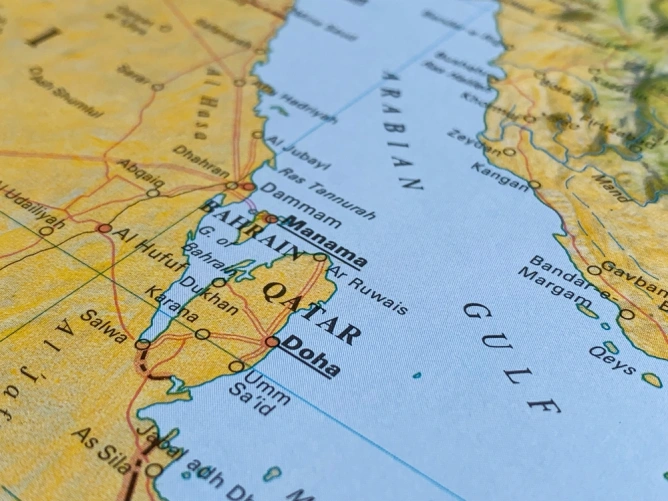
The U.S. And Israel jointly attacked Iran on February 28, leading to a retaliatory strike by Iran on Qatar's liquefied natural gas (LNG) infrastructure in Ras Laffan. The damage to Qatar's facilities has significant implications for global energy markets, as the nation stands as the world's second-largest LNG exporter, trailing only the U.S. Industry analysts estimate that repairs to Qatar's damaged LNG infrastructure could take between three and five years to complete. This extended repair timeline means that a significant portion of global LNG supply will be unavailable for a considerable period, exacerbating concerns about energy security and pricing worldwide. The immediate and long-term consequences of this disruption have prompted a global reassessment of energy supply chains and increased interest in alternative sources.
The disruption has prompted a shift in demand, with U.S. LNG exporters observing increased interest from Asian buyers. In March, U.S. LNG exporter Cheniere Energy reported that its Asian customers had requested more LNG in the aftermath of the conflict. This surge in demand from Asian markets, traditionally reliant on Qatari supplies, notes the critical role the U.S. Now plays in stabilizing global energy markets. To meet this growing demand, Cheniere Energy is working to accelerate the completion of two processing units, known as trains, at its Corpus Christi, Texas plant. This effort reflects the urgent need to bolster supply in response to the geopolitical events impacting Qatar's export capacity. The accelerated completion of these trains is a direct response to the altered global supply landscape, demonstrating the flexibility and responsiveness of U.S. LNG producers. The U.S. Position as the world's largest LNG exporter has become even more key in light of these disruptions, as nations seek reliable alternatives to fill the void left by Qatar's reduced capacity.
Broader Energy Landscape
Thailand is the largest liquefied natural gas (LNG) importer in Southeast Asia, and it is actively seeking to diversify its energy supply as it progressively replaces coal for electricity generation. The country is also exploring LNG supplies from neighboring Malaysia to bolster its import portfolio. This diversification strategy is key for Thailand's long-term energy security and its commitment to reducing its carbon footprint. The shift away from coal for electricity generation shows Thailand's environmental goals and its increasing reliance on cleaner-burning natural gas. The ongoing talks with the U.S. For long-term LNG supplies, alongside existing agreements and explorations with other regional partners, illustrate a full and multi-faceted approach to securing its energy future.
The administration of President Donald Trump and Thailand released a joint statement last October, indicating that Thai companies would purchase approximately $5.4 billion annually in U.S. Energy products, including LNG, crude oil, and ethane. This statement laid a foundation for closer energy ties between the two nations and signaled Thailand's strategic intent to deepen its energy relationship with the U.S. The substantial value of these projected purchases further emphasizes the scale of Thailand's energy demands and the U.S.'s capacity to meet them across various energy commodities. In January, French utility Engie signed a 15-year agreement to supply LNG to power plants owned by Thai company Gulf Development PCL, further illustrating Thailand's efforts to secure diverse long-term energy sources. These multiple agreements and ongoing negotiations collectively paint a picture of a nation strategically navigating a complex global energy market to ensure its economic growth and energy independence. The accelerated pace of discussions with Venture Global, in particular, notes the immediate impact of the Qatari infrastructure damage on Thailand's energy procurement strategy and its pivot towards reliable, long-term U.S. Supplies.