From the archive
US-Iran Talks in Doha Marked by Conflicting Agendas and Broader Geopolitical Shifts
US and Iran officials meet in Doha amid conflicting accounts of the agenda, highlighting disparities in expectations for high-level and technical…
American and Iranian officials are scheduled to convene in Doha on Tuesday for discussions, with Special envoys Jared Kushner and Steve Witkoff traveling to Qatar to meet with Iranian representatives. White House spokesperson Karoline Leavitt described the anticipated discussions as "high-level meetings," with "technical talks" expected to occur on the sidelines. However, Iranian negotiator Kazem Gharibabadi stated that "Technical working group meetings were not scheduled for this week," indicating a disparity in expectations regarding the scope of the talks. The differing characterizations highlight potential disagreements on the agenda and format of the upcoming engagements between the two nations, showing the delicate nature of the diplomatic efforts. The meetings are a critical juncture for both countries as they navigate complex issues ranging from financial disputes to regional stability.
Conflicting Accounts on Agenda and Diplomatic Venues
A U.S. Official stated that technical talks are slated to continue on all areas of the Memorandum of Understanding (MOU). Politico's Cheyanne M. Daniels reported the official's comment, specifically noting, "technical talks are slated to continue on all areas of the MOU." This statement comes as Special Envoy Steve Witkoff and Secretary of State Marco Rubio briefed all members of Congress on the Iran talks on Monday. The congressional briefing included discussions on the approximately $6 billion in assets, which were part of a 2023 prisoner swap signed by President Joe Biden. The ongoing dialogue aims to address the implementation of various aspects of the MOU, which has been a point of contention between Washington and Tehran.
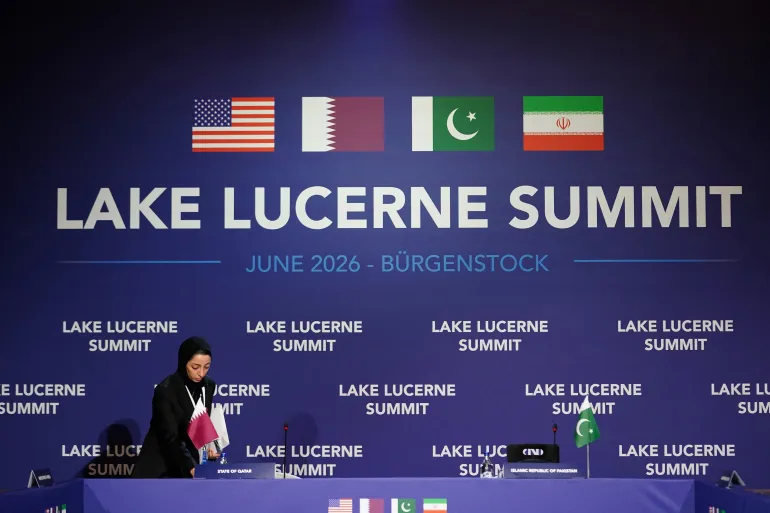
Previous U.S.-Iran talks had taken place in Switzerland, serving as a neutral ground for sensitive negotiations. The current Doha talks were initially meant to take place in Switzerland, indicating a shift in the chosen venue for diplomatic engagements. This change in location could reflect new strategic considerations or logistical preferences from either side. Concerns were also noted regarding the Trump administration’s clampdown on companies, which some observers suggest fuels concerns over Beijing’s rapidly advancing position in the artificial intelligence global race. This broader geopolitical context, involving technological competition and past policy impacts, subtly influences the backdrop against which these U.S.-Iran discussions are held.
Separately, the State Department has deployed a regional Disaster Assistance Response Team and search and rescue teams. These teams are working alongside elements from U.S. Southern Command to deliver aid and assist rescue efforts in affected areas, though the specific location of these efforts was not detailed in relation to the Doha talks. This deployment shows the U.S.'s ongoing humanitarian and disaster response capabilities globally, even as diplomatic efforts continue on other fronts.
Financial Disputes, Prisoner Swaps, and Policy Implications
Iran's emphasis in the Doha talks is on financial matters, including the unfreezing of $6 billion in assets, according to President Masoud Pezeshkian. The U.S. Had ordered these assets blocked in 2023 following the Hamas attack on Israel, a move that significantly impacted the financial landscape between the two nations. A U.S. Official, speaking on condition of anonymity, stated that "any release of funds for humanitarian purchases will be tied to performance and Iran’s implementation of the MOU." This conditionality notes the U.S.'s stance that the funds' release is contingent on Iran's adherence to agreed-upon terms, particularly concerning the humanitarian use of the assets. The $6 billion in assets was initially part of a 2023 prisoner swap signed by President Joe Biden, a deal that aimed to facilitate the release of American citizens held in Iran in exchange for access to these funds for humanitarian purposes. The blocking of these funds after the Hamas attack complicated the implementation of this agreement, leading to renewed diplomatic efforts to resolve the financial impasse.
In a broader context of U.S. Foreign policy, a Reagan Institute survey indicated that 76 percent of self-identified MAGA supporters desire increased U.S. Engagement in global events. This finding suggests a significant portion of a key political demographic supports a more active role for the United States on the international stage. MAGA respondents also showed the strongest support for an Iran war, with 89 percent in favor, a statistic that reflects a hawkish sentiment within this group regarding U.S. Policy toward Iran. The survey further found that 71 percent of all Republicans and 55 percent of Democrats believe the U.S. Should be more involved in world affairs, indicating a general bipartisan consensus, albeit with differing intensity, for global engagement.
Support for the NATO alliance among MAGA supporters stood at 48 percent, a figure notably lower compared to 52 percent of all surveyed Republicans. This divergence suggests a nuanced perspective within the Republican party regarding traditional alliances. The Reagan Institute survey concluded that the entire Republican party has aligned with former President Donald Trump's shifting foreign policy positions, reflecting the enduring influence of his "America First" approach on the party's platform and voter sentiment. These survey results provide valuable insight into the domestic political pressures and public opinions that often shape U.S. Foreign policy decisions, including those related to ongoing talks with Iran.
Separately, U.S. Central Command Commander Adm. Brad Cooper met with leaders from Israel and Lebanon in recent days. These meetings occurred during his visit to the Middle East, following a peace framework signed last week as the initial steps to end the fighting between Israel and Lebanon. This development shows the U.S.'s active role in regional de-escalation and peace-building efforts, running in parallel to the diplomatic discussions in Doha.
Broader Geopolitical Context and Regional Developments
California Governor Gavin Newsom and Anthropic have established a new agreement aimed at expanding access to Claude products across the state’s government. The California agreement is designed to make Claude the first artificial intelligence tool available to all California agencies and local governments at half the standard price. Additionally, employees are slated to receive free workforce training and technical support directly from Anthropic staff. This initiative notes the growing integration of advanced AI technologies into governmental operations, signaling a broader trend in technological adoption and workforce development. The move also positions California as a leader in leveraging AI for public sector efficiency and service delivery.
Separately, Pakistan’s Sunday strikes on Afghanistan resulted in the deaths of 36 civilians and injuries to 163 others. Pakistani Information Minister Attaullah Tarar stated that the attacks targeted three locations near the border, killing 25 alleged militants and destroying significant quantities of weapons and ammunition. Conversely, Taliban spokesperson Hamdullah Fitrat reported that the strikes destroyed multiple civilian homes, leading to the deaths of residents inside. Islamabad has initiated these attacks on its neighbor, alleging that Kabul is harboring militants who are plotting against Afghanistan. Following the strikes, Afghanistan’s foreign ministry summoned Pakistan’s chargé d’affaires in Kabul to address the incident, escalating diplomatic tensions between the two nations. These cross-border actions show the volatile security situation in the region and the complex challenges of managing militant groups operating across national boundaries.
In the United States, Florida’s Republican Venezuela hawks are citing Caracas’ response to recent earthquakes as evidence of the interim leadership’s corruption. The Venezuelan government has reported at least 1,450 fatalities from the tremors. Representative Carlos Giménez stated on social media that his Venezuelan-American constituents reported the government in Caracas was "politicizing aid distribution & impeding rescue efforts." Giménez added, "The regime is responsible for the deaths of thousands in #Venezuela trapped under the rubble!" Representatives María Elvira Salazar, Mario Díaz-Balart, and Rick Scott also accused Venezuelan Interior Minister Diosdado Cabello of impeding U.S. Rescue efforts. These accusations highlight the ongoing political tensions between the U.S. And Venezuela, with U.S. Lawmakers using humanitarian crises to show concerns about the Venezuelan government's governance and human rights record. The situation also reflects the strong advocacy of certain U.S. Congressional members on behalf of their Venezuelan-American constituents, further complicating the already strained diplomatic relations.