From the archive
Naftali Bennett Calls for Qatar to Be Declared Enemy State
Former Israeli PM Naftali Bennett calls for Qatar to be declared an enemy state and for Israel to launch a pressure campaign.
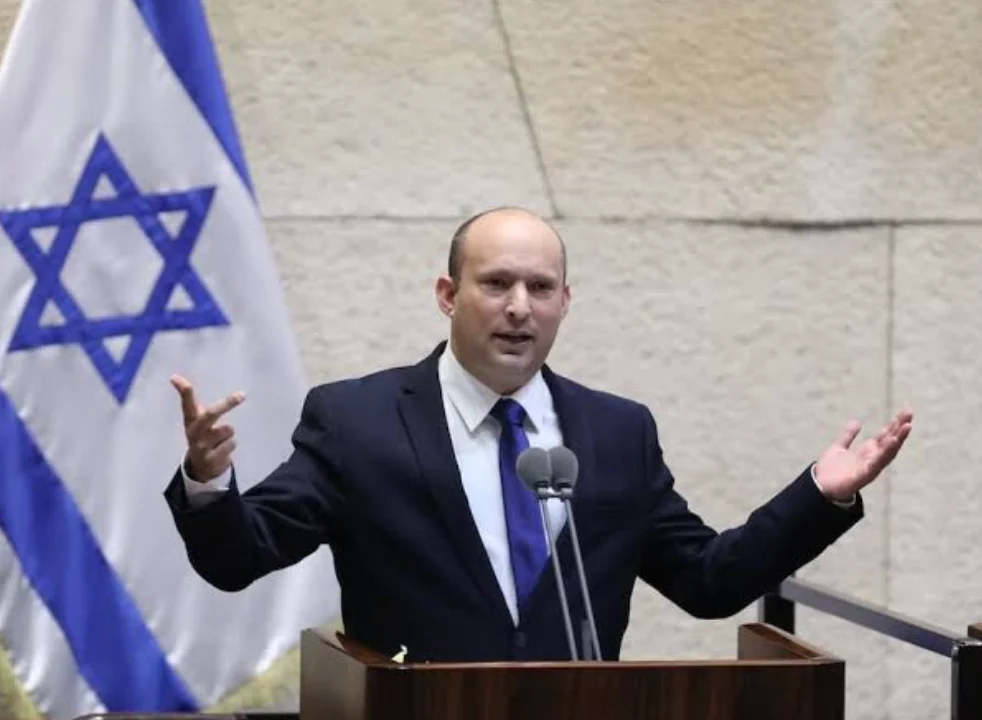
Former Israeli Prime Minister Naftali Bennett has publicly stated his intention to declare Qatar an enemy state, should he return to power. In conjunction with this declaration, Bennett affirmed he would instruct Israel's Mossad, Shin Bet, and military to prepare full plans and actively gather intelligence on the Gulf nation. Bennett asserted that Israel should fundamentally alter its approach, beginning to treat Qatar as an adversary through a focused intelligence collection effort. He specifically accused Qatar of financing Hamas and working to influence international public opinion against Israel. The former prime minister did not mince words, stating, "At the end of the day, it’s a tiny place, 330,000 people, and they’re causing crazy havoc, wreaking havoc on Israel." These remarks, outlining a significant shift in potential Israeli foreign policy, were published on September 5, 2026.
Bennett's Proposed Pressure Campaign
Naftali Bennett reiterated his characterization of Qatar as a "tiny place, 330,000 people, and they’re causing crazy havoc, wreaking havoc on Israel," showing his belief in its disproportionate regional influence. The former prime minister detailed his advocacy for a multi-faceted pressure campaign against Qatar. This strategy, he explained, would encompass diplomatic, economic, and public opinion spheres, explicitly stating a preference for these methods over an exclusive focus on military action. Bennett suggested that Israel should actively seek collaboration with key regional allies to amplify this pressure. He specifically named Saudi Arabia, the United Arab Emirates (UAE), and Egypt as potential partners in this endeavor. He proposed that a concerted effort by these influential nations could significantly impact Qatar's international standing and its operational capabilities on the global stage. The article detailing Bennett's proposals, which outlines these strategic considerations, is approximately a two-minute read, offering a concise overview of his policy vision.
Background and Previous Statements
Naftali Bennett's recent remarks represent an expansion and reinforcement of earlier declarations he made in July. During those prior statements, he first proposed the formal designation of Qatar as an "enemy state" if he were to be elected prime minister. His current statements solidify this position, moving beyond a mere proposal to outline specific, actionable steps Israel should undertake against the Gulf nation. Bennett, who previously served as Israeli prime minister from 2021 to 2022, is currently seeking a return to power, making his policy pronouncements highly relevant to the political discourse. His previous political tenure was notably characterized by a strong focus on national security issues and proactive regional diplomacy. The former prime minister’s continued and consistent focus on Qatar notes his unwavering stance regarding what he perceives as its problematic role in regional affairs and its impact on Israeli security interests.
Qatar's Response to Accusations
In a swift and firm rebuttal, Qatar's Media Attaché in the United States, Ali Al-Ansari, rejected the accusations leveled by former Israeli Prime Minister Naftali Bennett. Al-Ansari explicitly stated that Bennett was deliberately spreading disinformation about Qatar. He further asserted that these actions were transparently intended to advance Bennett's political ambitions and electoral prospects. The attaché's remarks directly addressed the core of Bennett's proposals, including his call for Israel to declare Qatar an enemy state and to initiate intelligence gathering operations against the Gulf nation. Bennett's statements, which prominently featured accusations of Qatar financing Hamas and attempting to influence international public opinion, have thus drawn a strong and unequivocal rebuttal from Doha's representative. Al-Ansari's comments show Qatar's official position that the allegations are not only politically motivated but also entirely lacking in factual basis.