From the archive
Netanyahu Defends Gaza Funds, Boasts of 2025 Strike on Doha
Israeli PM Benjamin Netanyahu defended Qatari funds to Gaza as humanitarian and boasted of a 2025 strike on Doha during an i24NEWS interview.
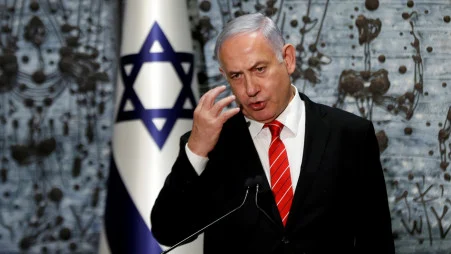
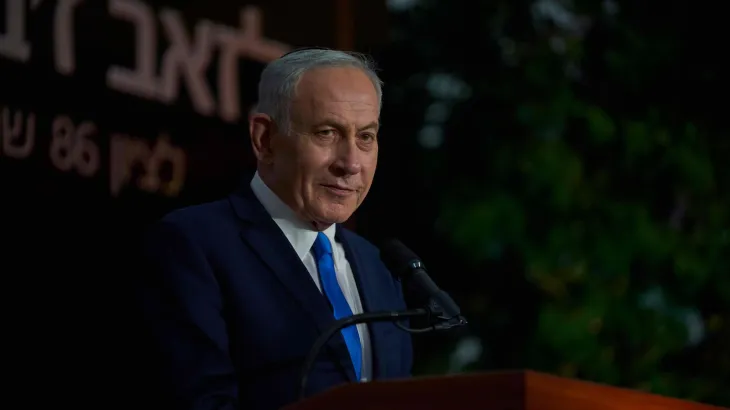
Israeli Prime Minister Benjamin Netanyahu defended his government's facilitation of Qatari funds to the Gaza Strip and boasted of Israel's 2025 strike on Doha during an interview with Israeli broadcaster i24NEWS. These comments were made weeks ahead of Israel's general election, scheduled for 27 October. The wide-ranging interview provided a platform for Mr. Netanyahu to address contentious issues surrounding his administration's policies concerning Gaza and its regional relationships.
During the interview, Prime Minister Netanyahu explicitly stated, "I attacked Qatar, I also bombed it and attacked them during the war, and they attacked me," in reference to the 2025 strike on Doha. This assertion noted a significant military action that had drawn international condemnation. The Gaza war, which formed the backdrop for much of the discussion, began in 2023. Addressing the financial transfers from Qatar to Gaza, a policy that has faced considerable scrutiny, Mr. Netanyahu remarked, "All this money is worth 2 percent – 2 percent of all the money that entered the Strip." This statement aimed to downplay the significance of the Qatari financial aid in the broader context of Gaza's economy and its alleged impact on Hamas's capabilities.
Strike on Doha Details
Prime Minister Benjamin Netanyahu's comments referenced an Israeli strike that occurred in Doha on September 9, 2025. This operation resulted in the deaths of five Hamas members and one Qatari security officer, marking a severe escalation in regional tensions. The strike took place during a critical meeting in Doha where participants were actively discussing a US-backed proposal aimed at achieving a ceasefire in Gaza. The timing and location of the strike, in a neutral country hosting peace talks, amplified international outrage and diplomatic fallout. The precision of the strike, targeting individuals within a sovereign nation's capital, raised significant questions about international law and state sovereignty.
Following the incident, Prime Minister Netanyahu and then-US President Donald Trump held a joint telephone call with Qatari Prime Minister Sheikh Mohammed bin Abdulrahman bin Jassim Al Thani to formally apologize for the strike. This high-level apology showed the gravity of the diplomatic crisis precipitated by the attack. The joint call from the leaders of Israel and the United States aimed to de-escalate tensions and mitigate the damage to their respective relationships with Qatar. Sheikh Mohammed bin Abdulrahman bin Jassim Al Thani has consistently defended Qatar's financial assistance to Gaza, reiterating his country's position on humanitarian aid. He stated, "Today, when they [Israel] are claiming that this is the financing of Qatar to Hamas, it has no basis." The Qatari Prime Minister further elaborated that "All our aid … went to Gaza, went to the people, and was under a very transparent process that the United States is fully aware about." This defense noted Qatar's insistence that its financial contributions were purely for humanitarian purposes and subject to international oversight.
Gaza Funds Defense
Israeli Prime Minister Benjamin Netanyahu staunchly defended Israel's facilitation of millions of dollars in Qatari funds into the Gaza Strip, a policy that has been a subject of intense domestic and international debate. Mr. Netanyahu rejected accusations that this Qatari money had aided Hamas's military operations, a central point of contention for his critics. He stated unequivocally that the funds were intended solely for humanitarian purposes, aimed at alleviating the dire conditions faced by the civilian population in Gaza. The Prime Minister added that the funds had been transferred with the explicit approval of Israel's most senior security agencies, Mossad and Shin Bet, implying that the transfers were thoroughly vetted and deemed strategically necessary. This assertion aimed to deflect criticism that his government had inadvertently strengthened Hamas.
Despite defending the fund transfers as essential for humanitarian stability, Mr. Netanyahu described Qatar as a "hostile" state. This seemingly contradictory stance reflected the complex and often fraught relationship between Israel and Qatar, which has historically played a mediating role in regional conflicts while also maintaining ties with groups like Hamas. He asserted that Qatar's influence had not dictated Israeli policy during the ongoing war in Gaza, attempting to portray Israel's actions as independent and not swayed by external pressures. However, critics have forcefully argued that the Qatari funds, regardless of their stated humanitarian intent, ultimately helped Hamas prepare for its devastating 7 October 2023, attack on Israel. This perspective suggests that the funds provided Hamas with the financial breathing room to allocate its own resources toward military buildup, rather than civilian needs.
Qatar has consistently and strongly denied allegations of funding Hamas's military wing or operations. Qatari Prime Minister Sheikh Mohammed bin Abdulrahman bin Jassim Al Thani previously stated that all Qatari aid went directly to Gaza and its people, under a transparent process that was fully known to and monitored by the United States. This transparency, according to Qatari officials, ensured that the funds were utilized for their intended humanitarian objectives, such as infrastructure, healthcare, and basic necessities for the civilian population, rather than being diverted for military purposes. The Qatari government maintains that its role has been one of humanitarian support and regional mediation, operating with the full knowledge and often at the request of international partners.
International Reactions
The Israeli strike in Doha on September 9, 2025, provoked widespread international condemnation and a strong diplomatic backlash. Majed al-Ansari, spokesperson for Qatar's foreign ministry, described the assault as "cowardly" and a "blatant violation of all international laws and norms." This strong language showed Qatar's perception of the attack as an egregious breach of its sovereignty and a dangerous precedent in international relations. The United Nations Secretary-General, Antonio Guterres, also denounced the strikes in unequivocal terms, calling them a "flagrant violation" of Qatar's sovereignty and territorial integrity. The UN's condemnation noted the serious implications of the strike for the international order and the principles of national sovereignty.
In a significant show of solidarity with Qatar, leaders from several key regional nations, including Jordan, the United Arab Emirates, and Saudi Arabia, visited Doha following the incident. These high-profile visits demonstrated regional unity in condemning the attack and offering support to Qatar, signaling a collective concern over the violation of sovereign territory. Other nations, including Iran and Pakistan, also condemned the attack on the Qatari capital, adding to the chorus of international disapproval. The strike occurred in a city that has hosted Hamas's political office since 2012, a fact that has often been cited in discussions about Qatar's role in the region. Qatar has consistently stated that it hosts Hamas's political office not as an endorsement of the group's actions, but at the specific request of the United States, positioning itself as a key channel for communication and mediation in complex regional conflicts. This role, Qatar argues, is essential for diplomatic efforts and de-escalation, particularly in times of crisis.