From the archive
Qatar, UK, France Delegation Meets Lebanese President to Reaffirm Support
Lebanon's President Michel Aoun met with a joint delegation from Qatar, the UK, and France to reaffirm support and discuss the nation's stability and…
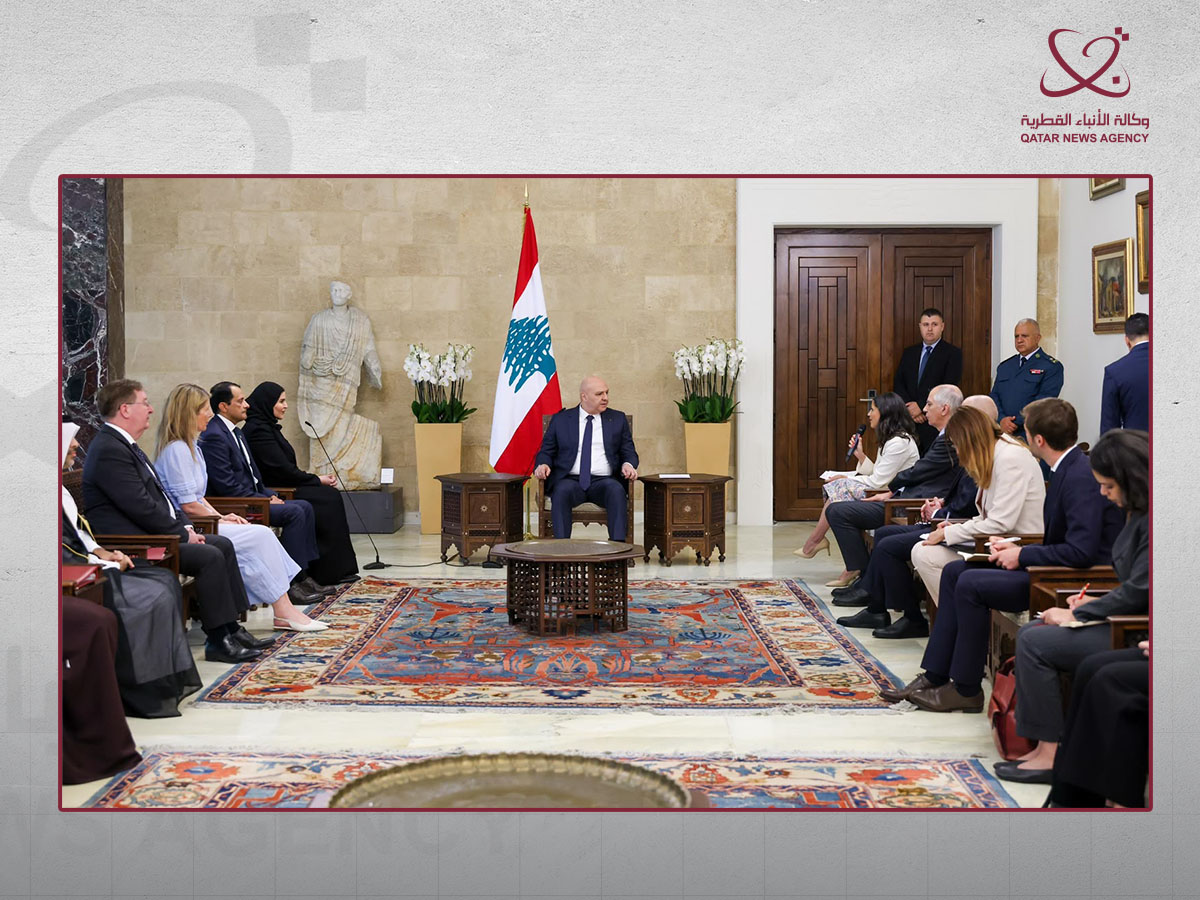
Lebanese President Michel Aoun received a joint ministerial delegation from Qatar, the United Kingdom, and the French Republic in Beirut on June 18, 2026, to reaffirm support for Lebanon. The delegation included Qatar's Minister of State for International Cooperation, Dr. Maryam bint Ali bin Nasser Al-Misnad, the UK's Minister for International Development, Baroness Jennifer Chapman, and France's Minister Plenipotentiary for Francophonie, International Partnerships and French Nationals Abroad, Éléonore Caroit.
Dr. Al-Misnad stated that the visit embodies "the continuous coordination between the State of Qatar, the United Kingdom, and the French Republic and the Lebanese Republic within the framework of international cooperation to keep pace with efforts for stability and recovery in sisterly Lebanon." She added that Qatar's support for Lebanon is not limited to the political level but also includes economics and development, emphasizing that "the position of the State of Qatar is based on two main axes: reaffirming support for Lebanon and rejecting any violation of its sovereignty and security, and encouraging the path of diplomacy and peace."
Meeting Discussions and Commitments
During the meeting, the delegation reviewed recent developments in Lebanon. Discussions emphasized the commitment to UN Security Council Resolution 1701 and the existing ceasefire agreement. The joint tripartite ministerial visit showed the keenness for continuous coordination between Qatar, the United Kingdom, France, and Lebanon. This coordination aims to support stability and recovery in Lebanon within the framework of international cooperation.
Qatar's Stance and Aid
Qatar's Minister of State for International Cooperation, Dr. Maryam bint Ali bin Nasser Al-Misnad, affirmed that Qatar continues its support for Lebanon and its cooperation with international partners to assist the nation. Dr. Al-Misnad stated, "استمرار دعم دولة قطر للجمهورية اللبنانية الشقيقة وتعاونها مع الشركاء الدوليين لمساندتها." She reiterated that Qatar's position is founded on two core principles: reaffirming support for Lebanon and rejecting any violation of its sovereignty and security, alongside encouraging diplomacy and peace. "موقف دولة قطر يرتكز على محورين أساسيين: تجديد التأكيد على دعم لبنان ورفض أي انتهاك لسيادته وأمنه، وتشجيع مسار الدبلوماسية والسلام," she said.
The Qatar Development Fund has provided approximately $434 million in humanitarian and developmental aid, benefiting over 1.5 million people in Lebanon. A package of humanitarian aid was dispatched in April, following the displacement of about one million people from their homes. Dr. Al-Misnad emphasized, "أهمية التعاون الدولي في هذه المرحلة المهمة وضرورة تسخير الشراكات الدولية لخدمة المجتمعات والحفاظ على كرامة الإنسان، انطلاقا من نهج قيادة دولة قطر الرشيدة الذي يحث على الاستثمار في الإنسان من أجل السلام." She further explained that Qatar's strategy includes investing in education and health in vulnerable areas, viewing this approach as a form of preventive diplomacy to address the root causes of conflict. Dr. Al-Misnad added, "الاستثمار في التعليم والصحة في المناطق الهشة ليس عملا خيريًا منفصلاً، بل هو شكل من أشكال الدبلوماسية الوقائية ومعالجة الأسباب الجذرية (الفقر، الجهل، تهميش الشباب) قبل أن تتحول إلى نزاعات مسلحة أو تطرف، بدل الانتظار حتى تتفجر الأزمة والتعامل معها بعد فوات الأوان."
Broader Diplomatic Context
The joint visit by delegations from Qatar, the United Kingdom, and the French Republic to Lebanon reflects a concerted international effort to support stability in the nation. Such engagements often seek to bolster regional security and address humanitarian concerns through multilateral cooperation. The presence of high-level representatives from three distinct nations shows a shared commitment to diplomatic solutions and aid provision in areas experiencing economic or political challenges. These diplomatic initiatives frequently aim to reinforce international partnerships and facilitate dialogue among various stakeholders. Continued collaboration among international partners like Qatar, the United Kingdom, and France is considered vital for promoting long-term recovery and resilience within the broader Middle East. These efforts typically involve a combination of political support, humanitarian assistance, and development aid tailored to specific national needs.