From the archive
Qatar's Diplomatic Prowess Facilitates US-Iran Rapprochement, Analysts Say
French analysts say Qatar's diplomacy was key to facilitating rapprochement between the United States and Iran, enabling dialogue and preliminary…
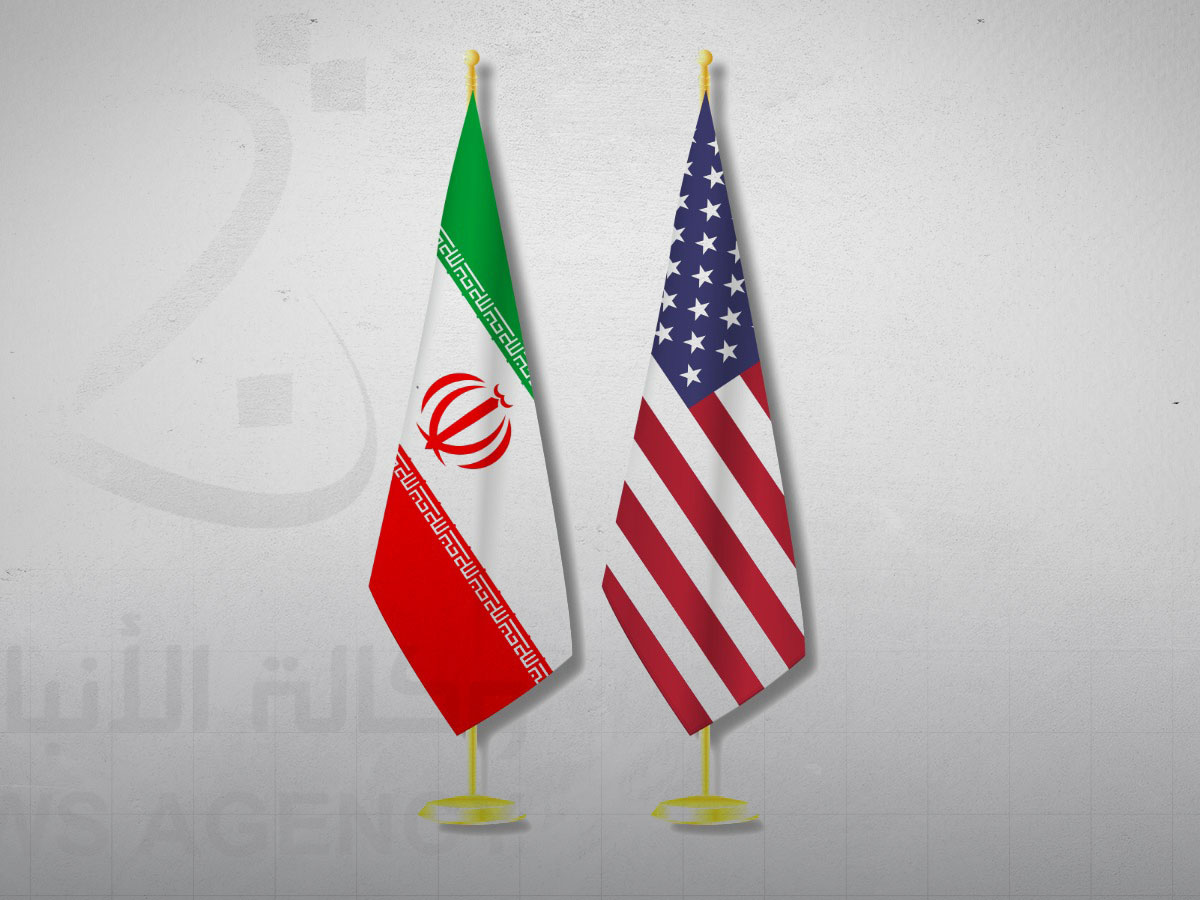
French analysts and politicians stated to the Qatar News Agency (QNA) that Qatari mediation played a significant role in achieving a diplomatic breakthrough towards rapprochement between the United States and Iran. These observers noted that Doha was key in cultivating the political and diplomatic environment necessary for the resumption of dialogue between Washington and Tehran. Qatar's efforts facilitated preliminary understandings on several contentious issues between the two nations, according to the analysts. French analysts and politicians told the Qatar News Agency (QNA) that Qatari mediation contributed to a significant diplomatic breakthrough in efforts to advance rapprochement between the United States and Iran. They further noted that Doha played a key role in shaping the political and diplomatic conditions that enabled the resumption of dialogue between the two sides and the emergence of preliminary understandings on several contentious issues.
Qatar's Key Mediation Role
Leslie Varenne, Director of IVERIS, stated that Qatar played the most prominent and sensitive role in engineering the diplomatic breakthrough between the United States and Iran. Varenne further noted that Doha has established a distinct position as a reliable mediator between opposing sides, particularly the United States and Iran. "Doha has, over recent years, established a distinct position as a reliable mediator between opposing sides, particularly the United States and Iran," Varenne said. He attributed this position to a balanced foreign policy that maintains strong strategic relations with Washington while preserving open and stable channels of communication with Tehran. "This position was not coincidental, but rather the result of a balanced foreign policy that maintains strong strategic relations with Washington, while also preserving open and stable channels of communication with Tehran, giving Qatar considerable flexibility in handling complex regional and international dossiers," Varenne added. Varenne specifically attributed Qatar's prominent and sensitive position to its balanced foreign policy, which adeptly maintains strong strategic relations with Washington while simultaneously preserving open and stable channels of communication with Tehran. This strategic approach provides Qatar with considerable flexibility in managing complex regional and international diplomatic challenges.
Varenne noted Qatar's ability to relay messages, facilitate indirect negotiations, and provide a neutral environment to narrow differences and foster understanding. He also commented on the broader implications, stating, "Any potential agreement between the United States and Iran could mark a significant strategic shift in the Middle East, given that tensions between the two countries have long been a key source of regional instability." The director of IVERIS emphasized that Qatar’s consistent engagement in facilitating dialogue and understanding between diverse parties has been key.
Gerald Olivier, a political analyst and strategist at the Institute for Prospective and Security in Europe (IPSE), remarked that Qatar played a leading and effective role in managing complex mediation efforts. Olivier described this role as grounded in an approach based on openness and bridge-building. "Qatar played a leading and effective role in managing complex mediation efforts, grounded in a foreign policy approach based on openness and bridge-building with various parties, which has reinforced its position as a reliable actor in Middle Eastern crises," Olivier stated. He further articulated that Qatar's foreign policy is characterized by an unwavering commitment to openness and constructing bridges of communication with various international parties. This strategic orientation has significantly reinforced its standing as a reliable and indispensable actor in addressing and resolving Middle Eastern crises. Khattar Abou Diab said Qatar played the decisive role in the final stages of the process, helping to finalize the memorandum of understanding and overcome remaining obstacles.
Broader Diplomatic Landscape
This development reflects Qatar’s growing status as a trusted international mediator, supported by its balanced network of relations and its ability to maintain open channels of communication with all relevant parties. Leslie Varenne, Director of IVERIS, pointed to Pakistan’s supportive role in the broader process, noting its contribution through leveraging its relations and providing political and logistical support for de-escalation efforts. Varenne showed that Pakistan’s involvement was instrumental in providing both political backing and logistical assistance, thereby contributing significantly to the overall de-escalation efforts between the United States and Iran. Gerald Olivier, a political analyst and strategist at the Institute for Prospective and Security in Europe (IPSE), stated that the real diplomatic breakthrough is linked to the key role played by both Qatar and Pakistan in reopening channels of communication.
Olivier elaborated on this, saying, "The real diplomatic breakthrough in the US–Iran rapprochement process is not limited to its immediate political outcomes, but is primarily linked to the key role played by both Qatar and Pakistan in reopening channels of communication between the two sides." He described Qatari–Pakistani coordination as a model of multilateral mediation, where official diplomacy intersects with indirect communication channels. Olivier explained, "Qatari–Pakistani coordination as a model of multilateral mediation, where official diplomacy intersects with indirect communication channels, enabling what he called a positive diplomatic breakthrough and the restoration of dialogue between parties that were close to rupture." This collaborative approach, according to Olivier, exemplifies how multiple nations can contribute to resolving complex international disputes through coordinated diplomatic efforts.
Olivier also reiterated that Qatar played a leading and effective role in managing complex mediation efforts. He noted that this role was consistently grounded in an approach based on openness and bridge-building, which has been a hallmark of Qatar's foreign policy. Khattar Abou Diab noted Pakistan’s contribution to supporting the negotiation process, indicating it received indirect backing from countries such as Egypt, Saudi Arabia, and Oman. Abou Diab noted that the support from these regional powers further solidified the multilateral nature of the mediation efforts. Olivier stated that the immediate impact of the agreement is expected to include a gradual reopening of the Strait of Hormuz to international navigation. He added, "what is currently being discussed remains within the framework of a memorandum of understanding or preliminary agreement whose details will be finalized later." Olivier also cautioned that "The agreement remains fragile due to its dependence on sensitive regional balances and existing disagreements among involved parties, adding that the most likely short-term outcome would be improved maritime traffic and a gradual reopening of sea lanes, rather than major strategic shifts."
Potential Impacts and Challenges
Gerald Olivier, a political analyst and strategist at the Institute for Prospective and Security in Europe (IPSE), noted that the immediate impact of the agreement is expected to include a gradual reopening of the Strait of Hormuz to international navigation. Olivier stated, "The immediate impact of the agreement is expected to include a gradual reopening of the Strait of Hormuz to international navigation, noting that what is currently being discussed remains within the framework of a memorandum of understanding or preliminary agreement whose details will be finalized later." The gradual reopening of this key waterway is seen as a significant step towards de-escalation and improving regional stability, directly addressing long-standing concerns about maritime security.
Olivier also cautioned that the agreement remains fragile due to its dependence on sensitive regional balances and existing disagreements among involved parties. He elaborated, "The agreement remains fragile due to its dependence on sensitive regional balances and existing disagreements among involved parties, adding that the most likely short-term outcome would be improved maritime traffic and a gradual reopening of sea lanes, rather than major strategic shifts." This fragility means that continuous diplomatic efforts and careful management of regional dynamics will be essential to sustain any progress. The analyst emphasized that while the agreement represents a positive step, it does not signify an end to all challenges, but rather a foundation for further dialogue and negotiation.
Dr. Khattar Abou Diab, a political analyst and professor of international relations at the Sorbonne University in Paris, concluded that the region may be moving toward a phase of relative calm rather than full peace. Abou Diab added, "The region may be moving toward a phase of relative calm rather than full peace, noting that the Palestinian issue will remain central to regional tensions as one of the most prominent unresolved conflicts in the Middle East." He stressed that while the current diplomatic breakthrough offers a glimmer of hope for reduced tensions, the underlying structural issues and unresolved conflicts, particularly the Palestinian issue, continue to pose significant challenges to achieving lasting peace.
Qatar's Mediating Status
Dr. Khattar Abou Diab, a political analyst and professor of international relations at Sorbonne University, stated that Qatar has emerged as a trusted mediator in a range of complex international dossiers. According to Abou Diab, Qatar's diplomatic influence extends to critical issues spanning from Palestine to Afghanistan and Iran. This consistent role has solidified its position as a reliable interlocutor capable of facilitating dialogue and understanding between diverse parties. Qatar's engagement in these varied contexts notes its strategic approach to foreign policy. Abou Diab further elaborated that Qatar's consistent and active engagement in these critical international dossiers has not only solidified its reputation as a trusted mediator but also showed its strategic approach to foreign policy, which prioritizes dialogue and conflict resolution.