From the archive
Qatar's Security Reassessment After Israeli Strike Spurs Regional Realignment
A year after Israel struck a Doha compound, Qatar reassessed its security, prompting Gulf states to re-evaluate regional defense and U.S. alliances.
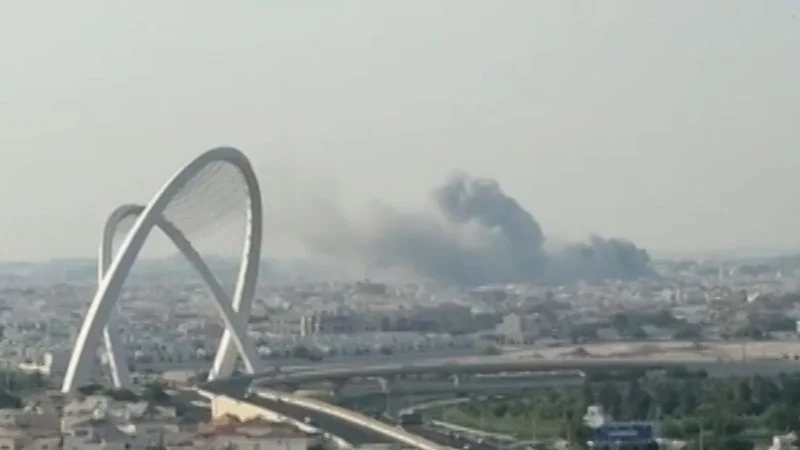
A year ago, Israel conducted a strike on a compound in Doha, targeting a meeting of Hamas leaders involved in negotiations to end the Gaza war. This specific incident, which aimed at disrupting the ongoing diplomatic efforts, sent significant ripples through regional security dynamics. The strike occurred despite Qatar holding the status of a U.S. Major non-NATO ally, a designation it formally received in 2022. This status typically implies a close strategic relationship and a degree of security assurance from the United States. Following the Israeli strike on Doha, a swift and notable realignment in regional security partnerships became apparent when Saudi Arabia and Pakistan signed a Strategic Mutual Defense Agreement only eight days later. This rapid response showed the immediate implications of the Doha incident on existing alliances and future defense strategies in the Middle East.
The Unprecedented Strike
The Israeli strike on a compound in Doha resulted in the deaths of five Hamas members and one Qatari security officer. This tragic loss of life noted the direct and severe consequences of the operation. The attack occurred despite Qatar's long-standing role as a host for the forward headquarters of U.S. Central Command (CENTCOM), which has been based at al-Udeid for nearly two decades. This base represents a significant U.S. Military presence in the region, serving as a critical hub for operations and intelligence gathering. The operation was unprecedented in the sense that Israel had never before directly attacked a Gulf Cooperation Council (GCC) member. This fact alone elevated the incident beyond a mere counter-terrorism operation, transforming it into a significant geopolitical event that challenged established norms of state sovereignty and regional conduct. The presence of CENTCOM headquarters in Qatar, a close U.S. Ally, made the strike particularly sensitive, raising questions about the implications for American strategic interests and regional stability.
Shifting Security Alliances
The United Arab Emirates unequivocally condemned Israel’s attack in Doha as a violation of Qatari sovereignty. This condemnation noted a unified stance among Gulf Cooperation Council members regarding regional security protocols, emphasizing the importance of respecting national borders and preventing external military actions within their territories. UAE President Mohammed bin Zayed’s visit to Doha the following day further showed this solidarity. The visit was interpreted by observers as a significant gesture of support from Abu Dhabi to Qatar, particularly in the aftermath of the unprecedented strike, signaling a united front among GCC states in the face of such aggression. The condemnation and subsequent high-level visit reflected a collective concern over the potential for destabilization and the erosion of sovereign protections within the Gulf region.
Eleven months later, a broader regional security framework emerged with the formation of the Mecca Joint Defense Agreement. This pact involved Saudi Arabia, Pakistan, and Türkiye, indicating a strategic realignment that extended beyond the immediate Gulf region to encompass key players in the wider Islamic world. The agreement's formation suggested a collective effort to address evolving security concerns, potentially influenced by the earlier incident in Doha and the perceived need for enhanced self-reliance in defense. The trilateral defense agreement represents a new axis of cooperation among these nations, potentially reshaping existing alliances and defense postures in the wider Middle East and South Asia. This development suggested a move towards a more diversified security architecture, possibly in response to perceived vulnerabilities or shifts in the geopolitical landscape.
Rethinking the U.S. Umbrella
The Israeli operation was unprecedented because Israel had never directly attacked a Gulf Cooperation Council (GCC) member state before this incident. This strike occurred despite Qatar's position as a major non-NATO ally of the United States, a status that typically implies a strong security partnership. The incident raised profound questions about the reliability of existing security frameworks and the extent of protection afforded by alliances with global powers. Following the Israeli strike on Doha, Iranian attacks on Qatar commenced as soon as the U.S. And Israel's war on the Islamic Republic began in late February. This sequence of events further complicated Qatar's security calculus, placing it in a precarious position between conflicting regional and international interests. The initiation of Iranian attacks added another layer of complexity to Qatar's security challenges, compelling a reassessment of its defense strategies and alliances in a rapidly changing geopolitical environment. The perceived vulnerability, despite its strategic U.S. Alliance, prompted a re-evaluation of its security posture and reinforced the impetus for new regional defense agreements.