From the archive
UN Chief Honors Qatar's Late Father Emir for Transformative Rule
UN Secretary-General Antonio Guterres honored Qatar's late Father Emir Sheikh Hamad bin Khalifa Al Thani at a UN ceremony, recognizing his transformative…
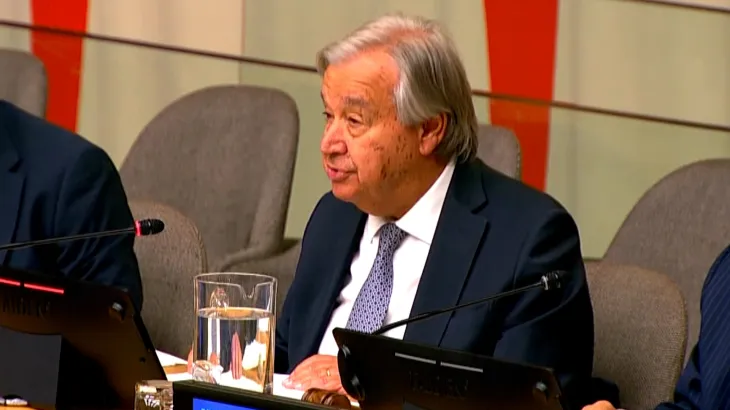
UN Secretary-General Antonio Guterres recently paid tribute to Qatar's late Father Emir Sheikh Hamad bin Khalifa Al Thani. The UN chief acknowledged the former ruler's significant contributions and transformative rule during his tenure. Guterres's remarks recognized the Father Emir's impact on Qatar's development and its role on the international stage. The tribute noted the late leader's legacy, which continues to influence the Gulf nation, showing the enduring nature of his vision for the country. This acknowledgment from the head of the United Nations signifies the global recognition of Sheikh Hamad bin Khalifa Al Thani's profound contributions during his time as Qatar's leader.
Tribute at United Nations
The tribute to Qatar's late Father Emir Sheikh Hamad bin Khalifa Al Thani occurred during a special ceremony held at the United Nations. The event, a formal gathering on the international stage, recognized the former ruler's contributions and his transformative rule. UN Secretary-General Antonio Guterres acknowledged the Father Emir's significant impact on Qatar's development and its role on the international stage, emphasizing the full nature of the changes initiated under his leadership. The ceremony noted the late leader's legacy, which continues to influence the Gulf nation, demonstrating the long-term effects of his policies. Guterres's remarks showed the enduring nature of Sheikh Hamad bin Khalifa Al Thani's vision and its lasting effects on both Qatar and the broader international community, reflecting a period of profound change and growth. The special gathering at the UN served as a formal acknowledgment of his esteemed place in global diplomacy and national progress, solidifying his historical importance in the eyes of the international body. This recognition by the UN Secretary-General further cemented the international community's appreciation for his key role.
Legacy of Transformation
UN Secretary-General Antonio Guterres described the late Father Emir Sheikh Hamad bin Khalifa Al Thani's rule as a period of major economic, social, and institutional transformation for Qatar. This assessment recognized the significant changes implemented during his leadership, which reshaped the nation's foundational structures and propelled it onto the global stage. The transformation encompassed substantial advancements across various sectors, impacting the daily lives of Qatar's citizens and its operational frameworks, leading to widespread modernization. Sheikh Hamad bin Khalifa Al Thani's tenure saw the nation undergo full development, establishing new economic paradigms and enhancing social programs, which significantly improved the quality of life for its population. These institutional shifts laid the groundwork for Qatar's subsequent growth and its emergence on the global stage as a key player in international affairs and energy markets. The Father Emir's strategic decisions during this era are widely credited with fostering a dynamic and progressive environment within the country.
Broader Context and Significance
The recognition by the United Nations Secretary-General Antonio Guterres shows the global acknowledgment of Qatar's development trajectory under Sheikh Hamad bin Khalifa Al Thani. This tribute places Qatar's transformation within a broader international context, noting the nation's emergence as a significant actor on the world stage, capable of contributing to global dialogue and cooperation. His leadership facilitated not only internal growth but also Qatar's increased engagement in international diplomacy and humanitarian efforts, enhancing its global profile and influence. The UN's formal acknowledgment reflects the lasting impact of his policies on Qatar's economic diversification and social progress, positioning the country as a notable example of rapid national development driven by strategic leadership. Such tributes from international bodies often serve to reinforce the historical narrative surrounding a leader's tenure and its subsequent influence on regional and global affairs, providing a testament to their lasting contributions. This high-level commendation from the UN Secretary-General serves to solidify the Father Emir's place in modern history.